




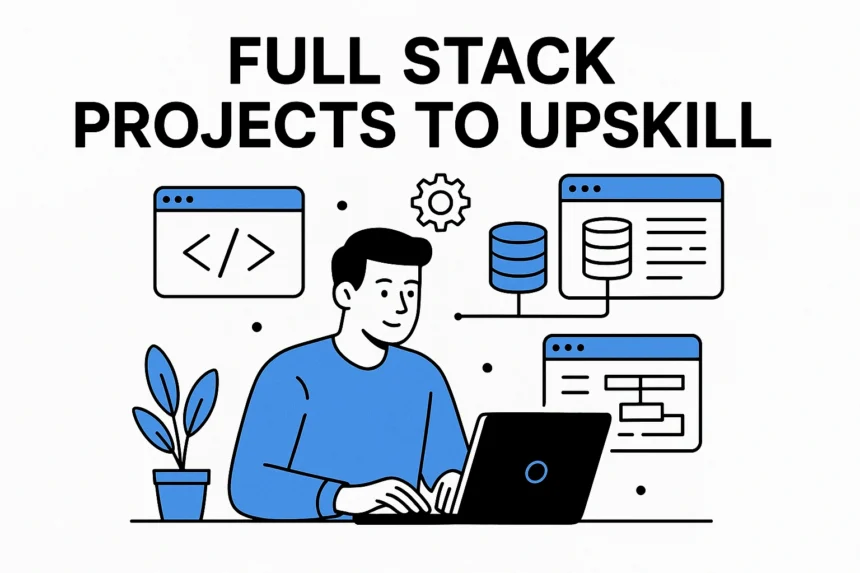
Breaking into full stack development in 2026 is less about collecting certificates and more about demonstrating that you can ship real, end-to-end applications. Full stack projects give you exactly that: visible proof that you can design, build, and deploy functional apps that solve real problems using modern stacks like React, Node.js, MongoDB, and cloud platforms.
Whether you are a student, career switcher, or junior developer, building a focused set of full stack projects can transform your resume from “educated” to “employable.” The sections below walk through why full stack projects matter, the 10 best ideas to build, recommended stacks, skills you’ll gain, and how to present everything in a portfolio that gets callbacks.
Why Full Stack Projects Are Essential for Career Growth
Employers hiring full stack developers in 2026 increasingly filter candidates by the strength of their project portfolios, not just degrees or course lists. When recruiters open your profile, they want to see GitHub repos, live demos, and commit histories that prove you can build, debug, and iterate on production-style applications.
Transform Your Career
Choose from our industry-leading programs designed for career success
Modern Software and AI Engineering Program
Master full-stack development with AI integration


 +1000 more
Modern Data Science and ML with specialisation in AI
Advanced data science techniques with AI specialization
+1000 more
Advanced AIML with Specialisation in Agentic AI
Deep dive into AIML with focus on Agentic systems
+1000 more
DevOps, Cloud & AI Platform Engineering
Build and manage AI-powered cloud infrastructure
+1000 more
AI Engineering Advanced Certification by IIT-Roorkee
Premier AI engineering certification from IIT-Roorkee

Well-chosen full stack projects also show that you understand the complete lifecycle of a web application: frontend UI/UX, backend APIs, databases, authentication, and deployment. Linking these projects from your resume, LinkedIn, and a personal portfolio website makes it easy for hiring managers to verify your capabilities within seconds.
Skill Without Practice = Missed Opportunity
Learning JavaScript, React, Node.js, or databases only at the tutorial level leaves a gap between “knowing the concepts” and “using them to solve real problems.” Full stack development projects bridge this gap by forcing you to design schemas, handle edge cases, implement error handling, and think about performance under realistic constraints.
Each project is a self-contained learning lab where you move from copy-pasting snippets to architecting features, integrating third-party APIs, and writing documentation that others can follow. Over time, this repeated practice builds the confidence and problem-solving mindset that interviewers look for in coding rounds and system design discussions.
What Recruiters Look for in Portfolios
Recruiters scanning full stack portfolios typically look for three things: real-world functionality, clean structure, and evidence of continuous improvement. That means they prefer apps that handle authentication, authorization, CRUD operations, and data persistence over toy demos that only render static pages.
They also pay attention to code organization, commit messages, README quality, and the use of issues or project boards, which signal that you can work in a team-like environment. Including tests, API documentation, and screenshots or GIFs of your apps further increases trust and makes your portfolio easier to understand.
The 2026 Developer Hiring Trend
Hiring trends for 2026 show a consistent theme: demonstrable skills and project-based evidence outweigh generic credentials. GitHub portfolios, open-source contributions, and full stack side projects now function as an unofficial second resume that many employers treat as more reliable than bullet points alone.
This is especially true for candidates targeting roles in modern JavaScript ecosystems (React, Next.js, Node.js) or cloud-native environments, where companies expect new hires to be productive quickly. By curating a small set of strong full stack projects and maintaining an active GitHub presence, you align yourself with how hiring managers already evaluate talent.
10 Best Full Stack Projects to Build a Job-Ready Resume
Below are 10 curated full stack projects from beginner to expert, aligned with real hiring needs and common stacks like MERN, Next.js, and serverless backends. Use them as a roadmap to progressively expand your skills while building a standout full stack portfolio.
1. Personal Portfolio Website (Beginner)
- Tech Stack: HTML, CSS, JavaScript, React
- Skills Learned: Responsive design, component-based UIs, routing, basic deployment
- Why It’s Great: A personal portfolio is often the first link recruiters click, so building it as a polished React app helps you showcase projects, skills, and contact details in one place.
Add sections for projects, blogs, and contact forms, and deploy using Netlify or Vercel with a custom domain for a professional touch. This project also gives you a live example of your frontend skills that you can keep improving as you grow.
2. Blog Application (Beginner to Intermediate)
- Tech Stack: React, Node.js, Express, MongoDB
- Skills Learned: CRUD operations, REST APIs, authentication, role-based access
- Why It’s Great: A blog app shows that you can manage users, posts, comments, and admin features across the full stack.
You will design API routes for creating and editing posts, implement JSON Web Token (JWT) authentication, and build a CMS-style admin dashboard for content moderation. This mirrors patterns used in real content platforms and builds a strong foundation for more complex SaaS apps.
3. E-Commerce Store (Intermediate)
- Tech Stack: MERN Stack (MongoDB, Express, React, Node)
- Skills Learned: Product catalogs, shopping carts, checkout flows, payment integration
- Why It’s Great: E-commerce projects are frequently cited as portfolio highlights because they combine UX, API design, and transactional data flows similar to real businesses.
Implement product search, filters, and order history, and integrate payment gateways like Stripe or Razorpay to demonstrate secure payment processing. This project also allows you to implement admin dashboards for inventory management, discounts, and user management.
4. Chat Application (Intermediate to Advanced)
- Tech Stack: React, Node.js, Socket.io, MongoDB
- Skills Learned: Real-time communication, WebSockets, message persistence, notifications
- Why It’s Great: Real-time apps are in high demand and show that you understand state synchronization, sockets, and event-driven architectures.
You can implement direct messages, group chats, read receipts, and online/offline indicators using Socket.io channels and MongoDB collections. Adding features like message search and typing indicators makes the app feel production-ready and recruiter-friendly.
5. Task Management App (Intermediate)
- Tech Stack: React, Redux, Express, PostgreSQL
- Skills Learned: State management, relational database design, REST APIs, filtering
- Why It’s Great: Task managers are ideal for showcasing CRUD operations, user-specific views, and drag-and-drop UI patterns similar to Trello-style tools.
Design tables for projects, tasks, and user assignments in PostgreSQL, then expose endpoints for creating, updating, and prioritizing tasks. On the frontend, use Redux or another state library to manage complex state and handle optimistic UI updates for a smooth user experience.
6. Social Media App (Advanced)
- Tech Stack: React, Node, GraphQL, AWS S3, MongoDB
- Skills Learned: Feed algorithms, file uploads, GraphQL queries/mutations, media storage
- Why It’s Great: A social media clone demonstrates advanced backend logic, scalable media handling, and engaging front-end interactions.
Implement features like posts, likes, comments, follows, and notifications while storing images and videos in a cloud bucket such as AWS S3. Using GraphQL instead of REST lets you showcase modern API design with flexible queries and efficient data fetching.
7. Video Streaming App (Advanced)
- Tech Stack: React, Node, AWS, Firebase
- Skills Learned: Streaming APIs, cloud storage, access control, authentication
- Why It’s Great: Video platforms are technically impressive and highlight your understanding of performance, caching, and secure media delivery.
You can store videos on AWS or Firebase Storage, secure access with tokens, and implement features like playlists, watch history, and recommendations. Recruiters see this as strong evidence of your ability to work with cloud infrastructure and handle heavy media workloads.
8. Job Board Platform (Advanced)
- Tech Stack: Next.js, Prisma, PostgreSQL, Node.js
- Skills Learned: Server-side rendering (SSR), schema modeling, advanced filtering, SEO
- Why It’s Great: A job board aligns directly with hiring workflows and shows that you can build search, filters, and user flows at the heart of many SaaS products.
Next.js gives you SEO-friendly pages for job listings, while Prisma and PostgreSQL handle relational data such as companies, roles, and applications. Add features like saved searches, email alerts, and company dashboards to demonstrate product thinking.

Free Courses by top Scaler instructors
9. Expense Tracker (Beginner)
- Tech Stack: React, Express, MongoDB
- Skills Learned: User authentication, simple analytics, charts, CRUD
- Why It’s Great: Expense trackers are small but impactful apps that show you can combine forms, validations, and visualizations into a clean user experience.
Track incomes and expenses by category, generate monthly summaries, and visualize data using chart libraries to highlight your data-driven UI skills. This is a perfect project to build early, then enhance over time with features like recurring transactions and export options.
10. AI-Powered Resume Builder (Expert)
- Tech Stack: React, Node.js, OpenAI API, MongoDB
- Skills Learned: AI/ML integration, prompt engineering, real-time text generation, modern UX
- Why It’s Great: Combining AI with full stack development gives your portfolio a cutting-edge edge, especially as generative AI becomes central to web products in 2026.
You can let users input their job target and experience, then use an LLM API to generate tailored bullet points, summaries, and keyword-optimized resumes. Storing multiple versions in MongoDB and enabling PDF export turns this into a genuinely useful tool that appeals to both users and recruiters.
Recommended Tech Stack for Full Stack Developers
Choosing a stack that aligns with market demand and your project complexity helps you learn faster and stay relevant. In 2026, JavaScript-centric and cloud-friendly stacks remain dominant, with strong ecosystems and hiring momentum across startups and enterprises.
| Category | Popular Technologies (2026) |
| Frontend | React, Next.js, Angular, TailwindCSS |
| Backend | Node.js, Express, Django, Spring Boot |
| Database | MongoDB, PostgreSQL, MySQL |
| Authentication | Firebase, JWT, Auth0 |
| Cloud/Deployment | AWS, Vercel, Netlify, Render |
| Version Control | Git, GitHub |
For beginner full stack projects, MERN (MongoDB, Express, React, Node) and simple deployments on Netlify or Vercel are easy to start with and widely used in tutorials and open-source repos. As you progress, experimenting with Next.js, Prisma, Docker, and CI/CD pipelines prepares you for more advanced full stack development projects and real-world production workflows.
Skills You’ll Gain from Full Stack Projects
Working through these full stack projects builds not just technical depth but also the soft skills that make you effective in teams. By the time you have 3-5 solid applications deployed, you will have a portfolio of concrete stories to share in interviews and career transition conversations.
Technical Skills
Through full stack projects, you strengthen core frontend skills like HTML, CSS, React components, and API handling for dynamic interfaces. On the backend, you learn to design REST or GraphQL APIs, structure business logic, and integrate with frameworks such as Express or Django for robust server-side behavior.
You also gain experience in database design with both SQL and NoSQL systems, implement authentication and authorization, and handle deployments with Git, CI/CD, and cloud providers. Over time, adding logging, monitoring, and basic testing practices rounds out your full stack developer skills beyond just “making it work.”
Soft Skills
Building and iterating on full stack projects naturally develops problem-solving and debugging skills as you confront integration issues, edge cases, and performance bottlenecks. Managing your work with Git branches, pull requests, and issue tracking teaches you agile project management habits and collaboration patterns used in real teams.
You also sharpen UI/UX thinking by collecting feedback, improving usability, and making design decisions that balance aesthetics and functionality. Communicating your decisions through READMEs, documentation, and commit messages further enhances your ability to explain technical choices to peers, mentors, and interviewers.
How to Present Full Stack Projects on Your Resume
Building great full stack portfolio projects is only half the work; presenting them effectively on your resume and profiles is what converts effort into interviews. Clear structure, impact-focused descriptions, and easy access to demos make recruiters far more likely to explore your work.
Showcase Projects on GitHub
Host your full stack projects in separate GitHub repositories, each with a detailed README that explains the problem, tech stack, features, setup steps, and screenshots. Adding live demo links, environment variable instructions, and sample data makes it easier for reviewers to run or understand your applications quickly.
Use meaningful commit messages and branches to reflect real-world development practices, which shows familiarity with collaboration workflows used in companies. Pin your best full stack development projects on your GitHub profile so they appear at the top when recruiters visit your page.
Mention Real-World Impact
On your resume, describe each full stack project in terms of user impact and measurable outcomes rather than only listing technologies. For example, highlight how many users your app can support, performance improvements you achieved, or specific problems you solved through design changes.
Using metrics such as “built a task manager app handling hundreds of tasks with real-time updates” makes your contributions more tangible and memorable. This impact-oriented framing demonstrates that you can think like a product engineer, not just a coder.
Scaler Placement Report and Statistics
Scaler learners achieved 2.5x salary growth with average post-Scaler CTC reaching ₹23L.
 Google
 Amazon
 Microsoft
 Flipkart
 Adobe
1200+ more
Adobe
1200+ more
Highlight Tech Stack & Tools
Under each project, include a concise bullet like "Tech Stack: React, Node, MongoDB, AWS" so recruiters can quickly scan for relevant technologies. Grouping projects by stack or complexity (beginner full stack projects vs. advanced full stack projects) can also help readers match your experience to role requirements.
Remember to mention tools such as Docker, Jest, Cypress, Stripe, or Auth0 when relevant, as these often map directly to job descriptions. This makes your portfolio feel aligned with industry-standard practices and improves keyword matching in applicant tracking systems.
Include a Live Portfolio Website
Finally, host a personal portfolio website on Netlify, Vercel, or a similar platform and link it prominently on your resume, LinkedIn, and GitHub. This site can aggregate your best full stack projects, GitHub repositories, blogs, and contact information into a single, recruiter-friendly hub.
Adding screenshots, short case studies, and links to your deployed apps gives hiring managers everything they need to evaluate your skills in one visit. A polished, fast, mobile-friendly portfolio itself counts as a strong full stack project.
Advanced Add-Ons to Make Projects Stand Out
Once you have your core full stack development projects in place, advanced features help differentiate your work from generic CRUD apps. These add-ons show that you are thinking about scalability, intelligence, and modern architecture patterns that companies care about.
| Feature | What It Adds |
| AI/ML Integration | Data-driven intelligence and personalization |
| Cloud Functions | Better scalability and event-driven logic |
| Microservices Architecture | Modular, maintainable backends |
| GraphQL APIs | Flexible, efficient data access |
| DevOps Integration (Docker, CI/CD) | Production-grade readiness and reliability |
For example, enhancing your job board or analytics dashboard with AI-powered recommendations and Dockerized microservices can move it into the "advanced full stack projects" category. Adding CI/CD pipelines, tests, and structured logs shows that you understand how real engineering teams ship and maintain applications over time.
Scaler Alumni and Their Success Stories
Also Explore These Projects to Build Your Portfolio
FAQs – Common Questions (Use FAQPage Schema)
Which is the best full stack project for beginners?
For beginners, the best starting point is a simple CRUD-based project such as a Blog or To-Do list app, built with React on the frontend and Node.js/Express with a lightweight database on the backend. These beginner full stack projects are small enough to finish yet rich enough to teach routing, forms, APIs, and basic persistence.
How many projects should I have on my resume?
Aim for at least 3-5 solid full stack projects that cover different problem domains and stacks. A good mix includes one personal portfolio, one content-driven app, one e-commerce or dashboard project, and one advanced app showcasing real-time or AI features.
Which stack is best for full stack development in 2026?
In 2026, MERN (MongoDB, Express, React, Node) and Next.js with PostgreSQL remain top choices for job-ready full stack development projects. These stacks dominate tutorials, bootcamps, and many production applications, making it easier to learn from community resources and open-source examples.
Do I need to deploy my projects online?
Yes, deploying your full stack projects online is essential because recruiters strongly prefer live demos over code-only repositories. Hosting on platforms like Netlify, Vercel, or AWS allows interviewers to interact with your apps instantly and see how they perform in production-like environments.
Can I get a job through GitHub projects?
High-quality GitHub projects and consistent contributions can absolutely help you land interviews and offers, especially for junior and self-taught developers. Many hiring managers actively review GitHub profiles to assess code quality, project structure, and engagement with the open-source community.
Final Verdict — Build Projects That Speak Louder Than Your Resume
Why Projects Matter
Full stack projects provide concrete, verifiable evidence of your ability to build real applications, which often carries more weight than certifications alone. They also generate rich stories for interviews where you can discuss challenges, trade-offs, and technical decisions in depth.
The Career Edge
Hands-on full stack development projects aligned with modern stacks, cloud platforms, and AI integrations can significantly accelerate your tech hiring journey in 2025. By curating a focused, well-documented portfolio, you turn your learning path into a compelling narrative that resonates with recruiters and engineering teams.
Start Building Projects with Guided Learning Paths
Use idea lists and repositories from communities and curated resources as inspiration, then adapt them into your own full stack portfolio projects. Combine structured courses with these project ideas to follow guided learning paths, and steadily ship applications that reflect both your current skills and your growth potential as a full stack developer.
