Students are usually advised to choose an engineering branch based on interest. It sounds simple. Many students in real life are not fully aware of what their interests are.
Some students might enjoy AI because it is a new term in the realm of technology. Another may enjoy computers because they use the apps and gadgets on a daily basis. Some might have an interest in cars and machinery. Some may like buildings, bridges or electronics.
However, liking the concept of a field isn't comparable with enjoying the branch.
Understand What Interest Means
Interest is more than simply liking the name of a Branch.
A student can continuously experience enjoying logic, machines, electronics, design, data, construction or problem solving. Such a pattern is preferable to selecting a branch.
Separate Real Interest from Hype
Many students confuse enthusiasm with interest. It's common to see this with Computer Science, AI, Data Science, Robotics and Cybersecurity.
These fields relate well to salary, jobs, and technology trends. It can influence students quickly.
However, a branch shouldn't just be chosen because it is trending.
Before choosing a Branch, students need to consider the following:
Will I explore this field even when the salary is out of consideration?
Will I still be able to follow the program if my friends select another branch?
Am I interested in the subject associated with the branch, not just the career name?
Match Your Interest with School Subjects
You can get early through school subjects. While they don't decide everything, they can indicate what learning they like.
If you like logic and maths, coding and digital problem-solving, check out the CSE / IT / Computer Engineering.
If you love maths, data, automation and intelligent systems, then you can try out AI, Data Science or AI & ML.
Students interested in physics, circuits, devices and communication systems may look into ECE, Electrical, or Electronics.
Consider various options in the field of mechanical, mechatronics or robotics, if the student is interested in machines, vehicles, manufacturing/design, etc.
Students with an interest in power systems, power, EV systems or control systems can think of Electrical, Electronics, or Mechanical.
If you have an interest in buildings, city planning, infrastructure, construction and sustainability, Civil or similar field studies of these areas may appeal to you.
Marks should not decide the branch. But being good at something doesn't always mean that you like it. If a student is weak in one subject, it does not necessarily mean that he or she should drop a branch.
If the primary subjects of a branch are something that the student doesn’t like, then that branch should not be considered.
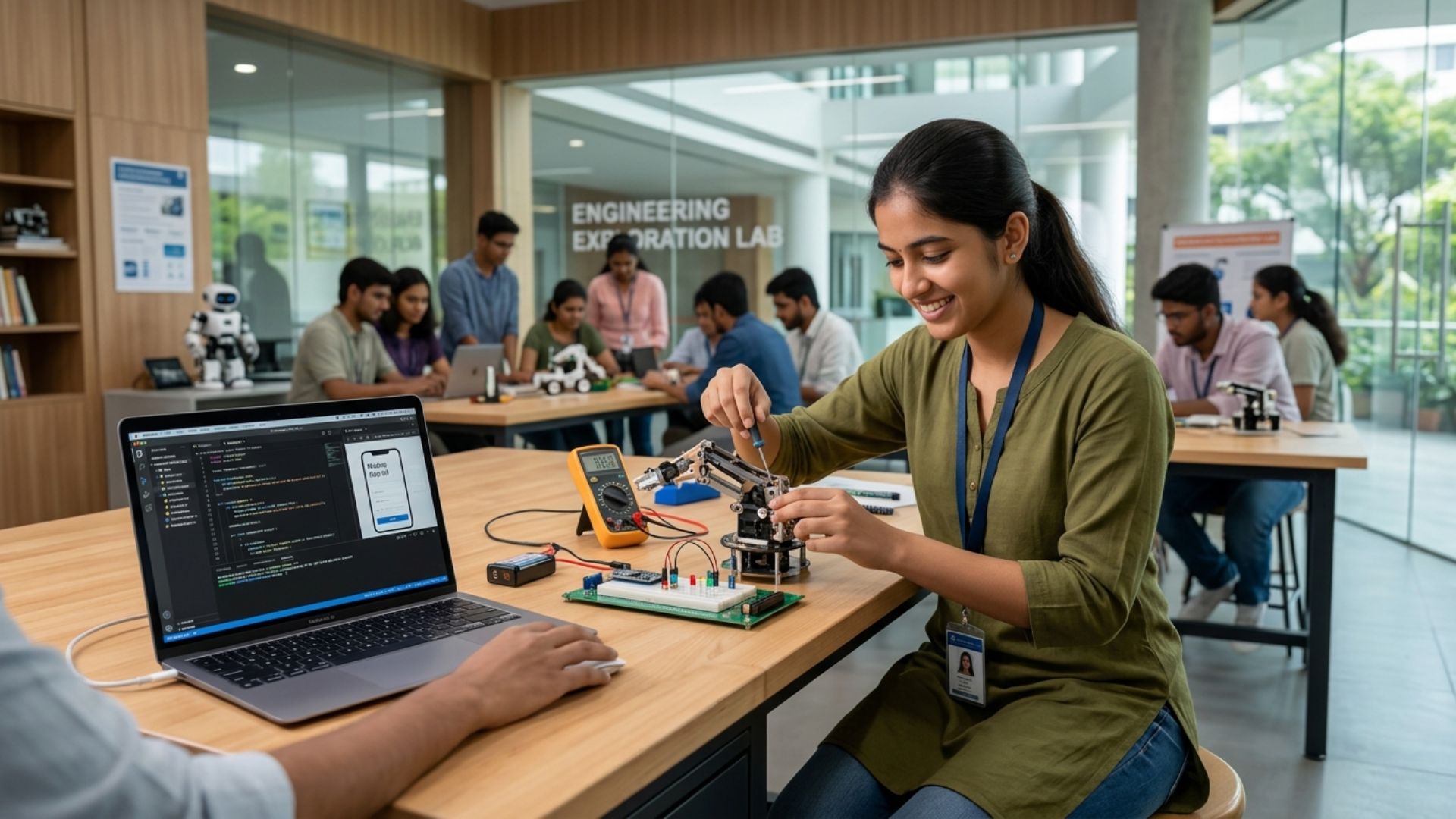
Try Small Experiments Before Deciding
An effective way to check interests is to engage in a brief activity before selecting a branch.
For CSE or IT, they can attempt a beginner coding course. Can develop a basic website, create a calculator or understand how apps are developed.
Students can take up the basics of Python programming for AI or Data Science. They can explore a simple data chart or discover how predictive models work at a very basic level.
For Electrical/ECE, students can learn or watch beginner introduction videos on Circuits, Sensors, Chips, IoT/Communication systems.
For Mechanical or Robotics, students may experiment with basic design tools or learn more about design elements of engines, machines, robotics and manufacturing.
For Civil Engineering, students can explore bridge design, City planning, basics of construction, sustainability and load-bearing structures.
Check If Your Interest Matches the Effort Needed
While a sense of interest is good, students also need to understand what the branch expects from them.
For example, a student may have a passion for the field of AI, but the branch requires expertise in maths, coding, data and logic. A student can enjoy Mechanical Engineering, but it will require some physics, design sense and problem-solving. A student might enjoy studying Electronics, but should be prepared to learn about circuits, signals and systems.
This does not mean that students have to be perfect before they select a branch. Engineering is supposed to be something that is learned. They should be realistic about whether they have the passion to expand the necessary skills for that career.
Check the Branch Curriculum Before Trusting Your Interest
There are students who select the particular branch according to their respective professions. Not checking on what they will learn. This may come as a disappointment later.
Students should consider the following before deciding to finalise a branch:
Subjects taught in the 1st and 2nd years
Core subjects throughout the programme
Laboratory work and practical exposure
Projects created by students
Internship opportunities
Potential employability routes defined by the branch
AI is much more than just using AI tools. It requires programming knowledge, maths, data, logic and fundamentals of computer science.
Robotics isn't all about robots. May involve mechanics, electronics, programming and control systems.
Civil Engineering is not only about construction sites. It includes structures, materials, surveying, design and planning.
For students looking to explore careers in computing, Scaler School of Technology offers a CS & AI programme that delves into Computer Science and AI through a learn by building approach and a future proof curriculum built and developed by 100+ tech leaders.
Relate Interest with the Work You Want Later
Students need not have a specific job title in Class 12. But they should consider what kinds of jobs they might be interested in.
Ask yourself:
Would I prefer doing work predominantly with software or digital products?
Is working with data, models and automation something I want to do?
Is it fun to work with hardware, circuits and devices?
Do I like machines, vehicles or physical systems?
Am I interested in buildings, infrastructure and plans?
This aids in relating interest to careers. Once they can relate it to something that they might enjoy doing, interest increases.
Do Not Ignore College and Programme Quality
Despite clear interest, the college environment can have an impact on the extent to which that interest grows.
Identical branches can be experienced differently in two colleges.
Students must look for faculty, curriculum, labs, projects, industry exposure, internships, placement support, and peer learning.
Students can be very interested in a branch, but a weak college support can, however, prevent learning.
Hence, don't compare only the fee, cut-off marks or brand name. They should check out how the programme is taught and delivered.
Use an Interest-Based Decision Checklist
Students can use this checklist before selecting a branch:
Am I interested in the problems solved by this branch?
Have I checked all the core subjects in the branch?
Have I tried a beginner activity, project or resource to get a brief understanding of this branch?
Am I familiar with the careers associated with this branch?
Am I taking this branch out of interest, not just for the salary or the trends?
Will I be able to stay consistent in this branch for 4 years?
Is there a learning support for this branch in the college?
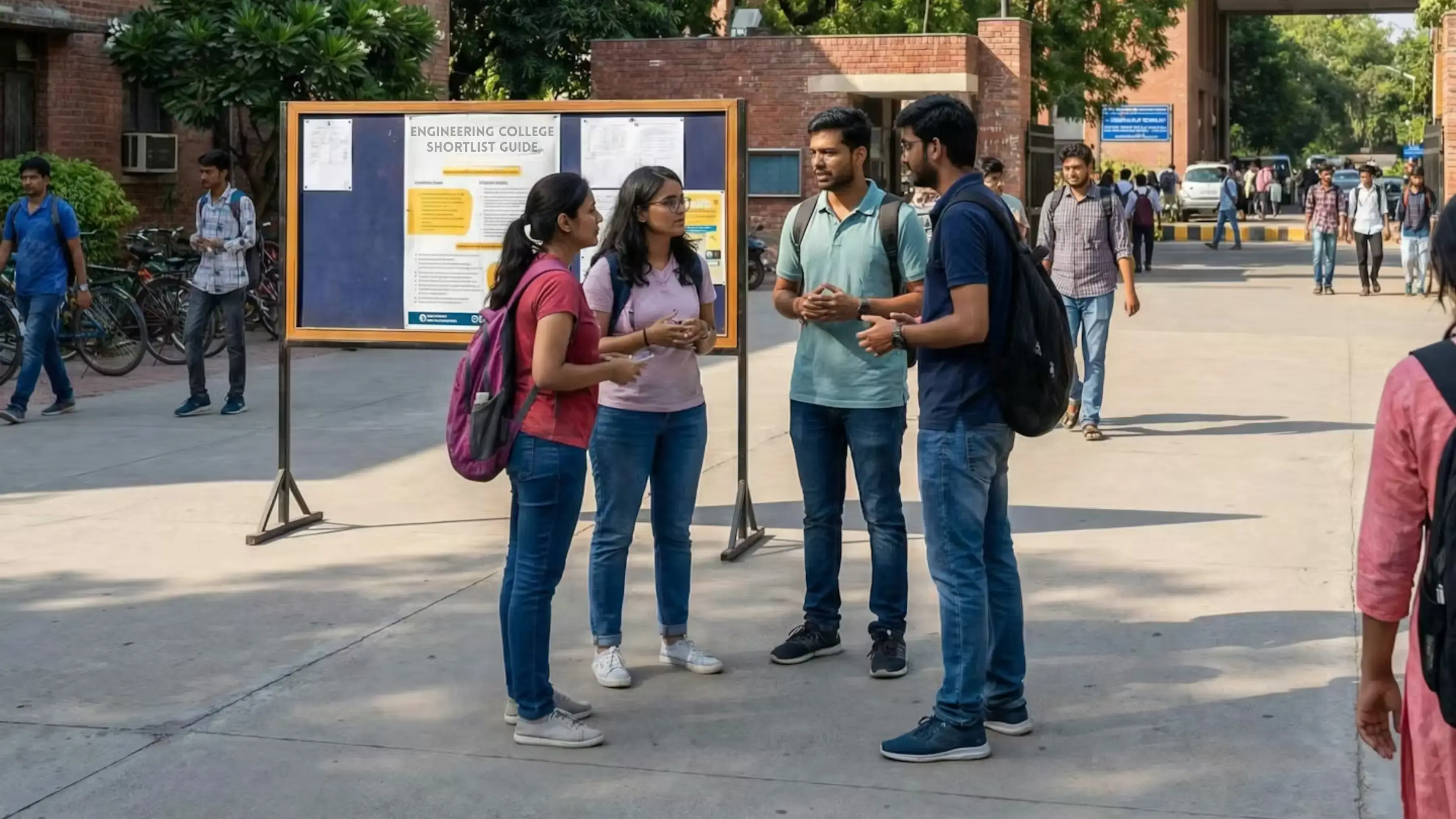
Once students have done some interest exploration, they should create a realistic engineering branch and college shortlist instead of depending only on a preferred option.
Conclusion
Selecting a branch of engineering based on interest is easy if students stop guessing and begin testing their curiosity.
Interest is a great starting point but must be supported by subjects, small activities, curriculum and college quality.
It is usually the right branch that enables students to be curious, explore subjects, and continue developing skills over the following 4 years.
FAQs
How to choose engineering branch based on interest?
Students are encouraged to find out what they like based about in subjects. They should check out the branch curriculum, try out some initial projects or resources, talk to senior students, and select a branch with career plans and college quality.
What to do if I am interested in two engineering branches?
Make comparisons between the two branches – subjects, projects, career pathway and college options.
How do I know if my interest in AI is real?
Typically, where there is interest in AI, there is interest in maths, programming, data, models and problem-solving. If a student is just interested in the trend, they should take time to investigate the basics before making a selection.
Can career counselling help in choosing an engineering branch?
Yes. Students can be guided about their interests and strengths through career counselling and aptitude tests. The final selection should contain curriculum checks, practical exposures, career goals, college quality, etc.