The idea that most CSE students need to write JEE Mains is mainly true for students aiming to get into government and semi-government engineering colleges in India. In fact, students looking for computer science engineering courses after 12th will find several top private engineering colleges that offer strong Computer Science and Engineering (CSE) programmes without requiring the candidate to depend only on JEE Mains.
However, getting admission to CSE colleges without JEE Mains does not always mean that they don’t have to give any entrance exam. In many cases, the entrance test is conducted by the university or the college that the student is applying to.
So instead of focusing only on where students can get in without JEE, they should also check whether the college offers a software career-focused learning environment and what type of admission process it follows.
Hence, for shortlisting the best CSE colleges in the private sector, a student needs to consider not only the colleges where they can get admission without JEE Mains, but also whether the selected college has industry-aligned CSE courses, a good curriculum for software careers and an appropriate admission route.
How to Compare the Best Private Colleges for CSE
Unlike many other courses, when we compare the best private colleges for CSE, the college name alone is not enough to conclude which option is better. One must compare the colleges on the basis of the following parameters: curriculum, coding culture, practical knowledge, projects, internships, placements, roles offered, fees, credibility and career growth after 4 years of CSE education.
Students who are comparing broader private CSE options can read this guide on best private colleges in India for Computer Science .
Instead of asking the more common question of “Which college is popular?”A better question for a CSE-focused student would be to find out which college will help him or her develop strong software, computing and problem-solving skills over the 4 years of college.
A good private CSE-focused college, especially when compared with other software engineering colleges in India, would impart in-depth knowledge to students regarding key topics of study like programming, data structures, algorithms, databases and software development. Also, students should be able to put their coding skills to use by working on interesting projects that help reinforce what they have studied in college. A strong coding culture is also very important, and there should be ample opportunities for students to prepare for technical interviews, real-life software development scenarios and other project-based work.
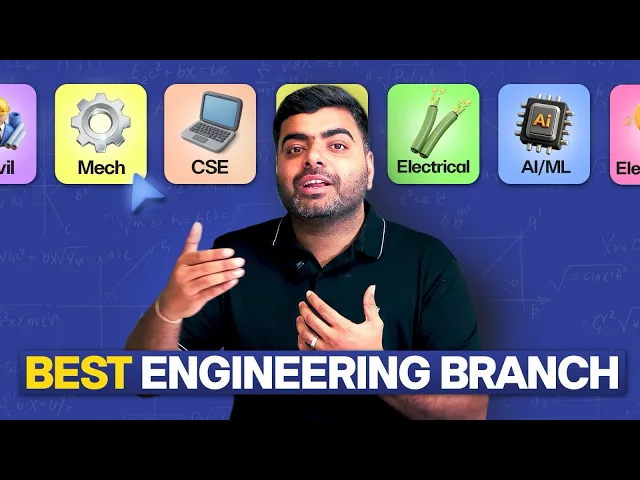
Students who are still deciding whether CSE is the right branch for them can also watch this video before finalising their college options.
The Engineering Branch Mistake Everyone Makes :
Top Private CSE Colleges Without JEE Mains
While selecting a private college beyond JEE Mains for studying Computer Science & Engineering, students must know more about the college than just its name. Also, there are engineering colleges that hold their own entrance test, and some colleges even provide more than one way of getting into the college. There are also tech-focused institutions that provide computer science focused education outside of the traditional engineering college route.
Students can refer to a detailed article on other engineering exams other than JEE and their corresponding application dates.
Here are some top private CSE colleges without JEE Mains for students’ reference and comparison:
BITS Pilani
BITS Pilani is one of the leading private engineering institutions in India for students who are interested in studying Computer Science Engineering and have a strong academic track record.
Entrance exam to prepare for: BITSAT
VIT
VIT is one of the well-known engineering colleges that offers many CSE and CSE-related programs across its campuses in India.
Entrance exam to prepare for: VITEEE
Scaler School of Technology
The Scaler School of Technology is another private CSE institution option for someone interested in a future-ready Computer Science education with AI deeply integrated into the curriculum from Day 1. With a hands-on learning approach, the CS & AI programme is a 4-year residential campus program in Bangalore.
Entrance exam to prepare for: NSET
SRM Institute of Science and Technology
SRM Institute of Science and Technology is a private engineering university in India with a large engineering ecosystem and multiple campuses. It has strong student interest in various Computer Science programs as well as other CSE-related programs offered at SRMIST campuses.
Entrance exam to prepare for: SRMJEEE
Manipal Institute of Technology
Manipal Institute of Technology has an established reputation as an engineering college, and many students aspiring to get into Computer Science look at MIT for the flexibility it provides in terms of various Computer Science and specialisation options within a well-established academic setup.
Entrance exam to prepare for: MET
How CSE-Focused Aspirants Should Compare These Options
When comparing options, students should look at:
Curriculum quality: CSE programmes should have a good foundation in programming, data structures, algorithms, databases, systems etc. Students should also check the number of projects and how classroom theory is connected to industry practice.
Study Environment: Students should try to understand how CSE students study in that particular CSE department. The question here is whether there is enough support for students to write code, complete projects, organise hackathons, apply for internships and generally get industry exposure.
College’s Placement Quality: While it is good to see a large number of students placed in top companies, it is also important to know the software roles that the college’s students are placed in. The number of students getting internships in good companies and other career opportunities provided by the college is also important.
Specialisations & Flexibility: This criterion is important for CSE-focused aspirants who wish to specialise in a particular area of Computer Science & Engineering or have diverse interests. While comparing CSE-focused colleges, they must take into account the specialisations that the college offers. The college may offer options like AI, Machine Learning, Data Science, Cybersecurity or Software Engineering, among others.
Admission Process: Students should check whether they can apply through a single entrance exam, through multiple entrance exams for engineering colleges, or through colleges that give more than one admission route.
Fees and ROI: Students should compare the total cost of studying at the college with the quality of education, projects, internships and placement opportunities they receive. Even college with high fees can be a good option if the industry-aligned learning, internships and placements justify the cost. At the same time, lower-fee colleges can also be a good option if they provide good education, internships and placement opportunities.
Accreditation and Credibility: Students should also look at the approval, accreditation and overall credibility of the college. They should also check the college’s institutional structure and academic credibility. In many cases, a well-known college may not provide the best learning experience, while a less-known college may provide good education.
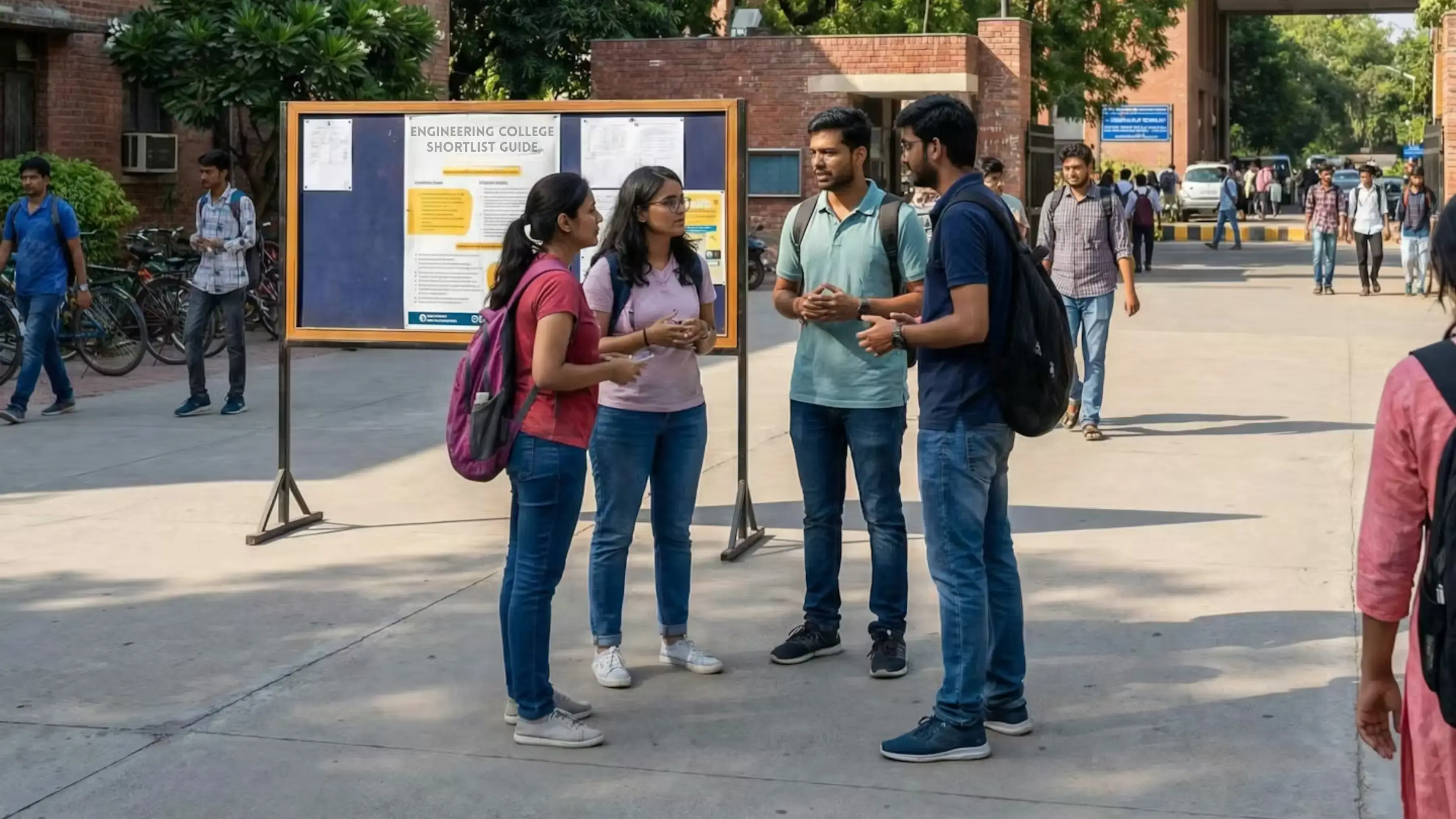
A good shortlist should match the student’s interests, entrance exam preparation level, budget and long-term goals. Students can go through engineering college shortlist guides to compare options in a more structured way.
Software Engineering Career Fit: What CSE Students Should Check
CSE students who are comparing software engineering colleges in India for careers in areas like software, product, AI, data and cloud should check how a college prepares them through strong programming fundamentals, data structures, algorithms, databases, software development skills and project experience.
A good CSE programme will also equip students for coding interviews, internships, real-life projects and technical problem-solving.
That is why it is very important for students to go through a career-fit checklist while searching for the best private colleges for CSE courses. Students should compare all options, make a detailed shortlist of possible colleges, and understand the different admission processes.
It is also important to confirm whether the college helps its students become good software developers, problem-solvers and project handlers, while also preparing them for various technical roles in the industry.
Engineering Mistakes Students Can Avoid
While exploring private CSE colleges beyond JEE Mains, students are likely to make a few avoidable mistakes that can affect their shortlist as well as their final decision.
Some common mistakes include:
Many students assume that colleges not using JEE are relatively easier to get into. The fact, however, is that most of them have their own entrance tests or modes of admission.
Choosing a college on the basis of its popularity amongst other students rather than matching it with the student’s goals, study style, budget, etc.
Being too focused on the names of famous colleges and not researching what the Computer Science Engineering curriculum looks like, or what scope there is for practical learning and computing projects.
Only looking at headline placement numbers rather than finding out the roles students are getting after graduation, the quality of internships provided to students, and the software engineering opportunities available.
Being too dependent on a single test or college for admissions.
Conclusion
Students interested in studying CSE through private institutions should consider the possibility of getting into a good college without relying solely on their JEE Main scores. They should look for good colleges that offer quality computing education and also understand how such colleges admit students.
Some colleges follow a different model and hold their own entrance test, while others may offer different paths to study CSE. Some colleges may be better for students who are interested in software-focused courses, while some colleges focus on AI courses and provide better practical learning to students.
A thoughtful choice among software engineering colleges in India is not just about entering a college. It is about choosing a college that will support a student’s software engineering and computing career.
FAQs
Can I get into a good CSE college without JEE Mains?
Yes, it is possible to get into a good private CSE option without depending only on JEE Mains. Private engineering colleges have their own entrance exams or admission pathways.
Which are the best private colleges for CSE without JEE?
It depends. The best college is one that suits your interests and learning goals. It can be based on various parameters such as curriculum, coding exposure, projects, internships, admission process, specialisations, fees and the overall learning environment of the college.
What admission routes are available for top CSE colleges without JEE?
There are numerous CSE colleges that don’t use JEE scores as the only admission criteria. Some colleges have their own entrance exams, while some have other criteria for selecting students. The admission process for colleges that don’t depend only on JEE may include entrance exams like BITSAT, VITEEE, SRMJEEE, MET, NSET, etc.
How should students compare the best private colleges for CSE?
When comparing the best private CSE colleges, it is best to look at the CSE curriculum, coding culture, amount of project work, internships, roles offered to final-year students through campus recruitment and the corresponding fees of the colleges. On the basis of these criteria, the best college for a CSE student would be one that can support the student’s CSE goals and help them achieve long-term career goals in the field of CSE and software.