MBA for Professionals
MBA for Entrepreneurs (2026): Do You Really Need One to Build a Company?
Do entrepreneurs really need an MBA? This guide examines when an MBA can help founders access capital, credibility, business skills, mentors, and investor networks—and when it is better to invest that time and money directly into a venture. It also compares full-time, executive, accelerator, and self-learning routes to help aspiring founders choose the right path.
Team SSB
Almost every guide to an MBA for entrepreneurs starts by assuming that MBA is a good idea. Plenty of founders, and a great deal of hard-won advice, would tell you the opposite: skip the degree, put the money into the business, and let the building teach you. So the real question here is not what an MBA covers. It is whether you, with your idea and your situation, actually need one.
The answer splits cleanly on what you are missing. If you have an idea and the nerve to start, an MBA is rarely the fastest route to a company. If you are missing capital, credibility or a network, especially in a regulated or capital-heavy field, that is where it starts to earn its price.
This guide makes the honest case on both sides, weighs the MBA against simply starting up, and looks at what actually moves the needle for a founder. It also looks at Scaler School of Business in Bengaluru, an option built around starting real businesses rather than studying them from a case sheet.
Short answer. Do you need an MBA to be an entrepreneur? No. Many successful founders never did one, and if you already have an idea with some traction, the money and the two years are usually better spent building. An MBA earns its cost when you need the network, capital access, credibility, or structured business skills you cannot get faster and cheaper another way. |
How an MBA for Entrepreneurs Actually Helps Founders
An MBA does not make you a founder. But for the right person, it removes specific obstacles to becoming one. Here is what it genuinely offers, and where it stops.
The network: co-founders, investors and mentors
This is the lever founders rate highest. A good program drops you into a dense pool of potential co-founders, a warm line to investors and advisors, and an alumni base you can call on for years. You can build that network alone. It is just slower.
Incubators, accelerators and seed money
Most strong programs run an incubator or accelerator, often with a seed fund and lab space, so you can pitch, test and stress-test an idea with mentorship and a little capital before you bet your savings on it.
Credibility with investors and clients
A respected program buys early trust, which matters most when you are raising money or selling to large enterprises in a regulated or capital-heavy field.
The business skills first-time founders lack
Finance, accounting, legal and intellectual property, unit economics, go-to-market: the unglamorous things that sink first ventures. An MBA gives you a structured version of them in one place.
A safety net if the venture stalls
If your venture does not work, the same degree opens product, venture capital, consulting and corporate roles.
What it will not give you. Grit, traction, or a product. An MBA can even work against a founder: business school tends to attract and reward risk-aversion, and most graduates never start a company at all, because the pull of a high salary in consulting or finance is hard to refuse. Go in clear-eyed about that. |
Do You Even Need an MBA to Be an Entrepreneur?
The honest answer is no, you do not need one, and for many founders it is the wrong move. But it is the right move for a specific set of people.
Lean toward an MBA when:
You have no business background and a technical or creative idea, and need the financial, legal and operating fundamentals fast.
You are building in a regulated or capital-heavy field, such as fintech, biotech or enterprise SaaS, where credibility and investor access gate everything.
You want accelerator, mentor and investor access you cannot assemble on your own.
You value the safety net of strong corporate options if the venture does not work.
Skip it, and just start, when:
You already have an idea with traction, and the tuition would otherwise fund the business.
Speed matters more than structure, and you would rather learn by building.
The only gap is a specific skill you can pick up on the job or through a cheap online course.
Hear the strongest argument against. Founders who have built real companies, including some who teach in MBA entrepreneurship classes, will tell you plainly that if your goal is to start a business, the degree is not the way: the debt holds you back, and the network is faster and cheaper to build on your own. They have a point. The rebuttal is narrow but real. In capital-heavy or regulated industries, and for people with no business grounding, the network, credibility and structured skills can be worth more than the time and money they cost. Some of the world’s best-known founders, including Steve Jobs and Jeff Bezos, built their companies without an MBA. An MBA is not universal among major-company leaders either: Fortune found that approximately 40% of Fortune 1000 CEOs held one, meaning most did not. Treat the MBA as one possible tool, not a rite of passage.
MBA vs Just Starting Up, and the Other Routes In
For a founder, the MBA competes with cheaper, faster routes. Here is the honest comparison.
Route | Rough cost and time | Best for | Main risk |
|---|---|---|---|
Just start the business | Low, now | Anyone with an idea and some traction | No structure, network or safety net |
Full-time MBA | High, ~2 years | No business background; capital-heavy or regulated plays | Opportunity cost; the pull away from founding |
Accelerator / incubator | Low to mid, months | Founders with an MVP wanting capital and mentorship | Equity given up; selective entry |
Online courses and exec-ed | Low, flexible | Filling a specific skill gap cheaply | No network, credential or capital |
Part-time / executive MBA while building | Mid, alongside work | Founders already running something | Time split between school and venture |
Buy a running business | Varies | Operators wanting a head start | Capital upfront; due-diligence risk |
The pattern. Idea plus traction, just start. Missing capital, credibility or a network in a hard industry, the MBA can earn its place. Already building something, a part-time or executive MBA lets you use the venture as your coursework. Only a skill gap, take a cheap course and keep your money in the business.
What You Learn: Founder Skills and the Right Specialization
A founder-focused MBA is less about general management and more about turning an idea into a company. The parts that matter most for building:
Validation and venture creation: testing whether an idea is real before you commit.
Startup finance and fundraising: unit economics, cap tables, and how capital actually gets raised.
Legal structuring and intellectual property: entities, contracts, and protecting what you build.
Building an MVP and go-to-market: from first version to first customers.
Co-founder equity: splitting ownership, structuring vesting, and hiring the early team.
Scaling and exits: growing past the first wins, and what comes after.
Pick the specialization that closes your gap, not the one with the nicest name. Entrepreneurship suits overall venture-building, go-to-market and raising capital. Finance suits capital-heavy startups where modelling and investor relations dominate. A technology-focused MBA suits SaaS and tech founders bridging product and business. The syllabus is a foundation, not a guarantee. You learn to run a business by running one.
Where It Can Take You: Founding, and the Safety Net
India is a good place to be building right now. As of early 2026, the Government of India described it as the world’s third-largest startup ecosystem, with more than 200,000 DPIIT-recognised startups and nearly 125 active unicorns.
Founding is the goal, but a founder-focused MBA also opens a wide safety net if a venture stalls or you want to learn under someone else first:
Co-founder or venture builder roles, helping launch and scale other startups.
Chief operating or chief executive tracks at growing companies.
Venture capital and private equity, evaluating and backing founders.
Product management, corporate intrapreneurship, and strategy consulting.
Angel investing and advisory, once you have built something of your own.
What an MBA Costs a Founder, and the Real Return
Read the economics differently as a founder. The headline salary numbers attached to entrepreneurship MBAs describe the jobs graduates take when they do not start a company. They are a safety-net figure, not a founder’s income, so do not let them frame the decision.
The cost. A top global MBA can run from roughly US$130,000 to US$200,000 once living costs are counted. In India, flagship programs at institutions such as IIM Ahmedabad, IIM Bangalore and ISB cost roughly around ₹26 lakh to ₹39 lakh, depending on the program and what the published fee includes. Then add the income you forgo and the building time you give up over one or two years. For a founder, that tuition is also capital that could have gone straight into the business.
The return, reframed. What you get back is not a paycheck. It is the network, the capital access, the credibility, the structured skills, and the safety net if the venture does not work. So the honest test is simple: would that money and that time do more inside your business than inside a classroom? For a founder with traction, often not. For someone missing capital and credibility in a hard industry, sometimes yes. Answer that question for your own situation, and the decision usually makes itself.
What to Look for in a Program Built for Founders
If you do decide a program is worth it, judge it on what helps you build, not on its brand or its ranking. The assets that actually matter to a founder:
A real incubator or accelerator, not just a club: a place to pitch, prototype and get mentored on a live idea.
A seed fund or capital access, so you can test an idea without first betting your own savings.
A builder peer group and founder network, the potential co-founders and early hires you will actually need.
Hands-on venture-building in the curriculum, live projects, real customers, a demo day, not only case studies.
Proximity to a startup and funding ecosystem, so investors, mentors and talent are within reach.
Then match the format to where you are. Full-time for a complete immersion, one-year programs for speed, part-time or executive to build while you study, and online or executive education when you only need the skills. The right format depends on whether you are building now or preparing to.
Most MBA Programs Teach Entrepreneurship. SSB Makes You Do It.
Most programs teach entrepreneurship and hope you start something later. Scaler School of Business is built the other way around: you start real businesses while you are there. For a founder, that is the difference that matters. It is an 18-month, full-time, on-campus PGP in Management and Technology in Bengaluru, admitted on the strength of your profile, with no CAT or GMAT.
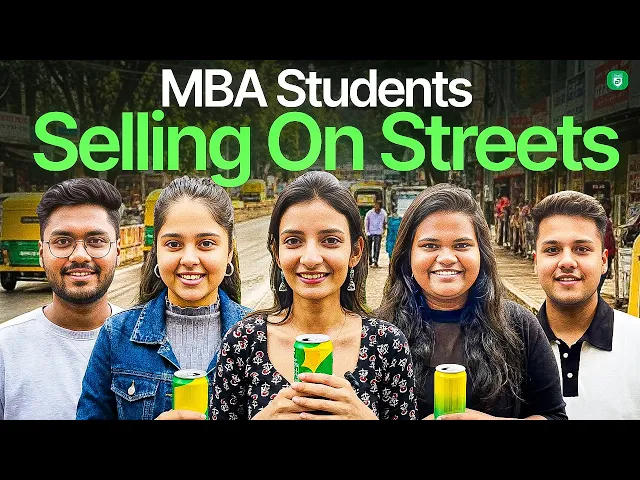
MBA Students Sell 300+ Prebiotic Cans on Bangalore streets | First day at MBA
What that looks like for someone who wants to build:
You run real businesses, not case studies. A Direct-to-Consumer challenge where teams have generated ₹15 lakh to ₹20 lakh in revenue in six weeks on real startup capital, and a venture track that takes an idea to paying users.
You can raise real money while still enrolled. 6 startup teams received pre-seed funding from VCs while still in the program.
You build inside a live startup ecosystem. The Scaler Innovation Lab sits on the same campus as SSB with more than ten funded startups operating in the same building, collectively valued at over $30 million and having generated over $500,000 in revenue. Students work with and inside these startups from early on: real briefs, real stakeholders, real stakes not a simulation of what startup work feels like.
You ship products with real users. Students build three AI products, work hands-on with more than 25 AI tools, and run live go-to-market work with brands including Mokobara, Quenzy and Practo.
You learn from operators and founder-backers. SSB was co-founded by Anshuman Singh (formerly Meta) and Abhimanyu Saxena (IIT Roorkee), and is backed by founders including Deepinder Goyal of Zomato, Kunal Shah of CRED and Binny Bansal of Flipkart, with working operators on the faculty.
Who it tends to fit. The builder who wants an ecosystem, peers and investor access more than a certificate. The early-stage founder who wants capital and mentorship to push an idea further. And the technical person who can build a product but needs the business, funding and network side around it.
Most programs put the case studies first and hope the founding follows. SSB reverses the sequence: you run businesses, raise real money, and ship products with paying users before you graduate. The credential comes with it. But for a founder, it's the least interesting thing you leave with.
One thing SSB says plainly. It awards a PGP certificate, not a UGC degree, and it sits outside the AICTE and UGC frameworks by design, which is what lets it run like an accelerator and update its curriculum fast. If you specifically need a UGC-recognised degree, it will tell you it is not the right fit. For a founder who cares about what they can build and who they can build it with, that trade is usually an easy one.

How to Get Started, With or Without the MBA
If you skip the MBA:
Validate the idea and get early traction before anything else.
Join an accelerator or incubator for capital, mentorship and a peer group.
Build your mentor and investor network directly, founder by founder.
Learn the specific skills your venture needs, on the job or through targeted online courses.
If you do a program:
Choose it for the incubator, seed fund and network, not the lectures.
Use the venture electives and labs to start a real company while you are enrolled.
Treat it as an accelerator that also hands you a credential, and use every part of it.
On eligibility, briefly. Most MBAs want a bachelor’s degree, usually two or more years of work experience, and a GMAT or GRE score. Profile-based routes with no CAT or GMAT do exist, Scaler School of Business above is one, where your idea, work and initiative are weighed instead of a single exam.
How to Decide: A Founder’s Framework
Run your situation through these, in order:
Do you already have an idea with traction? If yes, lean toward just starting.
Are you missing capital, credibility or a network in a hard industry? That is where a program earns its place.
Could you build while studying part-time, instead of stopping to study?
Which specialization closes your specific gap, entrepreneurship, finance or technology?
Does the program actually help you build, with an incubator, a seed fund and a founder network?
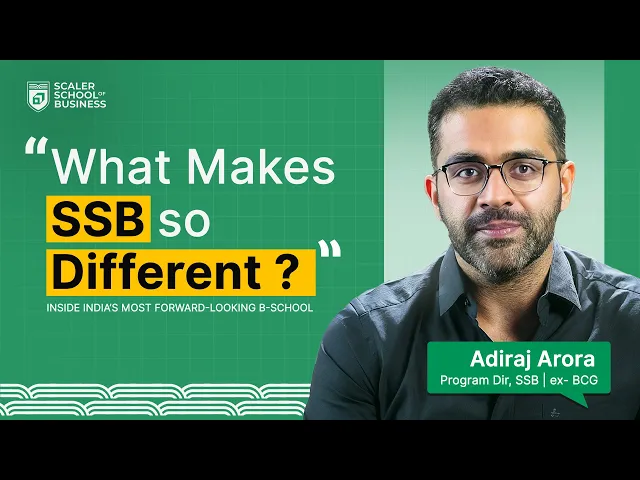
Why Choose Scaler School of Business? HONEST Review & Benefits
Common Mistakes to Avoid
Treating the MBA as a substitute for traction. It is not.
Choosing a program on brand instead of its incubator, seed fund and network.
Getting pulled into the consulting or finance rat race and never founding at all.
Taking on debt that starves the very business you wanted to start.
Expecting the degree to supply grit, an idea, or a product.
Paying for a full degree when a cheap course would close your only real gap.
Frequently Asked Questions
Q1. Do you need an MBA to be an entrepreneur?
A: No, and the founders who will tell you this most plainly are often the ones teaching in MBA entrepreneurship classes. If you have an idea and the nerve to start, the MBA is rarely the fastest route to a company. Where it earns its place is when you're missing something specific: capital access, credibility in a regulated industry, or a network you can't assemble faster on your own. Missing those things, it can be worth it. Missing only an idea or the will to start, it won't fix either.
Q2. Is an MBA worth it for entrepreneurs?
A: Sometimes, and the honest answer depends on what you're actually buying. If you're building in fintech, biotech, or enterprise SaaS where credibility and investor access gate everything early, the network and the signal can be worth more than the cost. If you already have traction and the tuition would otherwise go straight into the business, it usually doesn't. The question isn't whether the MBA is good. It's whether it's the best use of that money and those two years for your specific situation.
Q3. Which MBA is best for entrepreneurs?
A: Judge a program on its incubator, seed fund, founder network and hands-on venture-building, not its brand. The best one for you is the one that helps you actually build.
Q4. Can I do an MBA while running my business?
A: Yes, and it's often the smartest version of the degree for a founder. A part-time or executive program lets you use your venture as your live coursework, the finance module maps to your cap table, the go-to-market track maps to your next product launch. You're not studying business in the abstract; you're studying your own business with structured support around it. The trade-off is time: you're splitting focus between building and studying, and neither gets your full attention.
Q5. Can I get into an entrepreneurship MBA without work experience?
A: Some programs take strong freshers, especially profile-based ones that weigh your idea and initiative over a test score.
Q6. Which specialization is best, entrepreneurship, finance or a tech MBA?
A: Pick the one that closes your gap: entrepreneurship for venture-building, finance for capital-heavy startups, and a technology MBA for SaaS and tech founders.
Q7. What is the real ROI of an MBA for a founder?
A: Not a salary, that number describes what graduates earn when they don't start a company, which is the safety net, not the goal. The real return is the network you can call on for co-founders and early hires, the investor relationships that make a first raise less cold, the credibility that gets you into rooms you couldn't get into before, and the structured business fundamentals that stop you making the expensive first-timer mistakes. Weigh that against the tuition and the building time you give up. For most founders with traction, the time does more work inside the business. For someone missing capital and credibility in a hard industry, it can tip the other way.
Q8. Do I need an MBA to raise funding or become a CEO?
A: No. The founders raising the most interesting rounds right now are mostly people who built something people wanted, not people who wrote a great business school essay about wanting to build something. An MBA can help with early credibility especially in regulated industries where institutional investors look for it, but a track record moves faster and travels further. If you have neither yet, an MBA buys you time and structure while you build one. If you already have traction, use the traction.
The Bottom Line
You do not need an MBA to be an entrepreneur. It earns its place only when you are missing something specific, capital, credibility, or a network, and not when you are missing an idea or the will to start. For most founders with traction, the money and the months build more inside the business than inside a classroom. Be honest about which founder you are, and the answer tends to follow.
And if you want the structure and the network but would rather spend the time starting real businesses than studying them, that is exactly what Scaler School of Business is built for.
Non-IIM MBA
Top Non-IIM MBA Colleges in Bangalore (2026): Fees, Placements & How to Choose
5 min. read
MBA for Professionals
Is an MBA Worth It for Working Professionals? An Honest 2026 Guide
5 min. read

MBA for Engineers
MBA After B.Tech (2026): Eligibility, Specializations, Salary & Is It Worth It?
5 min. read
MBA for Engineers
MBA After Engineering (2026): Eligibility, Specializations, Salary & Is It Worth It?
5 min. read