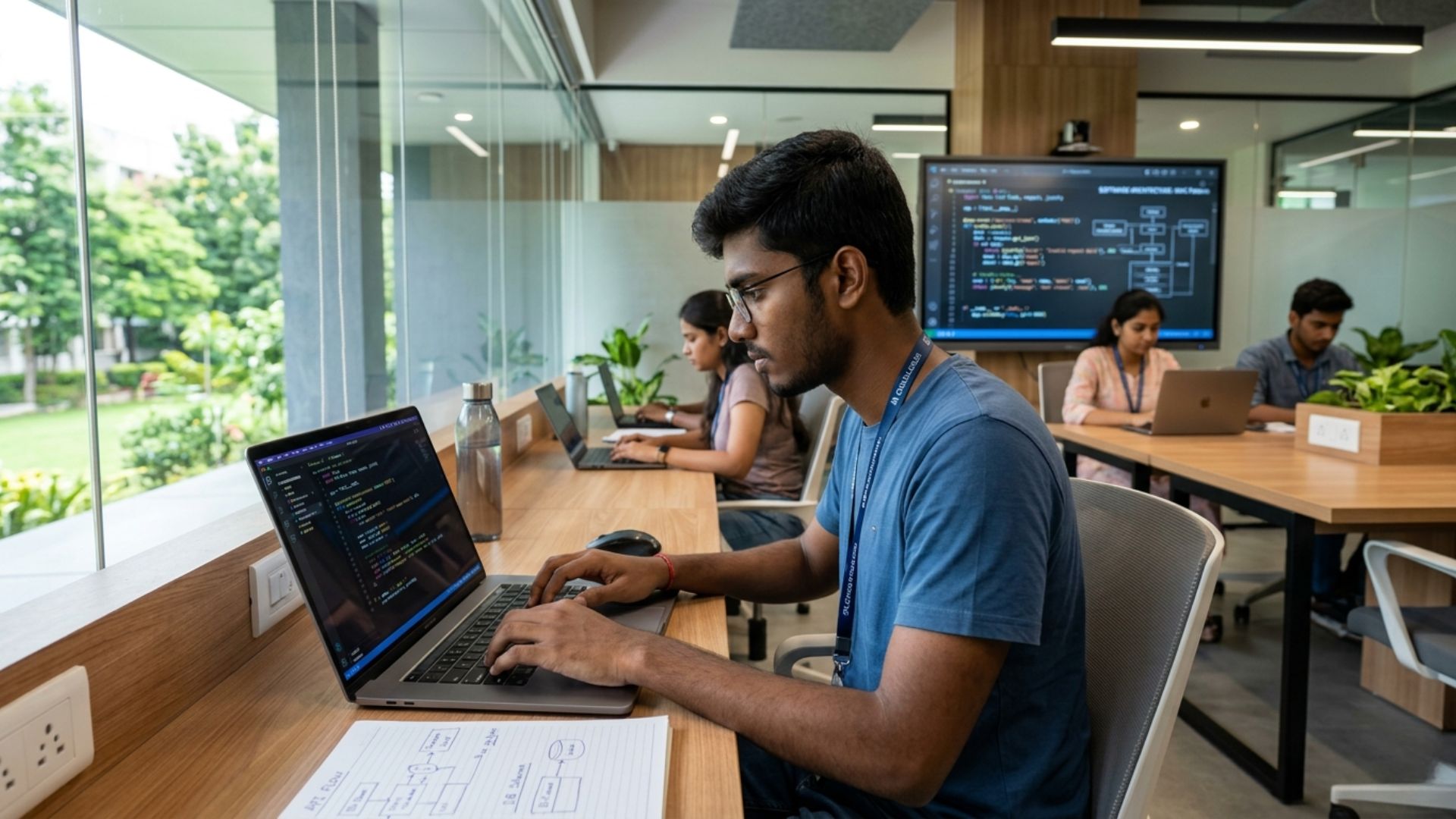
Students searching for a software engineering degree in India are not just looking for a course or a degree with coding subjects. They are really trying to understand what kind of degree can prepare them for how software is built today.
That matters because software work has changed. That is important since the use of software has evolved. It is no longer about writing code to do assignments or to master one language. In modern software development, APIs, cloud environments, testing pipelines, security layers, product workflows and, more recently, AI-assisted development are all worked on by modern software teams. Even a degree that ignores this change can still look fine on paper, and leave students unprepared to work with software in reality.
Strong Computing Fundamentals Still Matter
A modern software engineering degree should begin with strong computing fundamentals. Even though software workflows have changed, this part remains essential.
Students still need depth in core areas such as:
Programming
Data structures and algorithms
Databases
Operating systems
Computer networks
Software design
Problem-solving fundamentals
Students who build this base well usually adapt more easily when tools, frameworks, and industry expectations change.
Software Engineering Should Go Beyond Coding
A software engineering degree should not feel like a coding course with a few extra theory papers.
It should teach how software is planned, built, tested, reviewed, deployed, and improved over time. In other words, students need to understand not just how to write code, but how software is developed and managed as it grows.
A stronger degree usually includes exposure to:
Requirement analysis
Software design and architecture
Version control
Debugging
Code reviews
Testing
Documentation
Deployment and monitoring
That is what separates software engineering from learning programming in isolation. Software engineering is not only about writing code. It is also about making that code usable, reliable, maintainable, and ready for change.
Team-Based Development Should Be Part of the Degree
Many students still graduate after doing most of their technical work alone. That creates a gap.
Real software work happens in teams. Developers work with changing requirements, shared repositories, deadlines, reviews, rollbacks, and product constraints. A degree should expose students to this environment before they graduate.
That does not mean every classroom project must become an industry simulation. But students should at least have ample opportunities to work in teams, divide work sensibly, review each other’s code, and understand what collaborative development feels like.
A degree that teaches coding in isolation but does not teach collaborative software development is leaving out a major part of the discipline.
Software Quality and Maintainability Matter
A strong software engineering degree should introduce quality-related thinking from the beginning, not leave it for students to learn much later through trial and error.
Students should graduate with a working understanding of:
Software testing
Verification and validation
Debugging practices
Code readability
Maintainability
Reliability
Secure development basics
This matters because software work is not judged only by whether code produces an output. It is also judged by how well that software holds up when teams maintain it, update it, debug it, and build on it over time.
The Degree Should Reflect the Modern Software Stack
A software engineering degree in India today should not remain limited to classroom theory plus basic lab work.
Students do not need to master every tool during college, but they should at least understand the environment in which modern software is built. That includes some exposure to:
APIs and backend systems
Cloud basics
Deployment workflows
Security practices
Distributed systems thinking
Modern developer tools
Without this, the degree starts to feel disconnected from the way software teams actually operate.
A software engineering degree does not need to chase every new framework. But it should still give students enough exposure to understand the environments, tools, and workflows that shape modern software development.
AI Awareness Should Be Part of Modern Software Education
AI tools are also entering the development process of software, code inspection, and testing. That does not reduce the importance of strong fundamentals. It increases it, because students need enough technical depth to recognise where AI helps, where it falls short, and where errors can quietly enter the workflow.
A modern software engineering degree should treat AI-assisted development as part of present-day software practice. Students should understand how these tools can support speed and productivity, but also why verification, testing, and critical thinking remain essential.
This also explains why some newer-age programs are introducing AI as part of the learning experience from the beginning. Scaler School of Technology CS & AI Programme offers a real-world curriculum with AI integrated from the start and a strong learn-by-building approach.
Using AI well is not the same as relying on it blindly. In software engineering, the real skill lies in reviewing output, improving it, testing it, and understanding the logic behind it.
Project Work Should Carry Real Weight
A strong software engineering degree should ensure that students graduate with real project experience, not just completed coursework.
A good program should include meaningful project work through:
Team projects
capstone work
Product-style assignments
Internships
Deployment-oriented work
Portfolio-worthy builds
Projects matter because they expose students to the less predictable side of software work, including changing requirements, broken assumptions, debugging pressure, unfinished ideas, and repeated revision. These are the experiences that help bridge the gap between classroom learning and real engineering work.
This is also why build-first learning models are becoming more relevant. Scaler School of Technology, for example, places strong emphasis on hands-on learning, projects, and industry immersion, which aligns with the kind of practical software exposure many students now expect from modern tech education.
Industry Exposure Should Strengthen the Learning Experience
A good software engineering degree or programme should connect students to real industry practice without reducing the depth of the course itself.
Students should get exposure to internships, product thinking, current tools, and practical workflows. But these should add to the learning, not replace core engineering concepts. A course built only around short-term market needs may look useful in the beginning, but it can become outdated quickly as tools and expectations change.
A stronger degree usually combines:
Solid fundamentals
Real software workflow
Modern tooling awareness
Project-based learning
Practical industry exposure
Such a balance can assist the students to remain relevant long after the initial role.
The Degree Should Prepare Students for Real Software Work
A strong software engineering degree india should do more than support early placements. It should prepare students to keep learning, building, and adapting as software work continues to evolve.
By the end of the degree, students should be able to:
Understand core computing concepts
Work effectively in teams
Write and review code responsibly
Build and test software properly
Understand modern software environments
Adapt to changing tools and workflows
Conclusion
A software engineering degree or programme in India should no longer be judged only by coding subjects, lab work, or placement claims. It should be judged by whether it reflects how software is actually built today.
The strongest programmes will still take fundamentals seriously, while also including engineering workflow, quality thinking, modern software exposure, AI awareness, and project-heavy learning. That is what makes a degree valuable not just for the first job, but for long-term growth in software careers.
FAQs
1. What should students look for in a software engineering degree in India?
Students should look for strong computing fundamentals, software engineering workflow, testing and quality practices, project-heavy learning, and exposure to modern software environments such as APIs, cloud basics, and AI-assisted development.
2. Is a software engineering degree different from just learning to code?
Yes. Coding is only one part of software engineering. A proper degree should also cover design, testing, collaboration, debugging, documentation, deployment, and long-term software maintenance.
3. Should a software engineering degree in India include AI exposure today?
Yes. Students do not need to specialise in AI during college, but a modern degree should not ignore AI-assisted workflows, because they are becoming part of real software practice.