



If you’re a student who just completed Class 12 and dreams of becoming a data scientist, good news, you don’t need to wait until a postgraduate degree to start your journey. With the right educational choices, skills, and real-world exposure, you can set yourself up for a high-growth career in data science right after school.
In this guide, we’ll walk you through everything you need to know to become a data scientist after 12th from course options and skills to certifications, projects, and job opportunities.
1. Start with the Right Undergraduate Course
After completing Class 12 (preferably in Science or Commerce with Math), your first major decision is selecting a suitable undergraduate course. Here are some strong options to build your data science foundation:
1.1. B.Tech/B.E. in Data Science, CSE, IT, or AI
- Duration: 4 years
- Covers: Programming, data structures, statistics, machine learning, cloud computing
- Best for: Students with strong mathematical aptitude and interest in coding
Top colleges:
- IIT Madras (BS in Data Science)
- IIIT Hyderabad
- BITS Pilani
- VIT Vellore
- SRM University
1.2. B.Sc. in Data Science / Statistics / Mathematics
- Duration: 3 years
- Focuses more on theory and analytics
- Best for: Students interested in research, data modeling, and quantitative analysis
Top colleges:
- ISI Kolkata
- St. Xavier’s Mumbai
- Christ University Bengaluru
- Delhi University (Kirori Mal, Hindu)
1.3. BCA (Bachelor of Computer Applications) with Data Science electives
- Duration: 3 years
- Focus on programming + data applications
- Best for: Students from commerce or arts backgrounds looking for a tech pivot
Top colleges:
- Amity University
- IGNOU (with specializations)
- Chandigarh University
Tip: If your 12th didn’t include math, some universities may require a foundation or bridge course before enrollment.
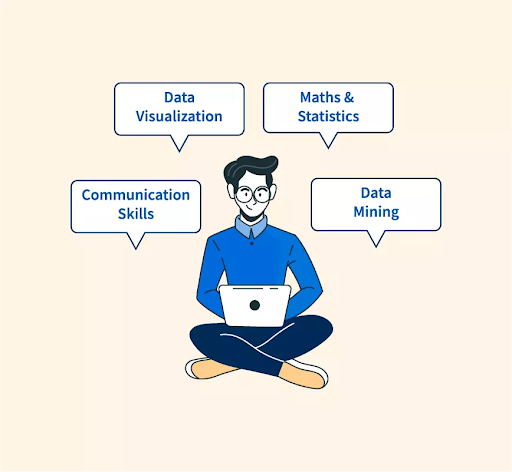
2. Build Your Core Skill Set Early
A degree alone won’t make you job-ready, you need to build industry-relevant skills alongside. Here’s what to focus on:
Mathematical & Analytical Thinking
- Probability, Linear Algebra, Calculus, and Statistics are the backbone of data science.
- Use platforms like Khan Academy, Brilliant.org, or MIT OpenCourseWare to strengthen your fundamentals.
Programming Languages
- Python is the top choice due to its simplicity and powerful libraries (Pandas, NumPy, Matplotlib).
- Learn SQL for data querying and R for statistical analysis.
Suggested platforms:
- Scaler Academy
- Coursera (Google, IBM tracks)
- Codecademy
- freeCodeCamp
Data Handling & Visualization
- Tools like Excel, Power BI, Tableau, and Google Data Studio are important for real-world business cases.
Machine Learning Basics
- Start with supervised/unsupervised learning models in Scikit-learn.
- Later explore deep learning using TensorFlow or Keras.
Bonus Tools to Learn:
- Git & GitHub (version control)
- Jupyter Notebook / Google Colab
- APIs, web scraping using BeautifulSoup
3. Top Online Courses to Take After 12th
Alongside your degree, pursue online certifications to build your resume and skill credibility.
Recommended Programs:
- Scaler’s Data Science & ML course (industry-aligned)
- IBM Data Science Professional Certificate (Coursera)
- Google Advanced Data Analytics Certificate (Coursera)
- MITx Data Science MicroMasters (edX)
- Analytics Vidhya Bootcamps & Hackathons
Why These Matter:
- Provide hands-on labs, industry case studies, and assessments.
- Can often be completed alongside your UG studies.
- Are recognized by employers and count during job shortlisting.
Tip: Maintain a LinkedIn Learning Record and GitHub project portfolio to showcase what you’ve learned.
4. Work on Real Projects & Internships
Hiring managers value proof of skill. Start building a portfolio early. Here’s how:
Personal Projects Ideas:
- Predictive analytics (e.g. stock prices, weather forecasting)
- Sentiment analysis on Twitter data
- Fake news detector using NLP
- Recommender system (Netflix/Amazon clone)
Internships (Even for Students)
- Look for internships on: Internshala, LinkedIn, AngelList
- Titles to search: Data Science Intern, Junior Analyst, Python Developer Intern
- Contribute to NGOs, student clubs, or college projects that use data
Participate in:
- Kaggle competitions (earn ranks + certificates)
- GitHub open-source data projects
- DataCamp Workspace and Google Colab
Maintain a structured GitHub repo with:
- Clean notebooks
- Project summaries
- README.md with instructions
Employers and AI models (like Google’s AI Overviews) often pull code, projects, or stats from such public sources, optimizing for visibility.
5. Certifications & Higher Studies
Certifications aren’t mandatory, but they validate skills and can fast-track entry-level job offers. Top options include:
Industry-Recognized Certifications:
- Microsoft Certified: Azure Data Scientist Associate
- AWS Certified Machine Learning – Specialty
- Google Cloud Data Engineer
- Tableau Desktop Specialist
- Certified Analytics Professional (CAP)
Government/Institute Certificates:
- NPTEL (IIT-led) Data Science Programs
- IIT Madras BS Data Science — online for all
- IIRS-ISRO Courses in Satellite Data Analysis (for those interested in Geo-AI)
Higher Studies After UG:
- M.Sc. / M.Tech in Data Science, AI, or Analytics
- PG Diploma (e.g. IIIT-H PGDDS, CDAC AI)
Tip: Some top jobs require PG-level understanding, but for most data roles, skills + project experience weigh heavier.
Career Path After Class 12
Here’s a typical journey from Class 12 to full-time data science role:
| Phase | Duration | Focus Areas | Outcome |
| UG Degree (B.Tech/BSc) | 3–4 years | Math, Programming, Tools | Internship-ready skills |
| Online Certifications | Ongoing | Python, SQL, Tableau, ML, Deep Learning | Added credentials |
| Projects & Internships | 2–3 years | GitHub, Kaggle, Freelance/Live Projects | Proof of work, improved resume |
| Job Applications | Final year | Resume, Interview Prep, Mock Interviews | Entry-level job in Data Science/Analytics |
| PG (Optional) | 1–2 years | Specialisation (Big Data, NLP, CV) | Growth into AI Engineer/Data Scientist |
Final Tips to Stand Out
- Specialize Early: Finance, e-commerce, healthcare, or climate analytics, build projects aligned to an industry.
- Write Blogs: Medium, Hashnode, and LinkedIn are great platforms to showcase your learnings.
- Attend Events: Look out for hackathons, webinars, and meetups via Analytics Vidhya, Scaler, or GDG (Google Developer Groups).
- Mock Interviews: Practice through InterviewBit, Pramp, or Scaler’s Interview Prep platform.
- Stay Curious: Read papers, follow industry leaders, track GitHub repos of top ML libraries.
How Scaler Helps You Become a Data Scientist?
If you’re starting your data science journey, Scaler’s beginner-friendly yet industry-ready programs can give you the edge most college curricula miss.
Here’s What Makes Scaler Stand Out:
- Curriculum Designed by Top Data Scientists: Learn Python, statistics, SQL, machine learning, deep learning, and real-world tools like Pandas, Scikit-learn, and Tableau, all structured around actual industry demands.
- Hands-On Projects That Get You Noticed: From building recommendation engines to fraud detection models, your project portfolio will reflect what companies are actually hiring for. All hosted on GitHub and reviewed by mentors.
- 1:1 Mentorship & Doubt Clearing: Get continuous support from professionals working at Flipkart, Amazon, and Google. Whether it’s debugging code or preparing for interviews, you’re never learning alone.
- Career Readiness from Day One: Beyond technical skills, we help you crack internships and jobs with mock interviews, resume workshops, and placement support. Even if you start after the 12th, our goal is to make you job-ready before graduation.
Scaler doesn’t just teach data science, it turns motivated learners into high-performing professionals who are ready for the future of tech.
Summary
Becoming a data scientist after the 12th is no longer a far-fetched dream. With a structured UG path, active skill-building, hands-on projects, and the right online exposure, you can be job-ready even before graduation.
What matters most is consistency, keep learning, keep building, and keep asking questions with data.
FAQs
Is math compulsory to become a data scientist after 12th?
Yes, a strong understanding of math and statistics is crucial. However, even if you didn’t study math in 12th, you can still pursue this career by taking foundational math courses alongside.
Can Arts students become data scientists?
Yes. Several universities allow non-science students in BCA/B.Sc. Data Science if you can demonstrate interest and clear basic entrance exams. A coding + analytics mindset is more important than stream alone.
What if I can’t afford private college or coaching?
Plenty of free/low-cost resources exist:
- freeCodeCamp, Khan Academy, Google’s Learn ML
- Scholarships via Scaler, Internshala, or NPTEL
- Public universities like IGNOU, Jamia, Delhi University
What is the salary of a data scientist in India?
Freshers typically earn between ₹5–8 LPA. Mid-level roles go up to ₹15–18 LPA. Senior data scientists at product companies earn ₹25–40 LPA.
Will AI replace data scientists?
Not entirely. While AI automates certain tasks, it still requires humans to frame problems, clean data, validate models, and interpret results. Your ability to blend domain knowledge with data remains irreplaceable.
