




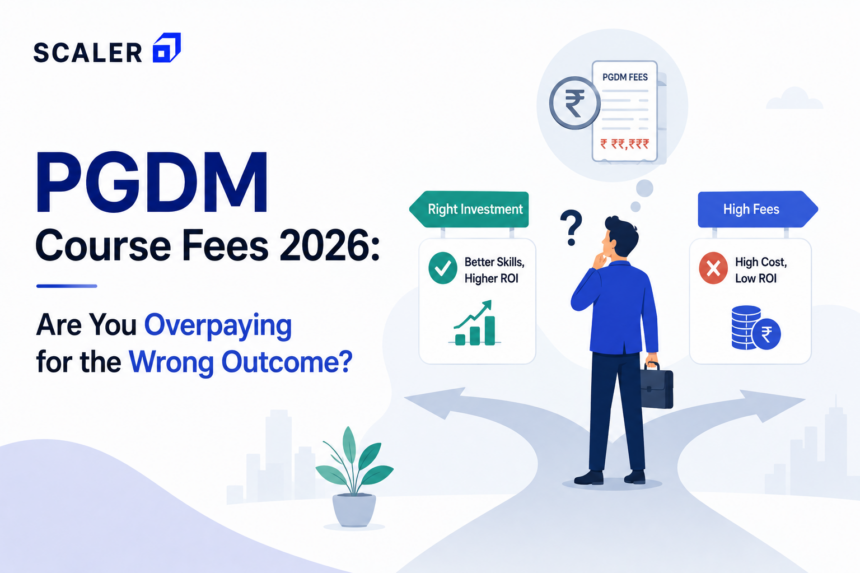
You might have searched for PGDM programs and have shortlisted a bunch, but in the end, the most confusing part becomes, just what could be the difference between the courses that cost exactly the same? And honestly, that happens oftentimes to a lot of people because now just by paying how or low doesn’t determine what you end up getting. Sounds a bit scary, but worry not, with proper research and by asking the important question, you can always choose the program that is best suited for YOU.
Now, you should also understand that programs function differently and depend entirely on who sets them up. One program may focus heavily on placements and recruiter visibility. Another may position itself around flexibility, industry exposure, or leadership learning. Some programs stay closer to traditional classroom management education, while others lean more toward applied business and execution-focused learning.
And that is why finding an answer to these questions, along with checking the PGDM course fees, is so important:
- what kind of experience are you actually paying for?
- what changes after completing the program?
- and whether that outcome genuinely feels worth the investment for your career stage right now
Because two programs with very different fee structures can still end up feeling equally valuable to completely different kinds of learners.
That is also why looking only at tuition fees usually does not help much after a point. You also need to think about:
- How much will your career be affected
- schedule sustainability
- learning depth
- industry access
- peer network
- and the kind of opportunities the course realistically prepares you for afterward
How Should You Evaluate PGDM Course Fees?
| What To Compare | Why It Matters |
| Tuition fees | Only one part of the total investment |
| Time commitment | Impacts consistency and sustainability |
| Lost income | Important in full-time formats |
| Curriculum depth | Changes in learning quality later |
| Industry access | Useful during transitions and interviews |
| Schedule structure | Affects long-term consistency |
| Career outcomes | Stronger indicator than branding alone |
Key Takeaway: Expensive programs do not automatically create better outcomes, and lower-cost programs do not automatically create better ROI either.
PGDM Course Fees
A lot of people assume that PGDM course fees mainly pay for the curriculum. But once you start comparing programs properly, you realize the pricing often includes many other things, too.
For example:
- institute reputation
- alumni visibility
- placement ecosystem
- peer network
- faculty access
- campus infrastructure
- location
- industry collaborations
- mentorship access
- and sometimes simply the brand value attached to the institute name
This is why two programs with very similar subjects in their curriculum can still have completely different fee structures.
And honestly, this is also where people start overpaying without realizing it.
Not because the program is necessarily bad, but because sometimes it can usually become quite confusing with what they want.
For example:
- If your main goal is industry network and recruiter visibility, then brand value may matter much more
- If you already have work experience and mainly want stronger execution skills, then project quality and learning depth may matter more than campus infrastructure.
- If flexibility is your biggest concern, then paying heavily for a full-time residential format may not even make sense for your situation.
Hence, when you compare PGDM fees vs career growth, you should always check whether the program structure matches your availability and if it can help you achieve your goal.
Think of getting answers to these questions:
- What exactly am I paying for here?
- Which part of this fee will still feel valuable after the course ends?
- Is this program helping me build skills, network, credibility, or all three?
- And does that match the outcome I actually want afterward?
You can also check out some alternative to MBA for professionals options, if you are looking for more flexibility with a curriculum updated to current demand.
PGDM Cost
You can expect the PGDM tuition fee to come in lakhs for reputed colleges and institutions, and some can even be in thousands if online or pre-recorded. After you carefully decide your budget, you should also look into what the course comes with.
Once the course begins, a lot of smaller expenses slowly begin stacking together:
- relocation
- hostel or rent
- travel
- food and daily expenses
- education loan EMIs
- software subscriptions
- certification costs
- and in some cases, one full year without salary
This becomes especially important in full-time programs.
A lot of people mentally separate “course fees” and “career break” while planning financially, even though both affect the decision together. Someone leaving a ₹10-12 LPA role for a full-time course is not only paying tuition. They are also stepping away from appraisals, promotions, bonuses, and one additional year of work experience at the same time.
That is why the actual cost can be very different from the one you see for just covering the tuition fee.
And if you are looking for online/weekend programs, then they also have their own set of challenges to look into:
- long commutes after work
- back-to-back weekend sessions
- constant deadlines
- Reduced personal time
- and the mental exhaustion of balancing everything together for months continuously
Hence, be it a full-time program or an online one, as long as the curriculum fits the current market demand, the next crucial thing is to see if you can keep up with it, because then only will the time given be worth it!
PGDM ROI
Imagine you complete the course and go back to work the very next week.
You won’t see any dramatic changes as such. Your salary may still be the same for a while. You may still sit with the same team. You may even continue working on the same business problems as before.
But slowly and steadily, you’ll start noticing the small things that are changing.
Earlier, you may have only handled execution. Now you will be expected to explain why the numbers dropped. Someone asks what should happen next quarter. Another discussion moves toward forecasting, planning, or customer retention, and for the first time, you are expected to contribute instead of just listening quietly.
And once you can make such a difficult decision, be able to explain the numbers and contribute to crucial decisions, you’re then secure a chance to grow higher in your position, and that’s the kind of ROI you can expect after completing your PGDM course.
You’ll probably notice this during interviews, too.
At some point, the questions stop sounding like:
- Define this concept
- What is this framework?
- Explain this formula
and start sounding more like:
- What would you do here?
- Why would you make that decision?
- What trade-off would matter more in this situation?
- How would you explain this to leadership?
This is why the structure of the course matters so much while evaluating ROI. If the program repeatedly puts you into presentations, business reviews, forecasting discussions, operational problems, and messy case situations, you slowly stop approaching work like an assignment with one correct answer.
And honestly, that confidence becomes visible very quickly once the conversations around you start becoming larger, faster, and more business-heavy than before.
If you are still comparing management pathways from an ROI perspective, this breakdown of PGP in Business vs MBA explains the differences in detail.
Management Course Fees
Management courses are known to cost on the higher end since they also provide that level of curriculum which is most needed by industries/businesses.
But you must also remember that these courses might not offer the same thing even if they cover the same subject. One may promise placements. Another could focus heavily on leadership. Someone else talks about industry exposure, networking, mentorship, global immersion, live projects, business simulations, and after a point, almost every option starts sounding important in some way.
That is usually when you need to understand what kind of direction you would expect the course to lead you.
For example, imagine paying for a full-time residential management program when your actual goal was simply to move into a better business-facing role while continuing work. In another situation, someone may choose the cheapest online option available and later realize they actually needed stronger peer interaction, recruiter visibility, or structured learning to stay consistent.
The problem isn’t really the course itself sometimes, but could stem from a difference in expectations. The mismatch usually happens because the format itself did not fit the outcome properly.
And this is exactly why management course fees can start looking wildly different once you break down what the program is actually built around.
| What The Program Prioritizes | What You May Actually Be Paying For |
| Full-time campus format | Peer network, placements, recruiter access |
| Executive MBA | Leadership exposure, experienced peer group |
| Online management programs | Flexibility and schedule convenience |
| Skill-focused postgraduate programs | Faster execution-heavy learning |
| Premium institute branding | Long-term signaling and alumni value |
Postgraduate Management Program Cost
At some point during the research process, almost every course starts sounding like a good investment.
The brochure looks impressive. The curriculum feels detailed. The testimonials sound convincing. And after comparing multiple options for weeks, it becomes very easy to feel like: “Maybe I just need to pick one and move forward now.”
But this is usually the stage where you should be more careful with your pick.
For example:
- Will you be able to continue this schedule for the next year?
- Does the learning style actually suit the way you learn?
- Are you expecting a placement outcome, a role transition, stronger business confidence, or industry visibility?
- Do you need a brand name, or do you mainly need execution skills?
- Will you still find this investment valuable two years later?
And considering these questions are important because, after a point, the postgraduate management program cost stops being only about affordability. The concerns start branching out to whether the outcome will be what you expected or not.
And honestly, this is why shorter applied programs, executive formats, online MBAs, PGDMs, and business-focused PGPs all continue growing side by side now. They are not solving the same problem for the same person anymore. But have their own structure to fulfill a particular need.
Conclusion
PGDM course fees can look overwhelming at first, especially once you start comparing programs across different formats and institutes. But your decision in the end solely depends on what kind of structure and curriculum favours your interests and goals the most.
It is also about understanding what you are actually paying for, what the program can help you with moving toward afterward, and whether that outcome genuinely feels worth the investment you are making into the next stage of your career.
Explore Course Fees & Pricing
FAQs
1. Is paying high PGDM course fees always worth it?
Not always. Higher fees may sometimes provide stronger brand visibility, recruiter access, or networking opportunities, but the actual value still depends on whether the program aligns with your goals and career direction.
2. How should you evaluate ROI before paying PGDM course fees?
You should surely evaluate:
- total cost
- lost income
- learning quality
- industry access
- flexibility
- career outcomes
- and how useful the learning will actually feel after the course ends.
3. What outcomes matter more than tuition fees?
Role growth, interview confidence, stronger business understanding, leadership visibility, and long-term career positioning are some factors that you should definitely consider once you are done checking the tuition fee.
