


Did you know that Statista projects that by 2028, the world is expected to generate over 394 zettabytes of data? With so much information at our fingertips, businesses rely heavily on experts who can make it easy for them by making sense of the mountain of data. And of course, that is when data science vs data analytics becomes a huge dilemma.
Though people confuse them from time to time, these fields serve very different purposes. Data science helps with building predictive models and analyzing future trends, while data analytics focuses on interpreting past and present data to guide business decisions. Still can’t make out the difference? Don’t worry, this confusion persists even amongst recruiters sometimes, so here we are to explain each aspect of the two roles in detail.
So, whether you’re wondering which is better: data science or analytics?, or trying to decide between becoming a data analyst vs a data scientist, by the end of this blog, you’ll have a clear picture as to what each role entails.
Definitions: Data Science vs Data Analytics
What is Data Science?
Data science is basically a broad, interdisciplinary field that works with both structured and unstructured data. It combines statistics, algorithms, machine learning, and data visualization to predict patterns and generate new knowledge scientifically. The main aspect of data science is to find answers from datasets to predict future outcomes.
A data scientist’s work often includes:
- Building predictive models
- Automating processes with machine learning
- Testing hypotheses to find hidden trends
- Turning raw data into strategies that can most likely work
So, to sum it up, data science is about innovation using data to create possibilities that didn’t exist before.
What is Data Analytics?
Data analytics, on the other hand, is a more focused field. It deals with analyzing existing datasets to answer specific, known questions. Using statistical methods, business intelligence (BI) platforms, and visualization tools, data analysts help organizations gain insights into the past and present.
Key aspects of data analytics include:
- Forming reports and dashboards
- Providing descriptive and diagnostic insights
- Guiding decision-making with evidence-based analysis
So, the key difference is:
While data science asks “What’s next?”, data analytics focuses on “What’s happening now, and why?”.
Scope & Objectives Explained
Scope: Macro (Data Science) vs Micro (Data Analytics)
So, is Data Science only meant to find answers from datasets? While this is the key aspect, this field extends into managing the full data lifecycle. From cleaning and structuring raw datasets to building advanced machine learning models, data science provides a framework to discover insights at scale. It is applied in areas like fraud detection, self-driving cars, healthcare diagnosis, and customer behavior prediction.
In comparison, the scope of data analytics is more business-oriented. It typically works with structured data from sources like sales reports, customer surveys, or web traffic logs. Analytics is heavily used in marketing campaigns, financial reporting, and supply chain optimization, where quick, reliable answers are needed.
Objectives
Data science objectives are long-term and strategic. By developing predictive systems and simulations, businesses prepare for market shifts, optimize processes, and innovate new products or services. In essence, it provides the “roadmap for the future.”
Data analytics objectives are short-term and tactical. Its role is to provide managers and teams with immediate clarity, such as understanding why customer churn is increasing or which product line performed best last quarter. This makes analytics a powerful tool for day-to-day business decisions.
Here’s a quick comparison table to help you understand the fields better:
| Feature | Data Science | Data Analytics |
| Data Type | Structured & unstructured (text, images, IoT data, etc.) | Primarily structured (spreadsheets, databases, BI dashboards) |
| Industries | AI, healthcare, fintech, autonomous systems, R&D | Marketing, sales, retail, finance, supply chain |
| Problem Nature | Open-ended, exploratory, predictive | Defined, diagnostic, performance-focused |
| Business Impact | Long-term strategy, innovation, competitive advantage | Short-term efficiency, cost reduction, and quick decisions |
| Decision Level | Strategic and organizational | Operational and departmental |
| Outcome | Predictive models, automation, future-proof strategies | Reports, dashboards, targeted insights |
Now that we have covered the basic idea of data science and data analytics, you might want to know what tools are used in each field, so let’s move on to the next section to get into it!
What Tools are Used for: Data Science & Data Analytics?
![[DS] Not sure how to be a top data scientist](https://scaler-blog-prod-wp-content.s3.ap-south-1.amazonaws.com/wp-content/uploads/2024/11/19104522/Banner-1-2.jpg)
Data Science often requires a more advanced tech stack because it deals with complex models and large datasets. Common tools include:
- Programming Languages: Python, R for modeling, ML, and statistics
- Big Data Frameworks: Hadoop, Spark for processing huge datasets
- Machine Learning Libraries: TensorFlow, Scikit-learn, PyTorch
- Data Handling: Tools to process structured and unstructured data, text, images, IoT feeds
Data Analytics, in contrast, relies on tools built for data cleaning, visualization, and reporting. Popular choices include:
- Databases: SQL for querying and managing structured datasets
- Spreadsheets: Excel for analysis, pivot tables, and quick summaries
- BI Platforms: Tableau, Power BI, Google Data Studio for dashboards and interactive reports
- Automation Tools: Scripts and add-ons for recurring analytics tasks
Also Read: 25 Best Data Visualization Tools for 2025
Data Science Vs Data Analytics: Career Path
After learning the core of data science & data analytics, here’s what the typical career paths look like.
What roles can you apply for, how the ladder often works, and what kind of compensation to expect, especially in India as of 2025:
| Track | Roles You Can Start With |
| Data Analytics Track | • Data Analyst (entry level)• BI Analyst / Business Intelligence Analyst• Reporting Analyst• Operations Analyst / Process Analyst• Marketing Analyst |
| Data Science Track | • Junior / Associate Data Scientist• Machine Learning Engineer• Data Engineer (if you pick up pipeline/infrastructure skills)• Research Analyst / ML Researcher• Specialized roles like NLP Engineer, Computer Vision Engineer |
After honing such in-demand skills, there are plenty of roles available in the job market for you.
To learn more, you can also read: Data Analyst Career Path
Progression & Levels
Here’s how the career ladder often looks for both tracks:
- Entry / Early Level
Freshers or professionals switching tracks usually start as Data Analysts, Junior Analysts, or Associate Data Scientists. Main tasks include cleaning data, writing basic queries, doing exploratory analysis, or assisting in model building.
- Mid Level (2-5 years)
With experience, you may become a Senior Data Analyst, BI Lead, or Machine Learning Engineer. Responsibilities can increase, including designing dashboards, handling larger datasets, implementing models, and communicating insights to stakeholders.
- Senior / Specialized Level (5+ years)
At this stage, roles could include Lead Data Scientist, Analytics Manager, Data Science Manager, Chief Data Officer, AI Researcher, etc. You may also specialize in subfields like deep learning, NLP, or computer vision, or move into leadership/strategy.
Which Path Should You Choose?
Now this might be a tough one, but do make this choice carefully.
So, if you enjoy working with large, unstructured datasets, building predictive models, and driving innovation with AI or machine learning, data science may be the right choice. It’s ideal for those who are interested in making discoveries, asking deeper questions, and designing systems that evolve.
On the other hand, if you’re more drawn toward creating business reports, generating quick insights, and communicating data-driven strategies to stakeholders, data analytics could be your perfect fit. Analytics thrives on structured data and helps businesses make fast and strategic decisions.
![[DS] think data science is for you](https://scaler-blog-prod-wp-content.s3.ap-south-1.amazonaws.com/wp-content/uploads/2024/11/19104524/Banner-2-2.jpg)
Of course, various elements overlap; many professionals start as analysts and transition into data science roles over time. For instance, one Scaler student shared:
“Scaler helped me follow my dream of working within the data science domain. Coming from a city not known for tech, I wasn’t sure how to enter the world of Data Science. Scaler not only showed me the way but also provided practical sessions and mentorship that kept me motivated and focused. … I’ve been able to excel in my role as a Data Scientist at AB InBev, a Fortune 500 company.”
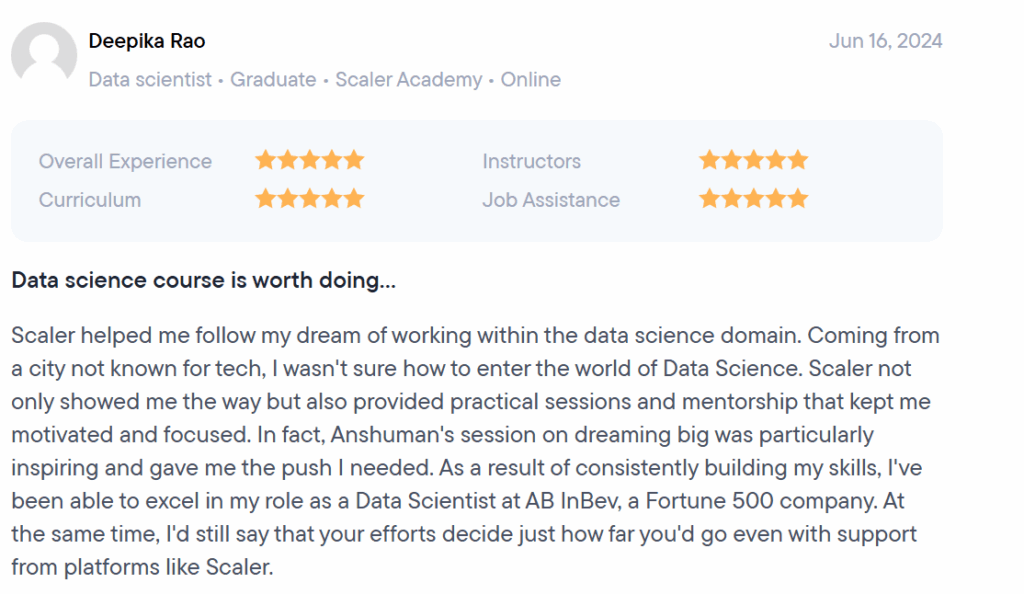
Ultimately, whether you choose data science or data analytics depends on your interests and goals, but with the right guidance, you can confidently work towards the career path in which you are most interested.
Conclusion
Data science and data analytics may sound similar, but their core focus is way different. Data science is broader, covering unstructured data, predictive modeling, and machine learning, while data analytics is more targeted, emphasizing structured data, reporting, and providing insights. Both career paths are valuable and share overlapping skills, which means you can always transition as your expertise grows.
The choice comes down to your interest: do you enjoy predicting future trends or interpreting existing data to guide business decisions? Think about where your passion lies.
And if you’re ready to take the next step, explore programs like Scaler’s data science courses that help you build the right skills and open doors to both roles.
FAQs
Which is better: data analyst or data scientist?
Neither role is inherently “better” than the other. The best fit for you depends on your interests and skills. If you enjoy solving complex problems and building predictive models, data science might be a good fit. If you prefer analyzing data to uncover insights and inform business decisions, data analytics could be a better match.
Can a data analyst become a data scientist?
Yes, data analysts can transition into data science roles by gaining additional skills in programming, machine learning, and statistics. Many online courses and bootcamps offer pathways to bridge this gap.
Do data analysts make more than data scientists?
Generally, data scientists tend to earn higher salaries due to their specialized skills and expertise. However, salaries for both roles can vary significantly depending on experience, location, and industry.
Will AI replace data analysts?
While AI and automation are transforming many industries, it’s unlikely that they will completely replace data analysts. AI can automate repetitive tasks, but human expertise is still crucial for interpreting insights, communicating findings, and making strategic decisions.
Is data analyst a stressful job?
The stress level of a data analyst can vary depending on the workload, deadlines, and company culture. However, like any job, it can have its challenges, such as dealing with tight deadlines, complex data sets, and stakeholders with different perspectives.
