Non-IIM MBA
MBA Colleges Without Entrance Exam in India: The Honest, Tiered Guide
Explore credible MBA routes in India without entrance exams, including profile-based programs, direct admission, online MBAs, executive options, fees, accreditation checks, and how to avoid weak or risky programs.
5 min. read
Can You Really Do an MBA Without an Entrance Exam?
Quick answer:
Yes. Many recognised colleges admit without CAT, XAT, or any national exam, using graduation marks, a profile review, and a personal interview instead. The four routes are: (1) direct merit or profile-based admission, (2) management quota seats, (3) online and distance MBA through UGC-DEB approved universities, and (4) executive MBA programs for working professionals. Quality varies enormously across all four. This guide tiers them honestly so you pick a program rather than just a seat.
Here is the thing nobody tells you when you start searching for this. Go to any MBA forum and ask “which is the best college without entrance exam?” The honest answer from people who have been through it is almost always the same: there are very few good ones, and most of the calls you will receive are from brokers filling seats, not advisors helping careers.
That is not a reason to stop looking. It is a reason to look more carefully. The right no-exam MBA exists. It just requires a filter, not just a list. This guide provides both.
And one more thing before the table: you are not as alone in this search as it feels. Non-CAT routes, direct admission, online programs, executive MBAs, profile-based admission — far more people are taking these paths than openly talk about it. A recent thread on r/CATPrep put it plainly: “cat feels like the only option sometimes because that’s all anyone talks about... feels like way more people are quietly taking these routes than openly admitting it.” That silence is not because the options do not exist. It is because most guides are too busy recommending CAT prep to explain what the other routes actually look like.
The honest trade-off, stated upfront: skipping the exam means you start sooner and save a year of prep. What it can also mean, at weaker programs, is a smaller alumni network, lower recruiter recognition, and a campus that admits everyone. Internships, live projects, and proof-of-work matter more after you graduate from a program that is not a household name. You will build more of your own credibility. The stronger programs on this list are designed for exactly that.
“No Entrance Exam” Doesn’t Mean “Settle”: The Honest Quality Tiers
Skipping the exam is not the risk. Picking a weak program is. The words “direct admission” cover everything from rigorous profile-based selection to pay-to-enter management quota seats. Here is the honest spectrum, from strongest to most risky.
Tier 1: Selective, Profile-Based Programs
Admission mechanism: a holistic review of your work history, projects, and academic record, followed by a group exercise and a personal interview. Some institutes run their own structured assessment; others accept a range of exam scores but weight the profile heavily and have no minimum cutoff.
This is the bucket where “no entrance exam” means a higher bar, not a lower one. These programs are selective about who gets in. The cohort quality reflects that. Verified outcomes, not just a credential, are what they offer.
One program worth noting here: Scaler School of Business (SSB), an 18-month full-time PGP in Bengaluru, sits in this tier. Profile-based, no CAT, no national exam, no minimum marks cutoff. Full profile below in the outcomes section.

Tier 2: Reputable Private, Deemed and Government Universities (Merit + PI)
Admission mechanism: graduation marks plus an accessible exam (MAT, CMAT, ATMA, or the university’s own test), followed by a personal interview or group discussion. No CAT percentile required.
This is the largest and most varied tier. At its best, it includes strong deemed universities and government central universities, with good placement pipelines and UGC-recognised degrees. At its weakest, it includes private universities running large batches with little selection rigour. The accreditation check in the next section is what separates the two.
Government central universities deserve special mention here. Jamia Millia Islamia in New Delhi, for instance, runs its own entrance test (not CAT), charges under Rs. 55,000 for two years, holds a NIRF management rank of 28, and places graduates at companies including Microsoft, KPMG, and Accenture. It is the strongest value-plus-recognition option in this tier and it almost never appears in lists about no-exam admission, because most lists confuse “no national exam” with “no selection process at all.” They are not the same thing.
One accuracy note on Amity University: it accepts MAT, CMAT, GMAT, NMAT, or CAT/XAT, so it is not a pure no-exam option. MAT 650 is the lowest threshold, which is meaningfully more accessible than a CAT 85th percentile. It sits in this tier because it requires a lighter exam and a personal interview, not because it admits without any test at all. That distinction matters.
FMS Delhi’s full-time MBA brings this tier’s quality ceiling into focus. The Batch of 2025–27 summer internship season saw 104 companies including BCG, McKinsey, Bain, and Kearney making 287 offers, with an average internship stipend of Rs. 3.42 Lakhs for the summer. That is the institutional brand which working professionals in the FMS Evening MBA program belong to, even if the Evening MBA tracks placements differently.
Tier 3: Online, Distance and Executive MBA (and Whether They Are Recognised)
Admission mechanism: graduation transcripts for online and distance programs; work experience and a profile review for executive programs. No entrance exam in either case.
The recognition anxiety around online MBAs is real and it has a clean answer: a degree from a UGC-DEB approved university is valid for private sector jobs, government recruitment, and higher studies including a PhD. What matters is not the delivery mode, it is the awarding institution. IGNOU, Amity Online, and Manipal Online are all UGC-DEB approved. Before you enrol in any online program, look the university up on the UGC-DEB approved institutions list directly, not on the college’s own website.
One honest limitation the community is clear about: online MBA programs almost never offer placement services in the way a full-time campus program does. A working professional using an online MBA to qualify for an internal promotion or to add a credential is using it correctly. A fresher expecting campus placements from an online MBA is likely to be disappointed.
This matters most for the working professional who says “I just want the brand tag for career progression.” The r/MBAIndia community heard this exact goal from a senior professional at 30 LPA, 8.5 years of experience, an AVP role, and still stuck because recruiters asked for an MBA. A legitimate goal. And a UGC-DEB approved online MBA with a recognised name can serve it. But the honest answer the community gave back was the same: the credential without the skills or the network has a ceiling. The people who get the most out of online MBAs are the ones treating it as a foundation, not a shortcut.
Tier 4: Management Quota and Unaccredited Seats — Approach With Caution
Admission mechanism: a higher fee or a donation in lieu of a test score. Sometimes called “spot admission” or “management seat.”
Reddit’s MBA communities describe this category consistently: brokers cold-calling without any score on record, fear-mongering about closing admissions, pushing unknown colleges at premium prices. One person documented being approached to pay Rs. 15 lakh or more for a management quota seat at a college whose regular merit-track average placement was under Rs. 5 LPA. That loan does not repay itself on a ₹5 LPA salary.
Multiple threads on r/MBAIndia say the same thing about Tier 4 outcomes: a management-quota seat at the wrong college buys you a low-paying sales role and a loan you cannot repay. That is not editorial opinion. That is what people who took those seats say on public forums when nobody is selling them anything.
The rule here is simple: at the same institution, always choose the merit route over the quota route. The qualification you earn is identical. The financial cost is not. And if the only way into a college is through a quota seat with no published placement data, that is the answer.
Watch for these specifically: unsolicited calls from consultants with no exam score on file; claims that “all good college seats are closing” to create urgency; inability to show a current NIRF or NAAC ranking on the official portal; placement reports with logos but no company names or role titles; and admission fees directed to a third-party consultant rather than the university itself.
The Master List: No-Exam MBA Programs Compared
The table below is organised by quality tier, not by city. Location appears in each row so you can filter to your preferred city without a separate section. Fee and source links go directly to each institution's own admissions or program page.
College / Program | Type | Location | Total Fees | Admission Basis | Recognition | Avg Package* |
|---|---|---|---|---|---|---|
Tier 1 — Selective, Profile-Based (Strongest Quality Signal) | ||||||
Private PGDM | Gurugram, NCR | AICTE | ||||
Tier 2 — Reputable Private, Deemed & Government (Merit + PI; No CAT Required) | ||||||
Govt / Central Univ | New Delhi | UGC, NIRF #28 | ||||
Deemed Univ | Delhi NCR / Bengaluru | Entrance Test (if applicable) + Assessment + PI; AICTE + NBA accredited | UGC, NAAC, NBA Accredited | |||
Private | Noida, NCR | MAT 650+ or GMAT/CMAT/CAT/XAT/NMAT + PI (lighter exams accepted) | UGC, NAAC A+ | |||
Tier 3 — Online / Distance MBA (UGC-DEB Approved) | ||||||
Central Univ — Online/ODL | Pan-India | No exam; merit-based on graduation marks (50%+ in bachelor's) | UGC-DEB, AICTE, NAAC A++ | No campus placement (distance learning) | ||
Private — Online | Pan-India | UGC-DEB, NAAC A+, WES | ||||
Private — Online | Pan-India | UGC-DEB, NAAC A+ | ||||
Tier 3 — Executive MBA (Working Professionals; No CAT) | ||||||
Govt / Delhi Univ — Executive | New Delhi | No CAT; work exp (5yr min.) + SOP + Extempore + PI; employer NOC required | UGC, Delhi University | |||
Note: Management quota seats exist at many Tier 2 institutions above. The table reflects merit-track admission. Quota seats typically cost more and do not qualify for most merit scholarships.
How to Verify a College Is Legit — and What That Recognition Gets You
The Verification Checklist
Run these five checks before you pay an application fee to any college on your shortlist. This checklist is the same one that separates a strong no-exam MBA from a seat-selling operation.
Check 1: Verify UGC and AICTE status on official portals, not the college’s own website. UGC’s approved university list and AICTE’s approved institution portal are the only sources that matter. If the college is not there, no brochure claim changes that fact.
Check 2: Look the college up on LinkedIn. Search the institution’s name and filter by “Alumni.” See where the last three graduating batches are actually working, what their roles are, and what the company names are. A college with strong placements has alumni visibly doing the work you want. A college with weak placements has alumni with LinkedIn profiles that trail off after the degree.
Check 3: Decode “100% placement.” This almost always means 100% of registered students received at least one interview call, not a job offer. Ask the admissions office directly: what percentage of the total batch received an offer letter from a company that was not the college itself? If they cannot or will not answer, that is your answer.
Check 4: For online programs, confirm UGC-DEB approval. Visit ugc.gov.in/deb and look up the university by name. A UGC-DEB approved online MBA is legally equivalent to a campus MBA from a UGC-recognised university. One that is not on the list is not.
Check 5: Watch for hidden development fees. Some colleges advertise a tuition fee and then layer on “development fees,” “infrastructure charges,” or “institution building funds” that double the headline number. Ask for the total fee payable over two years before you compare colleges.
The three-question test: Is the college accredited and verifiable on the official portal? Does the placement report show real company names with role titles, not just logos? Are alumni visibly doing the work you want to do? If any answer is unclear, move on.
Is a No-Exam MBA Actually Valid? (Jobs, Government, Higher Studies, Abroad)
The admission route does not determine recognition. The awarding institution does. Here is how each scenario plays out.
For private-sector jobs: a degree from a UGC-recognised university or AICTE-approved institute is valid. Recruiters in the private sector look at the institution’s brand and your demonstrable skills, not whether you sat a national exam to get in. A strong Tier 2 or Tier 1 no-exam program places graduates into corporate roles every year.
For government jobs and PSUs: a degree from a UGC-recognised university is accepted for eligibility under most government notifications that specify “MBA or equivalent.” IBPS, RBI, SBI, and similar banking recruitment bodies have historically been friendly to UGC-recognised management degrees. Read each specific notification before assuming eligibility.
For a PhD or higher studies: a UGC-recognised MBA from an accredited institution qualifies for PhD admission at most Indian universities. For further study abroad, get your credential evaluated by a service such as WES (World Education Services), which most foreign universities use to verify Indian qualifications.
Fees, ROI and What to Realistically Expect
The honest fee range across no-exam programs in India runs from under Rs. 1 lakh to over Rs. 20 lakhs. What you pay matters far less than what the program actually produces. Here is the money picture, cleanly separated from the outcomes question.
Government and central university programs (Tier 2 govt, Tier 3 online): Rs. 50,000 to Rs. 5 lakhs. Best ROI in India for anyone who qualifies and can secure a seat. JMI’s full-time MBA at Rs. 53,750 for two years with NIRF rank 28 placements is the strongest value proposition on this list.
Reputable private and deemed universities (Tier 2 private): Rs. 7 to Rs. 16 lakhs for two years depending on the institution. Realistic average placement for mainstream no-exam private colleges is roughly Rs. 4–6 LPA for freshers; stronger institutions with selective processes place higher. Run the full cost calculation — tuition plus two years of living costs plus foregone salary — before committing.
Online MBA programs (Tier 3): Rs. 62,000 (IGNOU) to Rs. 2.25 lakhs (Amity Online). Designed for working professionals who want the credential while staying employed, not for campus placement. The ROI calculation is different: it is about the credential enabling a promotion or a role change, not a campus offer.
The cost-of-delay trade-off: re-attempting CAT for another year costs twelve months of potential salary and experience. For some profiles, starting sooner at a solid recognised program beats chasing a marginally stronger brand a year later. This is a trade-off you weigh for your specific situation, not a universal answer.
Management quota seats and scholarships: quota seats almost never qualify for merit scholarships or education loan subsidies under government schemes. A merit-track seat at the same institution always comes with better financial options.
Eligibility and Documents
Basic eligibility (applies across most programs): a bachelor’s degree from a UGC-recognised university with a minimum of 50% aggregate marks (45% for reserved categories at most institutions). No upper age limit at most colleges. Work experience is valued and sometimes required for executive and executive MBA routes (typically five years for FMS’s Evening MBA).
Standard documents you will need: graduation marksheets or provisional certificate, Class 10 and 12 marksheets, a government-issued photo ID, a transfer certificate from your last institution, recent passport-size photographs, a statement of purpose if the program requires one, and a work experience letter for executive programs. Keep two to three attested photocopies of each before you start applying; most processes need these in the first week.
How Admission Usually Works (It Varies by College)
The exact process differs enough across institutions that a universal checklist would be misleading. What the common shape looks like: apply online with transcripts and a statement of purpose if required, get shortlisted for a profile or marks review, attend a GD or group exercise and a personal interview, receive an offer, confirm and pay fees.
One generalisation that holds across almost every no-exam route: the process moves faster than a CAT cycle. You are not waiting for a national exam date in November or a result in January. Applications, interviews, and offers can all happen in a few weeks. Confirm each college’s specific timeline on its official admissions page rather than an aggregator, because deadlines vary significantly.
Which Route Fits You?
The fresher with a good academic record who missed CAT: Tier 2 government option first (JMI if you are in Delhi, a strong central or state university in your region), then Tier 2 reputable private if you want a specific city or specialisation. Do not apply to Tier 4 out of deadline panic. A MAT or CMAT attempt in the next available window buys you a Tier 2 seat without a year’s gap.
The fresher worried companies won’t shortlist them from a no-exam college: This question appeared verbatim on r/Indian_Academia: “If I join a private college that claims 7–8 LPA average placement, will companies even prefer someone like me with such a profile even if I perform well?” The honest answer: it depends entirely on the tier. A Tier 2 government college like JMI places graduates at Microsoft, KPMG, and Accenture. A Tier 4 management-quota seat at an unknown college will not. Companies do not ask how you got in. They ask what you can do.
The fresher or professional who missed CAT due to illness, injury, or a life event: This is more common than the forums suggest and it is the most legitimate reason to be on this search. JMI’s own entrance test runs annually. SOIL takes applications on a rolling basis. MAT runs four times a year. The no-exam window is not a one-shot opportunity the way a CAT cycle feels. You have more time than the broker calling you thinks you do.
The working professional who cannot leave their job: Tier 3 online if you want a credential while working. Tier 3 executive (FMS Evening MBA, IIM executive programs, XLRI executive programs) if you have five or more years of experience and want a recognised brand. The FMS Evening MBA in Delhi is the strongest government-fee executive option in the country and almost nobody searching this topic lands on it.
The budget-conscious candidate for whom ROI is the primary filter: IGNOU is the most affordable UGC-recognised option in the country. JMI is the most affordable full-time campus option in this list. Neither is a consolation choice if you treat the program seriously.
The career switcher or engineer optimising for outcomes over credential: Tier 1 profile-based programs are built for you. SOIL in Gurugram is the best-known example in the traditional management space. If you are an engineer who spent four years on calculus and algorithms and has no desire to spend another year proving it again on a quant-heavy entrance exam, that instinct is not laziness. It is clarity. The profile-based route was designed for exactly that starting point. If you want the most execution-led version of this route, the honest fork is in the next section.
Route by specialisation: most no-exam MBA programs offer Finance, Marketing, HR, Operations, and Business Analytics. Choose a college with a demonstrably strong track record in your target function, not just a recognised name. Christ University in Bengaluru has strong finance and marketing pipelines given its city proximity. JMI has a diverse placement record across IT, FMCG, and financial services. SOIL’s placements skew toward consulting, HR, and analytics. IGNOU and online programs do not offer campus placement in the traditional sense.
The recognition fork: if you need a UGC-recognised MBA degree for a government role, a PSU job, or PhD eligibility, the Tier 2 and Tier 3 UGC-DEB options above are your route. Pick the strongest one you can qualify for. If you are optimising for corporate outcomes and proof-of-work and do not need the degree for a specific purpose, there is a third option worth knowing about.
What a No-Exam Program Should Actually Deliver in 2026
Here is the question that matters more than the admission route: what does the program actually produce?
This is not a niche concern. The most-upvoted post in r/MBAIndia on this topic in the past year was not about which college to choose. It was a former graduate pointing out that without real proof of work, a management degree is just an expensive certificate. That with proof of work and the right network, it is a completely different outcome. That framing is not an SSB talking point. It is what people who have been through mainstream management programs are saying on their own forums, unprompted.
Hiring teams at product companies, strategy functions, high-growth startups, and D2C brands are increasingly aligned with that read. They screen for demonstrable output, a shipped product, a live business problem solved, a real go-to-market strategy built and run, over the line on a certificate. The right question is not “was there an entrance exam” but “does this program produce people who can do the work, and does it have a record to prove it?”
Most no-exam programs do not answer that question well. The ones worth choosing are the ones that do.
A Look Inside the Third Bucket: Scaler School of Business
One program that consistently comes up in searches for profile-based, no-CAT management education is Scaler School of Business (SSB). It is worth placing accurately before anything else.
SSB is not an MBA college. It is an 18-month full-time PGP certificate program in Bengaluru, outside the AICTE and UGC framework by design. Not valid for a government job, PSU eligibility, or a PhD requiring a recognised master's degree. If any of those apply to you, the Tier 2 options above are the right fit. For everyone else, here is what the program actually delivers.
Outcomes and placements: 76% of SSB’s founding cohort pivoted into the roles they actually wanted, switching functions, industries, or career tracks entirely during the program. 100% of the founding cohort secured internships from campus, at companies including Razorpay, BharatPe, The Whole Truth, Apna, and others. Full-time placements from the cohort span Blinkit, Urban Company, Razorpay, BharatPe, Ninjacart, Scapia, Toddle, and Even Health, among others, with an average salary hike of 3.2x after the program.
Cohort caliber: 47% engineers, 27% business and management graduates, 26% from arts and science backgrounds, average 2.8 years of work experience. IIT alumni, former Amazon, McKinsey, and Uber professionals, and strong freshers, all selected on profile depth, not percentile.
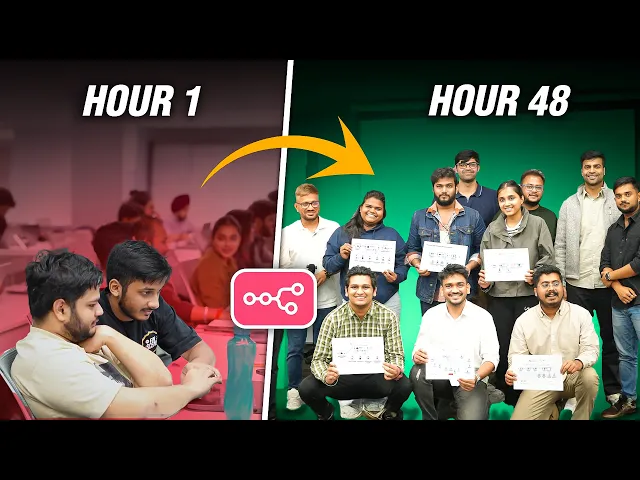
Execution proof: Students have taken real D2C brands from product sourcing through live retail sales within six weeks — generating ₹15–20 lakh in revenue on real startup capital. In a 48-hour AI build sprint, students with no prior coding experience shipped working AI products. Others worked on live problems brought in directly by founders, building go-to-market strategies that are actively being implemented.
Admission: profile-based. No CAT, no GMAT, no external test. The in-house Scaler Management Test (SMT) is available as an optional structured assessment. Program fee: Rs. 23 lakhs. SSB Admissions
We Gave MBA Students 48 Hours to Build AI Products Without Code :
MBA Without Entrance Exam: Frequently Asked Questions
Which MBA colleges do not require an entrance exam?
Start with three names worth knowing. Jamia Millia Islamia in New Delhi uses its own entrance test and a personal interview, no CAT, and charges under Rs. 55,000 for two years. SOIL Institute in Gurugram admits entirely on profile, with no minimum cutoff on any exam score. IGNOU offers a UGC-recognised online MBA with no exam requirement at all. The full tiered list with fees and accreditation status is in the comparison table above. The answer to this question is not the list. It is knowing which tier on the list is actually worth your time.
Is an online MBA without an entrance exam recognised by employers?
Yes, if you do one thing first: look the university up on the UGC-DEB approved institutions list before you pay a rupee. A UGC-DEB approved online MBA is treated as equal to a campus MBA for private sector hiring and most government job notifications. What it will not do is deliver campus placements. If you are a working professional using it to qualify for a promotion or make a role switch, it was designed for exactly that situation. If you are a fresher expecting placement support from an online program, that expectation will not be met. Know which situation you are in before you choose.
What is the cheapest MBA without an entrance exam?
Two names, both central government institutions. IGNOU: Rs. 16,000 per semester for three semesters and Rs. 18,000 for the project semester — Rs. 66,000 base in total (plus registration and development fee per session) — online, no exam required, UGC-DEB approved. Jamia Millia Islamia: approximately Rs. 53,750 for two years, full-time campus in New Delhi, own entrance test, NIRF management rank 28. Neither is a consolation pick. Both are the kind of low-fee, high-recognition option that most expensive private programs spend their brochures pretending to beat.
Can working professionals do an MBA without an entrance exam?
Yes, and the best route for most experienced professionals is one that rarely shows up in these searches: the FMS Delhi Evening MBA. Government fee. University of Delhi recognition. Evening schedule. No CAT required. You need five years of work experience and an employer NOC. If you have both, it is the strongest value proposition in the executive MBA space. IIM and XLRI executive programs also skip CAT but require GMAT or their own assessment. For those who cannot attend campus, IGNOU and Amity Online are UGC-DEB approved with no exam requirement.
Can NRI or PIO candidates get direct admission without an entrance exam?
Most UGC-recognised universities run NRI seats that admit on documents and merit rather than exam scores. Fee structures for these seats are typically higher than the regular merit track. The eligibility, fee, and process differ enough across institutions that generalising here would mislead you. Check the specific university’s NRI admission page directly. For online programs, residency is not a factor at all.
Where does a PGP certificate program like SSB fit in all this?
Not in this list, and that is the point. SSB is a Tier 1 profile-based outcomes-first certificate program outside the UGC/AICTE framework. Not valid for a government role, a PSU, or a PhD that requires a recognised master’s degree. The right fit when corporate outcomes and proof-of-work are the goal and the degree label is not the requirement. That is a specific profile. If it is yours, it is worth a serious look. If it is not, everything you need is in the tiers above. Our PGDM vs MBA guide walks through the full recognition framework if you want the complete picture.
The Bottom Line
The question is not whether you can get an MBA without an entrance exam. You can. The question is whether the program you are choosing is worth what you are paying, and what it will actually do for your career.
If recognition is the priority, a government central university or a UGC-recognised deemed university with a verified placement record is the honest answer. If outcomes and execution are the priority and recognition is not a hard requirement, a selective profile-based program is worth looking at seriously.
What neither option tolerates is a panic decision made after a broker calls to say seats are closing. They usually are not. And even when they are, the wrong seat is still the wrong seat.
For the full picture on which routes are genuinely available without any entrance exam, including GMAT, XAT, and profile-based routes, see our companion guide: MBA Without CAT. For a breakdown of top-ranked colleges that place at the strongest packages, see: Top Non-IIM MBA Colleges in India 2026.
Non-IIM MBA
Top Non-IIM MBA Colleges in Bangalore (2026): Fees, Placements & How to Choose
5 min. read
MBA for Professionals
Is an MBA Worth It for Working Professionals? An Honest 2026 Guide
5 min. read

MBA for Engineers
MBA After B.Tech (2026): Eligibility, Specializations, Salary & Is It Worth It?
5 min. read
MBA for Engineers
MBA After Engineering (2026): Eligibility, Specializations, Salary & Is It Worth It?
5 min. read