


Applications of OOPs (Object Oriented Programing)
Overview
With its diverse applications, Object-Oriented Programming (OOPs) has revolutionized the world of software development. OOPs supports modular, efficient, and scalable program architecture by organizing code into reusable objects. OOPs, have many applications, from desktop apps to online development. One of the primary benefits of OOPs is the ability to improve code reusability and maintainability. OOPs helps developers to design robust, adaptable, and easily expandable systems through encapsulation, inheritance, and polymorphism. OOPs enables developers to easily tackle complicated tasks, whether inventing sophisticated algorithms, creating intuitive user interfaces, or designing intricate database structures.
Build an AI-First Career, Master the Complete Skillset
Choose from our industry-leading programs designed for career success
Modern Software and AI Engineering Program
Master full-stack development with AI integration


 +1000 more
Modern Data Science and ML with specialisation in AI
Advanced data science techniques with AI specialization
+1000 moreAdvanced AIML with Specialisation in Agentic AI
Deep dive into AIML with focus on Agentic systems
+1000 moreDevOps, Cloud & AI Platform Engineering
Build and manage AI-powered cloud infrastructure
+1000 moreAI Engineering Advanced Certification by IIT-Roorkee
Premier AI engineering certification from IIT-Roorkee

AI Forward Deployed Engineer Program
Full-stack engineering, production AI and client-facing consulting
+1000 moreWhat is OOP?
Object-Oriented Programming (OOP) has emerged as a paradigm shift in computer programming, enabling developers to create robust and adaptive software solutions. OOP has changed how we design and build large applications by emphasizing modularity, encapsulation, and reusability. We will look at the definition, benefits, limitations, applications, and features of Object-Oriented Programming, as well as its impact and significance in the field of software development, in this article.
Object-Oriented Programming (OOP) is a programming paradigm that organizes data and functions into reusable objects. These objects are genuine entities with properties (data) and behaviors (functions or methods). Classes are the fundamental building blocks of OOP, acting as blueprints for object generation. The instantiation procedure creates objects from classes, allowing the developers to work with individual instances and control their characteristics and behaviors.
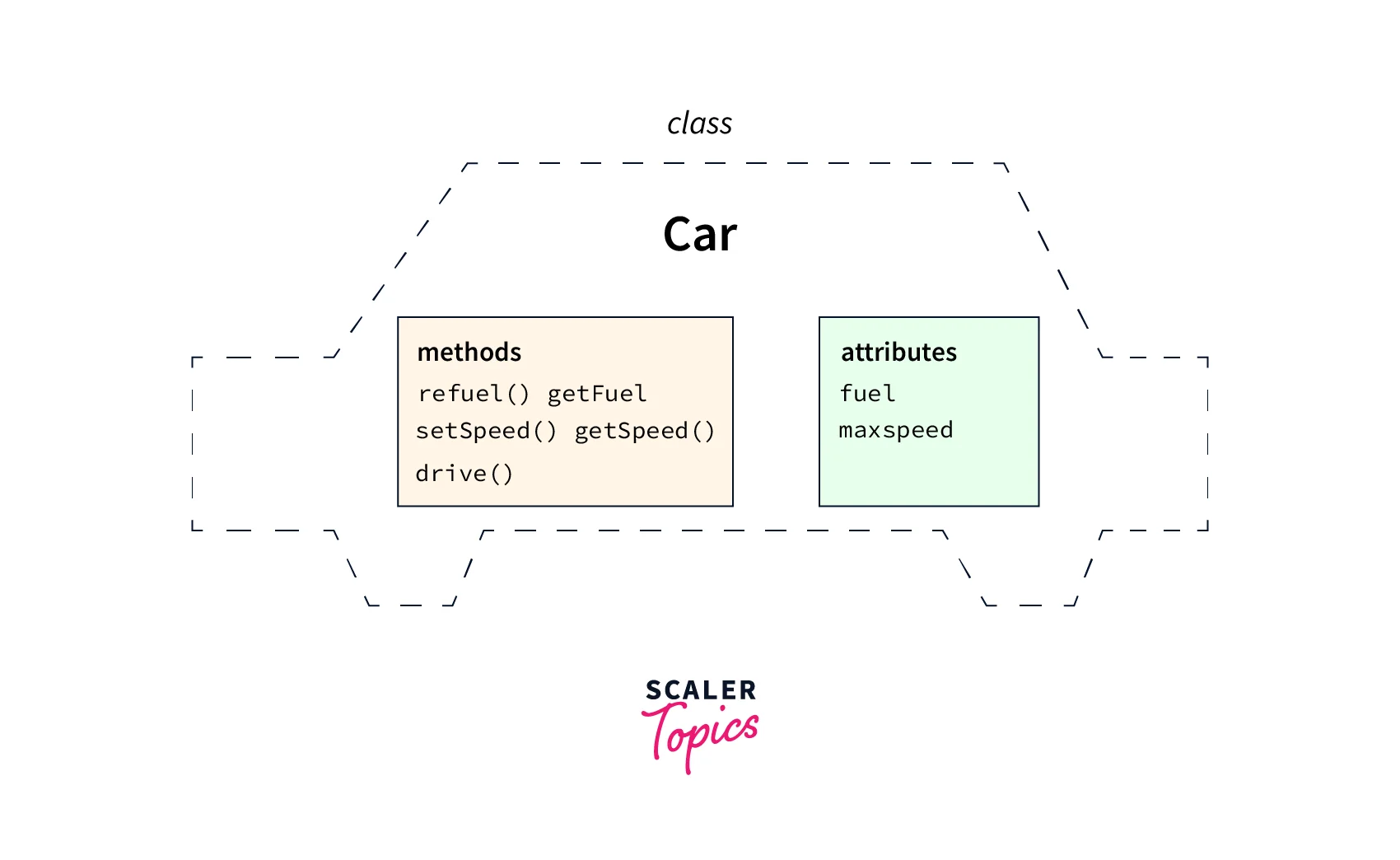
Various programming languages endorse Object-Oriented Programming (OOP) principles. Prominent among them are Java, Python, and C++, recognized as top OOP languages. OOP's modularity, encapsulation, and inheritance concepts are integral in these languages, enabling developers to design robust and scalable software. Java's platform independence, Python's simplicity, and C++'s performance highlight the diversity of OOP implementation across languages. This foundational approach enhances code reusability, collaboration, and efficient software development.
Advantages:
- Modularity through Breakdown: OOP excels in modularity by dividing complex systems into self-contained units, enhancing code reusability and maintainability.
- Efficient Collaboration: Modular design enables multiple developers to work on specific components simultaneously, boosting productivity and speeding up development.
- Clearer Code Structure: Component-based approach results in clear, comprehensible code that is easier to understand and test.
- Data Encapsulation: OOP encapsulates data and methods within objects, safeguarding them from external interference and promoting security.
- Enhanced Privacy and Security: Encapsulation conceals implementation details, with well-defined interfaces controlling access, reducing unintended changes and enhancing data privacy.
- Inheritance Benefits: OOP supports inheritance, allowing new classes to inherit properties and behaviors from existing classes, reducing repetition and promoting efficient code maintenance.
Disadvantages:
- Encapsulation safeguards data and methods within objects, preventing external interference.
- It enhances security by hiding object implementation details.
- Well-defined interfaces control access, minimizing unintended changes.
- Particularly useful for maintaining data privacy and security in large-scale applications.
- OOP supports inheritance, allowing new classes to inherit properties from existing ones.
- Derived classes can expand and modify without altering the base class.
- Increases code reuse and reduces repetition.
- Efficient code maintenance as changes in base classes propagate to derived classes.
Example
Output:
Top Applications of OOPs
Let us explore the top applications of OOPs and how it enhances the development process across various domains.
How Scaler Transformed Careers in Different Fields
Scaler learners achieved 2.5x salary growth with average post-Scaler CTC reaching ₹23L.
 Google
 Amazon
 Microsoft
 Flipkart
 Adobe1200+ more
1. Software Development:
OOPs, are widely used in software development because it allows developers to design modular and reusable code. It improves code organization by encapsulating data and methods within objects, making complex software systems easier to manage and maintain. Furthermore, OOPs promotes code reuse through concepts such as inheritance and composition, allowing developers to build on existing codebases and eliminate repetition.
2. Development of Graphical User Interfaces (GUIs):
OOPs lends itself well to GUI development, giving a natural approach to model and representing graphical elements. Developers may construct engaging and intuitive user interfaces using classes and objects. OOPs, and frameworks such as Java's Swing and C#'s Windows Presentation Foundation (WPF) provide rich libraries and tools to help developers create visually beautiful and user-friendly programs.
Turn Learning into Career Growth
3. Game Development:
OOPs are commonly used in game development due to their ability to express game things as objects. Complex interactions between people, objects, and settings are common in games. Developers can use OOPs to describe these entities as objects and define their behaviors and characteristics. OOPs ideas are used by game engines such as Unity and Unreal Engine, allowing developers to build immersive and engaging gaming experiences.
4. Database Management Systems:
Encapsulation and abstraction are OOPs ideas used in database management systems (DBMS). OOPs languages like Python and Java have libraries like JDBC and SQLAlchemy that ease database interaction. Database activities can be encapsulated within objects, enhancing code organization and maintainability. OOPs also enables the building of data models, which makes mapping database tables easier.
5. Mobile App Development:
OOPs are widely utilized in mobile app development, powering popular platforms such as Android and iOS. Languages that adhere to OOPs concepts, like Java and Swift, enable developers to create robust and scalable mobile applications. OOPs allows for code reuse, making designing programs for multiple platforms easier while sharing similar code logic.
Object-Oriented Programming (OOPs) has emerged as a critical paradigm in current software development. Its uses include software development, graphical user interface development, game development, database management systems, and mobile application development. OOPs enables developers to create scalable, maintainable, and efficient programs by emphasizing code reusability, encapsulation, and modularity. As technology advances, OOPs will remain important for developers looking to create new and dependable software solutions.
FAQs
Q. What is Object-Oriented Programming (OOP)?
A. Object-Oriented Programming (OOP) is a programming paradigm centered on the concept of objects, which are class instances. It emphasizes organizing code into reusable and modular components that can interact with one another to solve difficult issues. OOP provides a set of concepts and strategies for structuring code more naturally and flexibly.
Q. What are the key benefits of using OOP?
A. OOP offers distinct advantages. It encourages modular objects for reusable code, ensures well-organized and maintainable code via encapsulation, inheritance, and polymorphism, allowing flexibility and easy updates. Additionally, OOP models real-world scenarios, enhancing system understanding.
Q. What are the top applications of OOP?
A. OOP finds broad applications in software development domains:
- Software Development: OOP is vital for large-scale software systems, enhancing organization and maintainability.
- GUI Development: OOP suits GUI creation, modeling components as objects with defined behavior.
- Game Development: OOP represents game elements, like characters and items, streamlining runtime object creation.
- Database Systems: OOP creates database systems through object-oriented data models and ORM frameworks, minimizing SQL use.
- Simulation and Modeling: OOP is used in simulating real-world systems for analysis, from physics to finance.
Q. Can OOP be used in web development?
A. Absolutely! OOP is applicable in web development too. Frameworks like Ruby on Rails, Django, and Laravel utilize OOP for organized and scalable web app development. It streamlines code, offers reusability, and supports features like authentication, forms, and databases. JavaScript, a key web language, also incorporates OOP for dynamic and interactive interfaces.
Q. Is OOP the sole programming paradigm utilized in software development?
A. OOP is one of numerous software development programming paradigms. Procedural programming, functional programming, and declarative programming are also popular paradigms.
Conclusion
- Object-Oriented Programming (OOPs) serves as the foundation for modern software development, modeling real-world concepts effectively for robust systems.
- Code reusability is a key benefit of OOPs, leveraging inheritance and polymorphism to save time and simplify maintenance.
- OOPs promotes modularity by breaking complex problems into manageable modules, enabling independent coding, testing, and upgrades.
- Encapsulation in OOPs secures data and methods, enhancing object integrity, security, and reducing reliance on internal details.
- Encapsulation in OOPs secures data and methods, enhancing object integrity, security, and reducing reliance on internal details.
- Collaborative development is enhanced by OOPs, allowing multiple developers to work on modules with clear interfaces for smoother integration.
- OOPs encourages clean code, separation of concerns, and modular structure, easing maintenance and debugging efforts.
- OOPs supports flexible development with iterative improvements, facilitating adaptations to changing requirements.




