


What is an Artificial Intelligence (AI) Engineer?
Artificial Intelligence (AI) is revolutionizing industries globally, led by the expertise of A intentionally, who specialize in designing systems that simulate human abilities such as language processing, decision-making, and visual recognition. They employ machine learning, neural networks, and data analysis to create adaptive, intelligent systems. AI engineering, an intersection of computer science, mathematics, and statistics, involves developing algorithms for machines to learn and make decisions. It encompasses machine learning, deep learning, natural language processing, and computer vision. AI Engineers are crucial in transforming theoretical AI concepts into real-world applications, driving innovation across various sectors. This article explores the role and impact of AI Engineers in today's technology-driven world.
What Is Artificial Intelligence?
Artificial Intelligence (AI) is a branch of computer science that focuses on creating intelligent machines capable of simulating human intelligence. It involves developing algorithms and models that enable machines to perceive, reason, learn, and make decisions. The field of AI encompasses various subfields, such as machine learning, natural language processing, computer vision, and robotics.
At its core, AI aims to replicate human cognitive abilities, allowing machines to perform tasks that typically require human intelligence. These tasks include speech recognition, image and video analysis, language translation, autonomous navigation, and problem-solving. AI technology has the potential to transform numerous industries by automating processes, enhancing efficiency, and enabling data-driven decision-making.
Artificial Intelligence engineers are the driving force behind the development and implementation of AI systems. They possess a deep understanding of algorithms, statistical models, and programming languages, which allows them to create intelligent solutions tailored to specific applications. Artificial Intelligence engineers combine their technical expertise with domain knowledge to solve complex problems and drive innovation in various fields.
The role of an Artificial Intelligence engineer involves designing and developing AI algorithms, training machine learning models, analyzing large datasets, and fine-tuning models for optimal performance. They work closely with data scientists, software engineers, and domain experts to understand the requirements and constraints of a particular application.
What is AI Engineering?
AI engineering is a specialized field within the broader domain of artificial intelligence that focuses on developing and implementing AI systems and solutions. Artificial Intelligence engineers are the professionals who drive the field of AI engineering forward, leveraging their expertise to create intelligent systems that can learn, adapt, and perform tasks with human-like intelligence.
AI engineering involves a combination of computer science, mathematics, statistics, and domain knowledge to design and implement algorithms, models, and architectures that enable machines to process and analyze data, make decisions, and perform complex tasks. These tasks can range from natural language processing and image recognition to predictive analytics and autonomous systems.
To become an Artificial Intelligence engineer, individuals require a strong foundation in mathematics, statistics, and programming. Proficiency in programming languages such as Python, R, and Java is essential, as AI engineers often work with libraries and frameworks like TensorFlow, PyTorch, and scikit-learn to build and train machine learning models.
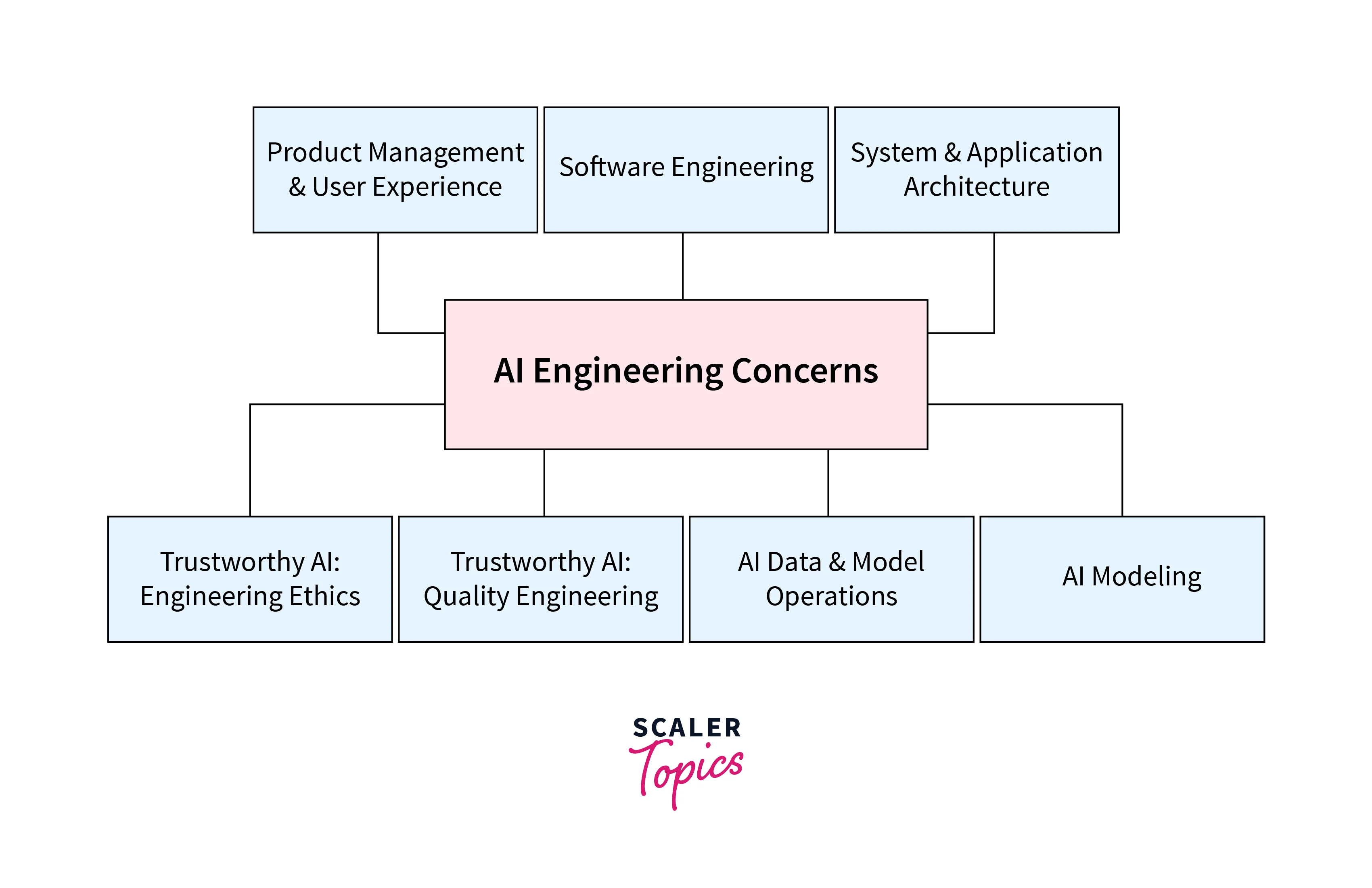
`AI engineers need to have a deep understanding of machine learning algorithms, neural networks, and optimization techniques. They must be able to preprocess and clean data, select appropriate features, and fine-tune models to achieve high accuracy and performance.
The field of AI engineering is rapidly evolving, and staying updated with the latest advancements is essential for professionals in this domain. Continuous learning and keeping abreast of cutting-edge technologies, research papers, and industry trends are crucial for AI engineers to deliver innovative and impactful solutions.
AI engineering finds applications in various industries, including healthcare, finance, cybersecurity, retail, and manufacturing. In healthcare, AI engineers develop systems for medical image analysis, drug discovery, and personalized medicine. In finance, AI engineers build algorithms for fraud detection, risk assessment, and algorithmic trading. The potential applications of AI engineering are vast and continue to expand as technology advances.
What Does an AI Engineer Do?
Artificial Intelligence engineers play a pivotal role in developing and implementing AI systems and solutions. Their responsibilities encompass a wide range of tasks throughout the AI project lifecycle. Let's take a closer look at what an AI engineer does:
- Designing and Developing AI Algorithms: AI engineers design and develop algorithms that enable machines to learn from data and make intelligent decisions. They select and fine-tune machine learning models, neural networks, and other AI techniques to address specific use cases and objectives. AI engineers also optimize algorithms for performance, scalability, and efficiency.
- Data Preprocessing and Analysis: AI engineers work with large datasets, cleaning and preprocessing the data to ensure its quality and suitability for training AI models. They apply statistical techniques and data exploration methods to gain insights and identify patterns that can be utilized for model training and evaluation.
- Building and Training Models: AI engineers are responsible for building and training machine learning models using appropriate libraries, frameworks, and tools. They select the best algorithms and architectures for the given problem, fine-tune hyperparameters, and iteratively train models to achieve desired performance levels. They also employ techniques such as cross-validation and regularization to avoid overfitting.
- Implementing AI Solutions: Once the models are trained and optimized, AI engineers implement them into production systems or integrate them into existing software applications. This involves deploying models on cloud platforms or edge devices, ensuring compatibility and efficiency in real-world scenarios.
- Performance Evaluation and Improvement: AI engineers evaluate the performance of AI systems by analyzing metrics such as accuracy, precision, recall, and F1 score. They diagnose model weaknesses and make improvements through techniques like ensemble learning, feature engineering, or architecture modifications. Continuous monitoring and improvement are vital to enhance the robustness and reliability of AI solutions.
- Collaboration and Communication: AI engineers collaborate with cross-functional teams, including data scientists, software engineers, and domain experts, to gather requirements, understand business needs, and align AI solutions with organizational goals. Effective communication skills are essential for translating technical concepts into actionable insights for stakeholders.
- Research and Innovation: AI engineers stay updated with the latest research and advancements in the field. They explore innovative approaches, experiment with emerging technologies, and contribute to the development of new AI algorithms and methodologies. By pushing the boundaries of AI, they drive innovation and pave the way for future advancements.
What Does It Take To Become an AI Engineer?
Becoming an Artificial Intelligence engineer requires a combination of technical skills, knowledge, and personal attributes. Here are the essential skills and qualifications needed to pursue a career as an AI engineer:
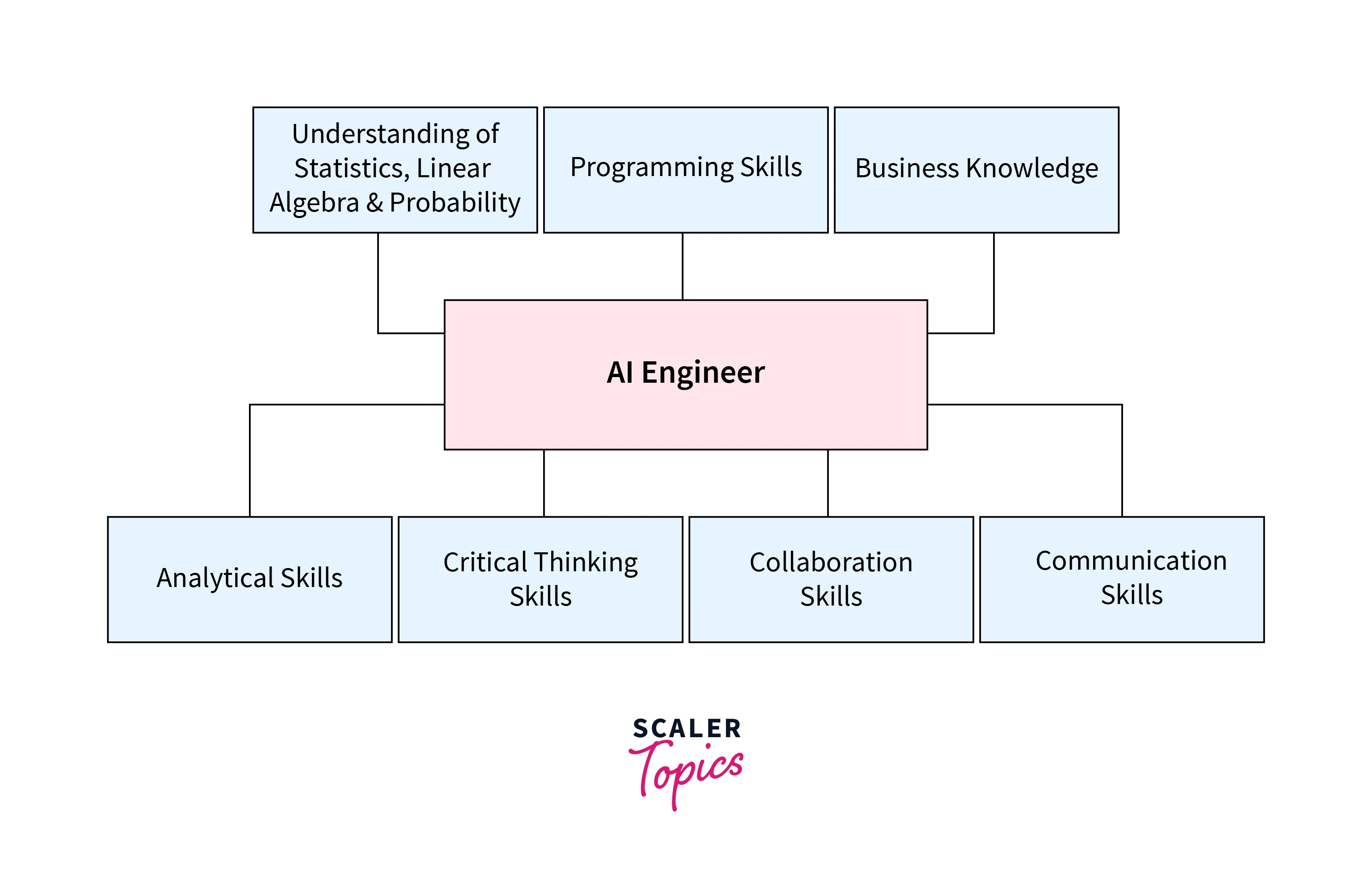
- Strong Programming Skills: Proficiency in programming languages is crucial for an AI engineer. Python is widely used in the AI community due to its extensive libraries and frameworks, such as TensorFlow, PyTorch, and scikit-learn. Additionally, knowledge of languages like R and Java can be beneficial when working with specific AI applications.
- Mathematics and Statistics: A solid foundation in mathematics and statistics is essential for AI engineers. Concepts such as linear algebra, calculus, probability, and statistics form the basis of many AI algorithms and models. Understanding these mathematical principles helps in developing and fine-tuning AI solutions.
- Machine Learning Algorithms and Techniques: AI engineers must have a deep understanding of machine learning algorithms and techniques. They should be familiar with various algorithms like decision trees, support vector machines, random forests, and neural networks. Knowledge of ensemble methods, dimensionality reduction, and feature selection is also valuable.
- Data Preprocessing and Analysis: AI engineers need to be skilled in data preprocessing and analysis. This involves cleaning and transforming data, handling missing values, dealing with outliers, and performing feature engineering. Proficiency in exploratory data analysis and statistical techniques is crucial for gaining insights from data.
- Neural Networks and Deep Learning: Deep learning has become an integral part of AI engineering.AI engineersshould have expertise in working with neural networks, convolutional neural networks (CNNs), recurrent neural networks (RNNs), and other deep learning architectures. Understanding concepts like backpropagation and optimization algorithms is vital.
- Proficiency in AI Libraries and Frameworks: AI engineers should be familiar with popular AI libraries and frameworks such as TensorFlow, PyTorch, Keras, and scikit-learn. These tools provide pre-built functions and modules for developing and training AI models efficiently.
- Problem-solving and Analytical Thinking: AI engineers need strong problem-solving skills to identify and define AI use cases, analyze complex problems, and devise appropriate solutions. They must think critically, break down problems into smaller components, and develop innovative approaches to tackle challenges.
- Continuous Learning and Adaptability: The field of AI is rapidly evolving, and AI engineers must be committed to continuous learning. They should stay updated with the latest research papers, attend conferences, and explore new technologies and techniques. Adaptability to changing tools and frameworks is crucial to stay at the forefront of AI engineering.
- Communication and Collaboration: Effective communication and collaboration skills are essential for AI engineers. They need to convey complex technical concepts to stakeholders, work in interdisciplinary teams, and collaborate with data scientists, software engineers, and domain experts. Strong interpersonal skills facilitate effective teamwork and successful project delivery.
- Education and Certification: While formal education requirements may vary, a bachelor's or master's degree in computer science, mathematics, or a related field is typically preferred for AI engineering roles. Additionally, obtaining certifications in AI and machine learning from reputable institutions can demonstrate competence and enhance career prospects.
Education
To embark on a career as an Artificial Intelligence engineer, a strong educational foundation is essential. Here are some educational pathways and degrees that can prepare individuals for the role of an AI engineer:
- Bachelor's Degree: Many AI engineers begin their journey with a bachelor's degree in computer science, mathematics, or a related field. These programs provide a solid foundation in programming, algorithms, data structures, mathematics, and statistics. Courses in artificial intelligence, machine learning, and data analysis further deepen the understanding of AI concepts.
- Master's Degree: Pursuing a master's degree in Artificial Intelligence, Machine Learning, or Data Science can provide individuals with advanced knowledge and specialization in AI engineering. These programs often offer courses on topics such as deep learning, natural language processing, computer vision, and reinforcement learning. A master's degree can enhance career prospects and enable individuals to work on more complex AI projects.
- Online Courses and Bootcamps: Online learning platforms and boot camps offer flexible and accessible options for acquiring AI engineering skills.
- Specialized AI Programs: Some universities and research institutions offer specialized programs in Artificial Intelligence. These programs focus on cutting-edge AI research, advanced algorithms, and specialized domains such as robotics or natural language processing. Participating in these programs can provide in-depth knowledge and research experience, paving the way for AI engineering roles in research or development-oriented industries.
- Certifications: Obtaining certifications in Artificial Intelligence and machine learning can showcase expertise and dedication in the field. Certifications from reputable organizations such as Google, Microsoft, and IBM validate skills and can enhance credibility. Some popular certifications include Google's TensorFlow Developer Certificate, Microsoft Certified: Azure AI Engineer Associate, and IBM Data Science Professional Certificate.
While formal education and certifications are valuable, practical experience is also crucial for becoming a successful AI engineer. Engaging in real-world AI projects, internships, or research opportunities allows individuals to apply their knowledge in practical settings and develop essential problem-solving and project management skills.
AI Engineer Salary
Artificial Intelligence engineers are highly sought after in today's job market, and their salaries reflect the demand for their specialized skills and expertise. The salary of an AI engineer can vary based on several factors, including experience, location, industry, and company size.
On average, AI engineers can expect to earn a competitive salary that often surpasses the salaries of many other IT professionals. According to recent industry reports and salary data, the annual salary for AI engineers ranges from $90,000 to $150,000 or more, depending on the aforementioned factors.
Experience plays a significant role in determining an AI engineer's salary. Entry-level AI engineers with limited experience can expect to earn salaries toward the lower end of the range. However, as they gain more experience and expertise, their earning potential increases significantly. Senior AI engineers and those with several years of experience can command higher salaries, often exceeding the six-figure mark.
The industry in which an AI engineer works can also impact their salary. Industries such as finance, healthcare, and technology tend to offer higher compensation packages for AI engineers, given the critical role AI plays in these sectors. Startups and companies focused on cutting-edge AI research and development may offer competitive salaries and additional benefits to attract top talent.
Company size can also influence salary levels. Larger companies, especially those in the technology industry, often have more resources and can offer higher salaries to AI engineers. However, smaller companies and startups may provide other perks, such as equity or the opportunity to work on innovative projects, which can be attractive to some AI engineers.
In addition to base salaries, AI engineers may receive bonuses, stock options, and other incentives, depending on their role and the company's compensation structure. These additional benefits can further enhance the overall compensation package.
Conclusion
- `Artificial Intelligence engineers play a crucial role in designing, developing, and implementing AI systems and solutions.
- To become an AI engineer, individuals need a strong foundation in programming, mathematics, and machine learning algorithms.
- Education options for AI engineering include bachelor's and master's degrees, online courses, and specialized programs.
- The salary of an AI engineer can range from 150,000 or more, depending on factors such as experience, location, and industry.
- Pursuing a career as an AI engineer offers` financial rewards, intellectual fulfillment, and abundant opportunities in a rapidly growing field.