


Data Mining Issues
Overview
In the digital age, data mining stands as a powerful tool for extracting valuable insights from vast datasets. It involves the process of discovering patterns, trends, and useful information from data. However, beneath its potential lies a landscape fraught with challenges. In this article, we delve into the world of data mining issues.
Transform Your Career
Choose from our industry-leading programs designed for career success
Modern Software and AI Engineering Program
Master full-stack development with AI integration


 +1000 more
Modern Data Science and ML with specialisation in AI
Advanced data science techniques with AI specialization
+1000 moreAdvanced AIML with Specialisation in Agentic AI
Deep dive into AIML with focus on Agentic systems
+1000 moreDevOps, Cloud & AI Platform Engineering
Build and manage AI-powered cloud infrastructure
+1000 moreAI Engineering Advanced Certification by IIT-Roorkee
Premier AI engineering certification from IIT-Roorkee

What is Data Mining?
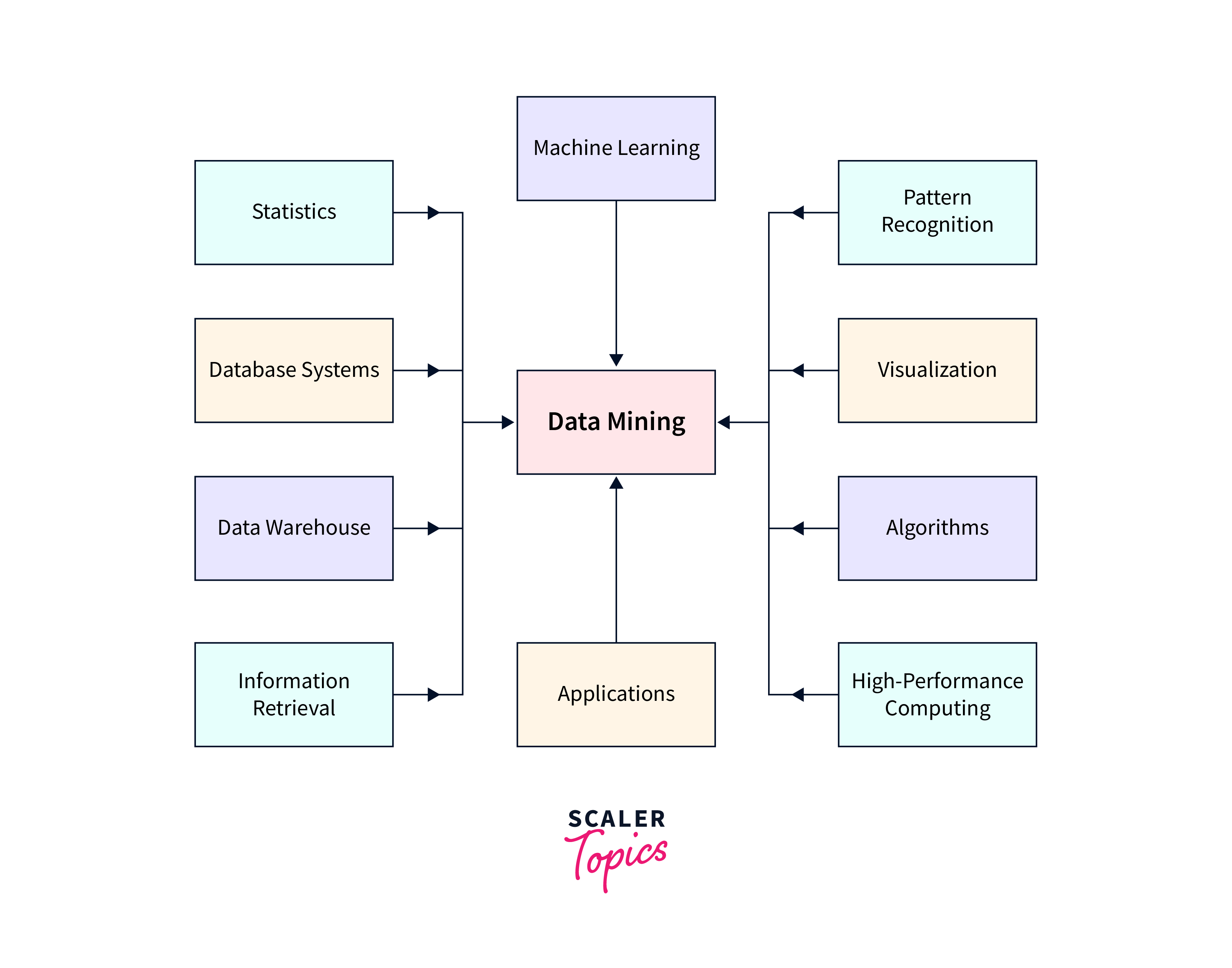
Data mining is the process of extracting knowledge and patterns from large volumes of data. It involves using techniques from statistics, machine learning, and database management to uncover hidden insights, relationships, and trends within datasets. This invaluable discipline aids decision-making, prediction, and knowledge discovery across various fields and industries.
Purposes of Data Mining
Data mining serves several critical purposes, including identifying patterns and trends, predicting future outcomes, and improving decision-making. It enables businesses to gain a competitive edge by optimizing marketing strategies, understanding customer behaviour, and detecting anomalies or fraud. In healthcare, data mining aids in disease prediction and treatment optimization. It's also instrumental in scientific research, helping to extract meaningful insights from complex datasets. Essentially, data mining transforms raw data into actionable knowledge, driving innovation and informed choices across diverse domains.






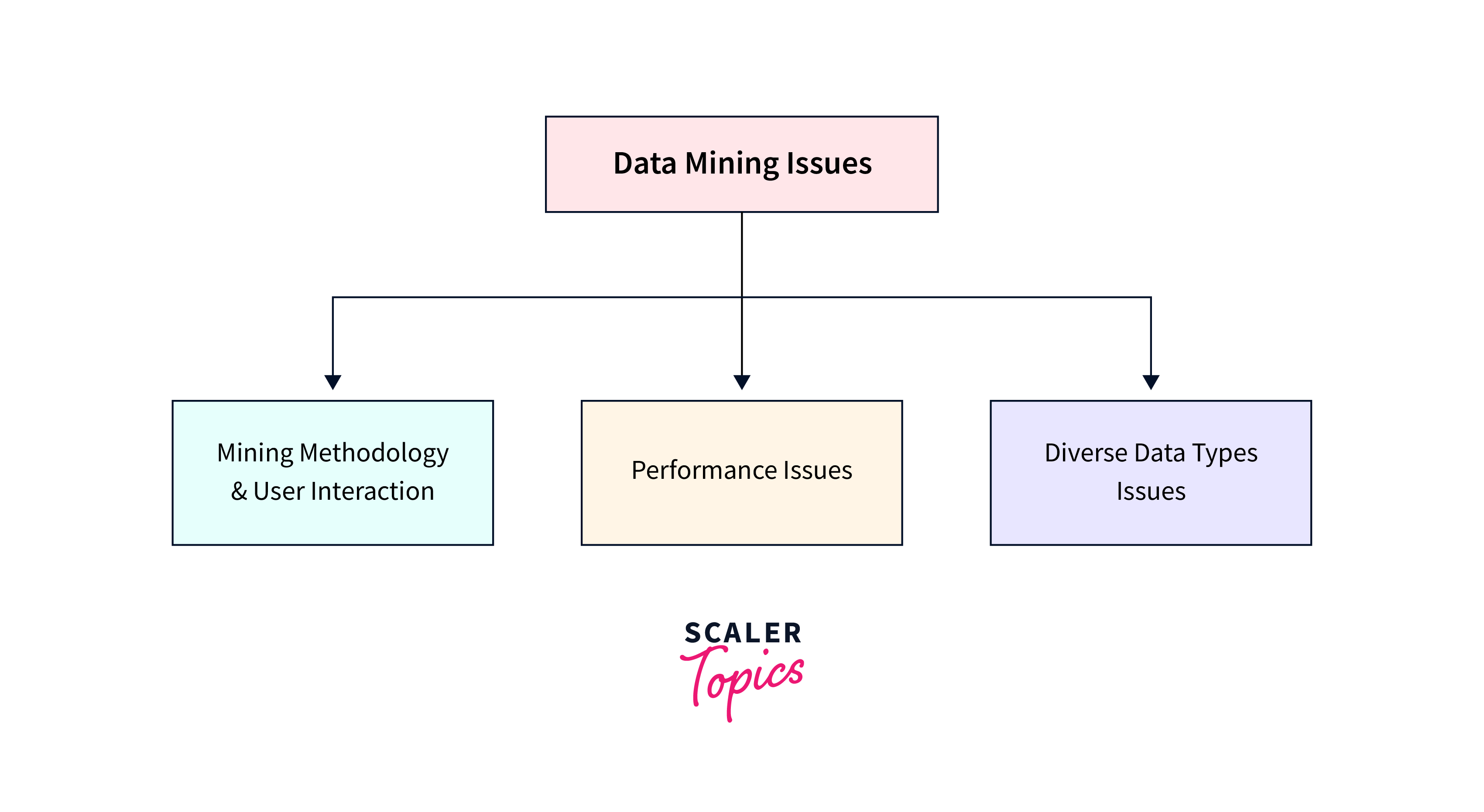
Data Mining Issues
Let’s explore three key data mining issues, as mentioned below -
Scaler Placement Report and Statistics
Scaler learners achieved 2.5x salary growth with average post-Scaler CTC reaching ₹23L.
 Google
 Amazon
 Microsoft
 Flipkart
 Adobe1200+ more
1. Mining Methodology Issues
Methodology-related data mining issues encompass challenges related to the choice and application of mining algorithms and techniques. Selecting the right method for a specific dataset and problem can be daunting. Moreover, issues like overfitting, bias, and the need for interpretability often arise, making it crucial to strike a balance between model complexity and accuracy.
2. Performance Issues
Performance-related data mining issues revolve around scalability, efficiency, and handling large datasets. As data volumes continue to grow exponentially, it becomes essential to develop algorithms and infrastructure capable of processing and analyzing data promptly. Performance bottlenecks can hinder the practical application of data mining techniques.
Turn Learning into Career Growth
3. Diverse Data Types Issue
The diverse data types data mining issues highlight the complexity of dealing with heterogeneous data sources. Data mining often involves integrating data from various formats, such as text, images, and structured databases. Each data type presents unique challenges in terms of preprocessing, feature extraction, and modelling, requiring specialized approaches and tools to tackle these complexities effectively.
Challenges of Data Mining
In this section, we will explore various challenges of data mining, as mentioned below -
- Data Quality - Data mining heavily relies on the quality of the input data. Inaccurate, incomplete, or noisy data can lead to misleading results and hinder the discovery of meaningful patterns.
- Data Complexity - Complex datasets with diverse structures, including unstructured data like text and images, pose significant challenges in terms of preprocessing, integration, and analysis.
- Data Privacy and Security - Safeguarding sensitive information is paramount. Data mining can potentially compromise privacy if not conducted with stringent privacy-preserving techniques and compliance with data protection regulations.
- Scalability - As data volumes continue to grow, ensuring that data mining algorithms and infrastructure can handle large-scale datasets efficiently becomes a pressing issue.
- Interpretability - Understanding and explaining the outcomes of data mining models is crucial for informed decision-making. Black-box models can raise concerns when interpretability is required.
- Ethics - Ethical considerations in data mining, such as fairness, bias, and the responsible use of data, are gaining prominence. Ensuring ethical practices throughout the data mining process is a critical challenge.
Conclusion
- Data mining is a powerful tool for extracting insights from data, but it comes with a set of intricate data mining issues and challenges that must be addressed to unlock its full potential.
- From data quality and privacy concerns to the need for scalable solutions and ethical considerations, data miners must be vigilant and adopt best practices to overcome these data mining issues.
- As data plays a pivotal role in decision-making and innovation, understanding and mitigating data mining issues will be instrumental in harnessing its transformative capabilities across various industries and domains.
- By embracing these data mining issues and challenges as opportunities for growth and improvement, we can ensure that data mining remains a valuable tool for knowledge discovery and informed decision-making in an increasingly data-driven world.