


In Simple Chaining, What Data Structure is Appropriate?
 FREE
FREE

Build an AI-First Career, Master the Complete Skillset
Choose from our industry-leading programs designed for career success
Modern Software and AI Engineering Program
Master full-stack development with AI integration


 +1000 more
Modern Data Science and ML with specialisation in AI
Advanced data science techniques with AI specialization
+1000 moreAdvanced AIML with Specialisation in Agentic AI
Deep dive into AIML with focus on Agentic systems
+1000 moreDevOps, Cloud & AI Platform Engineering
Build and manage AI-powered cloud infrastructure
+1000 moreAI Engineering Advanced Certification by IIT-Roorkee
Premier AI engineering certification from IIT-Roorkee

AI Forward Deployed Engineer Program
Full-stack engineering, production AI and client-facing consulting
+1000 moreOverview
Simple chaining (sometimes referred to as Separate chaining), is a collision resolution strategy followed in the concept of Hashing. As per the simple chaining strategy whenever there is a collision in HashTable, instead of looking for any other slot we prefer putting the data in the initial bucket generated by the hash function. So we would require some sort of data structure to contain all the data for each of the buckets.
Takeaways
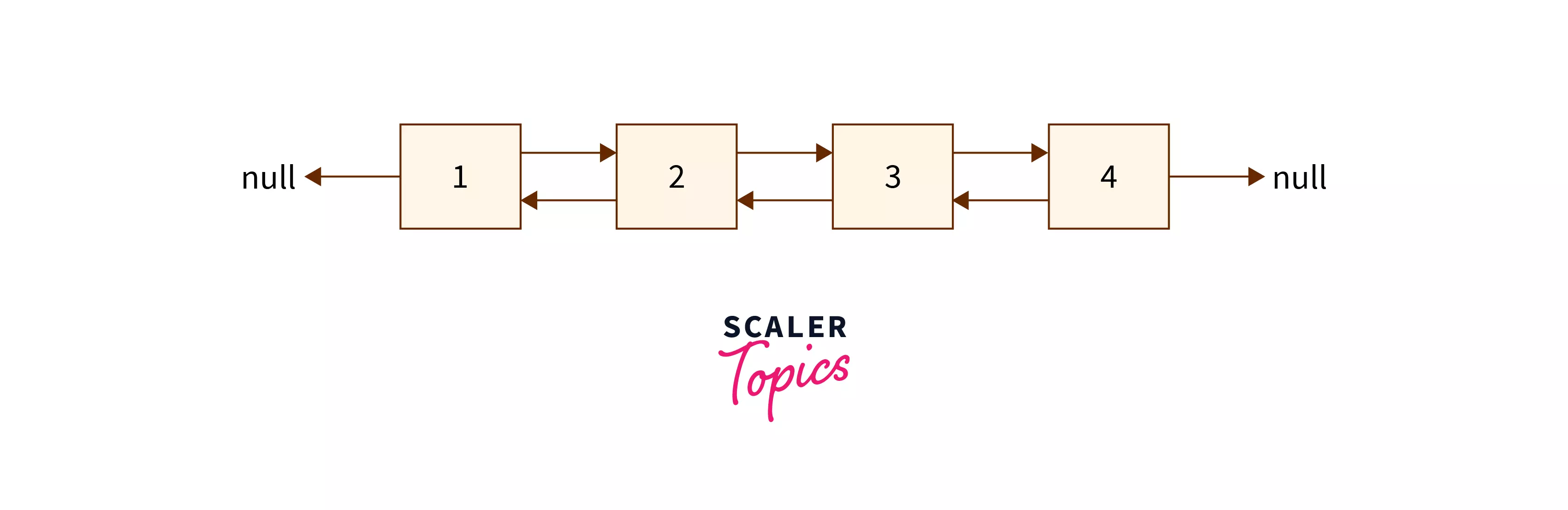
Each node of a Doubly linked list contains the memory address of the previous and next node.
In Simple Chaining, What Data Structure is Appropriate?
- Singly Linked List
- Doubly Linked List
- Red Black Trees
- Segment Trees
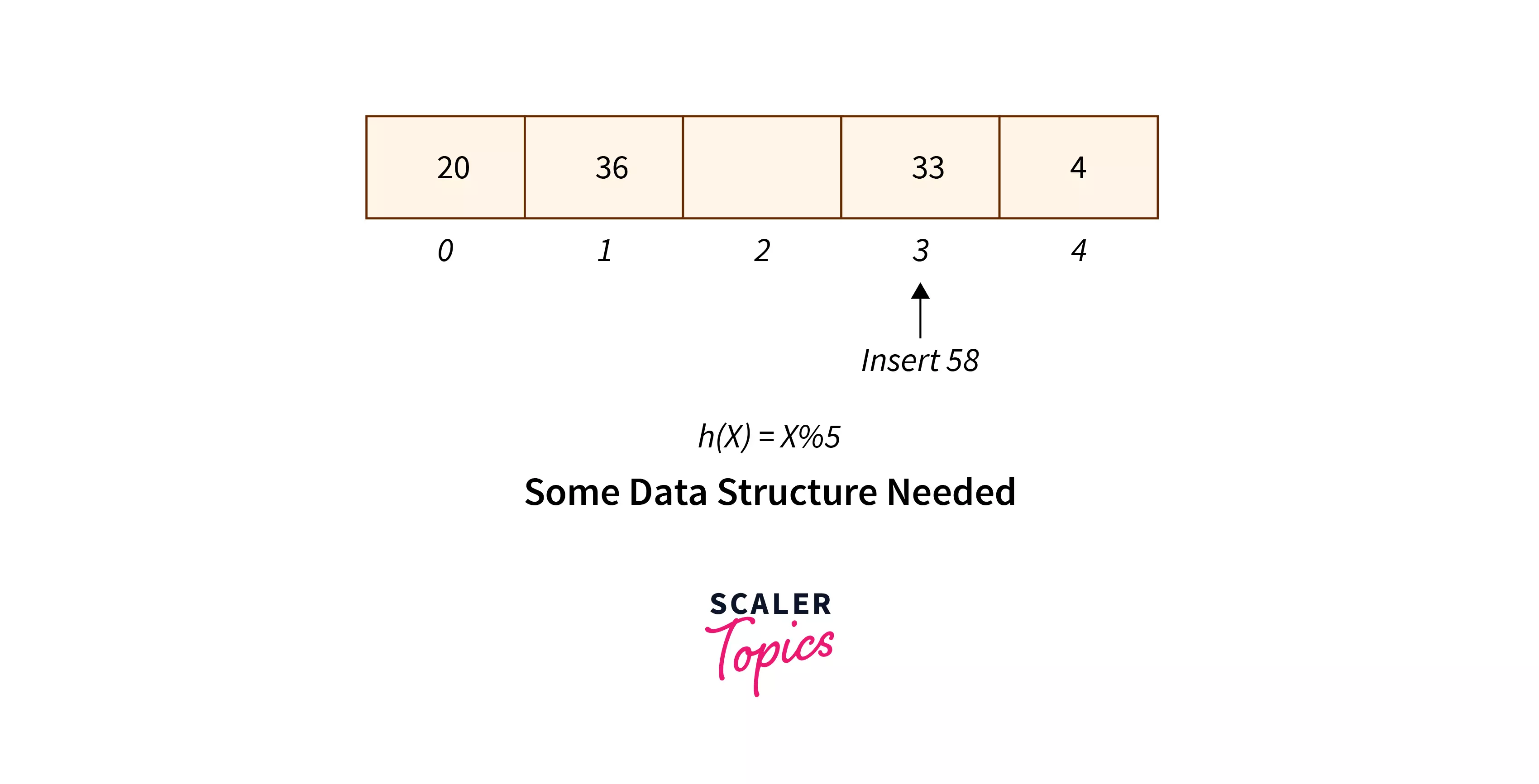
Answer - Doubly Linked List is an appropriate data structure for simple chaining.
What is a Doubly Linked List?
Doubly Linked Lists are nothing but a slight variation of singly linked lists. As the name suggests, in doubly linked lists we can traverse in both directions forward and backward unlike singly linked lists where we can only traverse in the forward direction.
Doubly Linked List is most widely used to implement undo and redo functionality in different application software like MS Word, Google docs, Premiere Pro, File Explorer, etc. Similarly, it can also be used to traverse back and forth in the chain/list of data in a Hash Table.
How Scaler Transformed Careers in Different Fields
Scaler learners achieved 2.5x salary growth with average post-Scaler CTC reaching ₹23L.
 Google
 Amazon
 Microsoft
 Flipkart
 Adobe1200+ more
Representation of Doubly Linked List
In each node of the doubly linked list, we have the following data -
- Value of the node.
- Address of the backward node (null in the case of the head node).
- Address of the forward node (null in the case of the tail node).
And in coding terms, it is represented in the following way -
Operations in Doubly Linked List
All the operation in the Doubly linked list and their time complexities is almost the same as in the singly linked list.
| Insertion | Accessing | Deletion | |
|---|---|---|---|
| Head Node | |||
| Tail Node | |||
| Node |
As it can be seen, all the operation in the Doubly linked list costs time in the worst case and also in the average case, while all of them requires constant time in the best case.
The time complexity of operations at the tail node can be brought down to by storing the address of the tail node at every instance of time in a Node type variable (say tail), so that you can directly access/remove the tail node. And when inserting after the tail node, use the same variable to insert and then update it.
We have seen that we can perform all the operations efficiently in the doubly linked list hence the doubly linked list is an appropriate data structure to use in simple chaining.
Turn Learning into Career Growth
Learn More
We strongly suggest you read the detailed article on Doubly Linked List to know how we can perform various operations in the doubly linked lists, how we can implement linked list using different ways, etc.
Conclusion
- Doubly linked list consumes more memory because each node has one additional node.
- Doubly linked list is possible to traverse in both forward in backward direction.
- Browsers like Google Chrome have “Go Forward” and “Go backward” buttons (see top left corner), to transverse back to the visited websites, which are represented using the doubly Linked list.
- All Operating systems offer functionality to switch the applications using the alt + Tab and shift + alt + Tab key combination which is also a use case of Doubly Linked List.




