


Convert Mirror Tree to Binary Tree
 FREE
FREE

Build an AI-First Career, Master the Complete Skillset
Choose from our industry-leading programs designed for career success
Modern Software and AI Engineering Program
Master full-stack development with AI integration


 +1000 more
Modern Data Science and ML with specialisation in AI
Advanced data science techniques with AI specialization
+1000 moreAdvanced AIML with Specialisation in Agentic AI
Deep dive into AIML with focus on Agentic systems
+1000 moreDevOps, Cloud & AI Platform Engineering
Build and manage AI-powered cloud infrastructure
+1000 moreAI Engineering Advanced Certification by IIT-Roorkee
Premier AI engineering certification from IIT-Roorkee

AI Forward Deployed Engineer Program
Full-stack engineering, production AI and client-facing consulting
+1000 moreProblem Statement
Given a binary tree, our task is to convert this binary tree into its mirror tree. A mirror tree is another form of a binary tree where the left and right children of all non-leaf nodes are interchanged.
Example of Mirror Tree
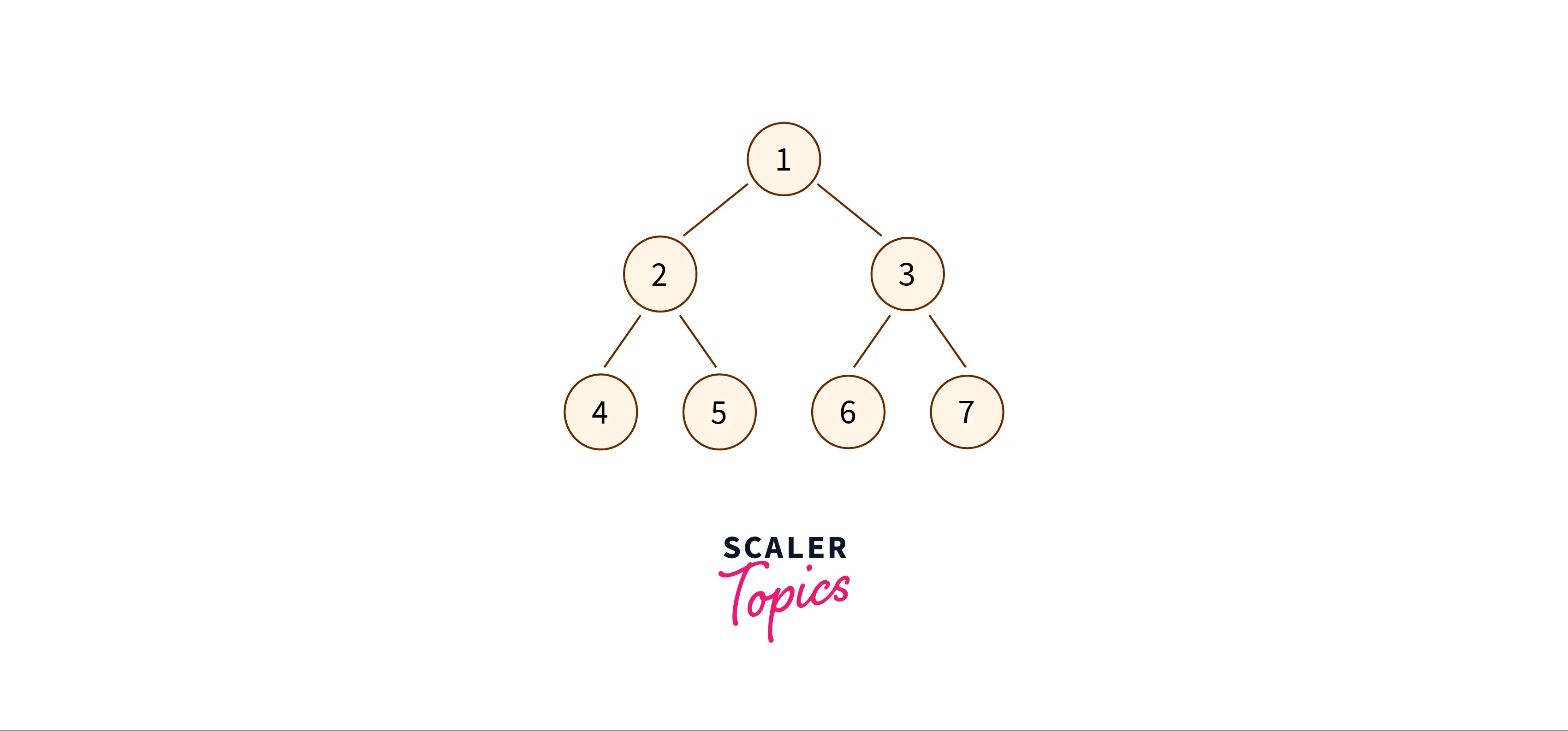
Let us try to mirror the following binary tree:
Example Explanation
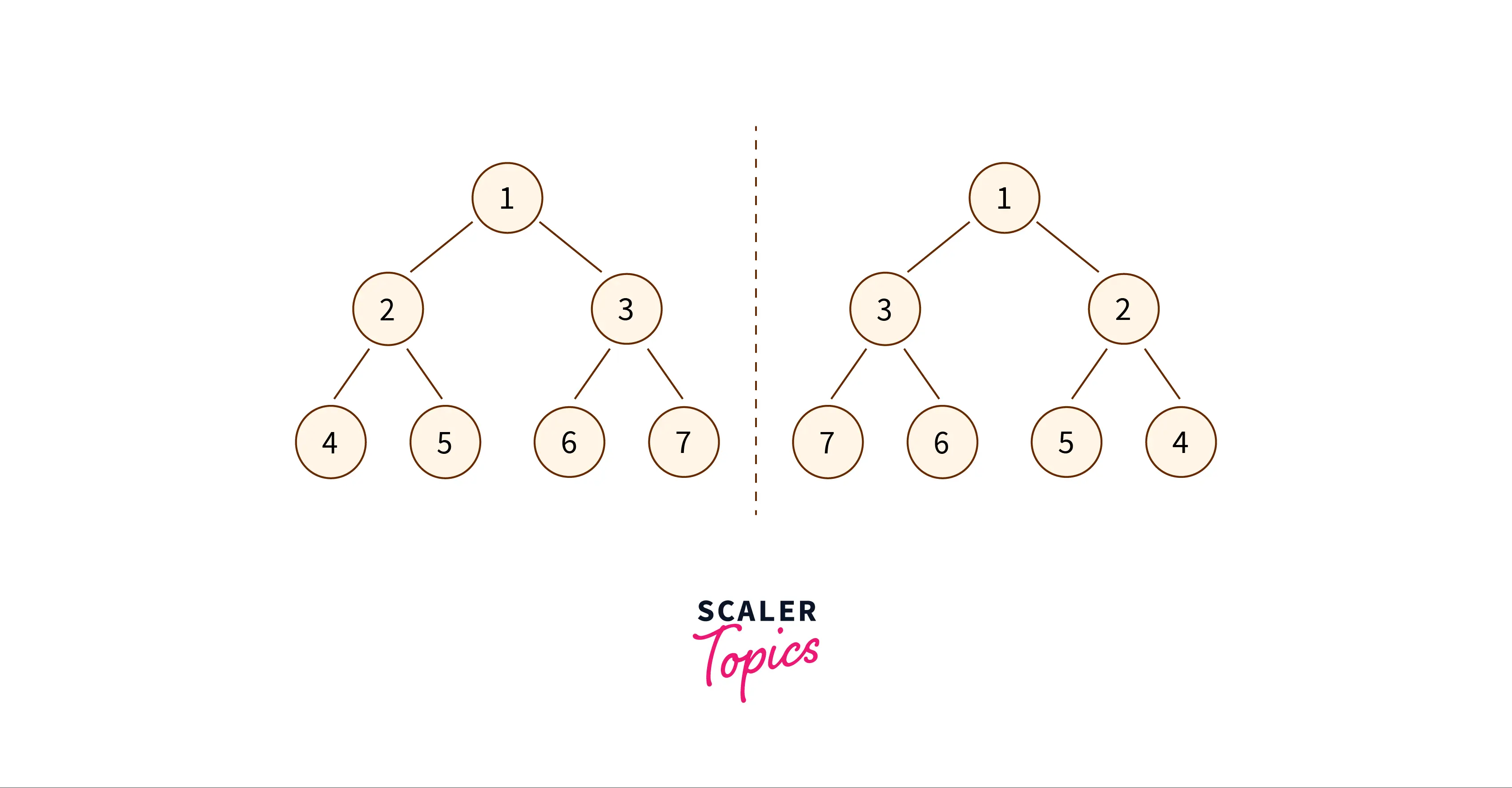
In the above-shown example consider the dotted line as a mirror thus the tree on the left side is the original binary tree while tree on the right is the mirrored binary tree.
How Scaler Transformed Careers in Different Fields
Scaler learners achieved 2.5x salary growth with average post-Scaler CTC reaching ₹23L.
 Google
 Amazon
 Microsoft
 Flipkart
 Adobe1200+ more
Input/ Output of Mirror Tree
The input statement contains each tree node's data separated by a single space in a single line. If any node in the binary tree is NULL, we will put -1 in its place. Therefore, for the tree depicted in the above example the input will be given as:
1 2 3 4 5 6 7 -1 -1 -1 -1 -1 -1 -1 -1
The output for the above given input will the following:
Here, output includes the Inorder traversal for both the original and mirrored tree.
Constraints of Mirror tree
Here N is the number of nodes in the tree, and Data denotes the value contained in the node of the binary tree.
Turn Learning into Career Growth
Approach 1- Recursive
The intuition of this approach is to solve the problem using recursion. We will create a mirror() function that will recursively mirror the left and right sub-tree.
-
Algorithm
The algorithm for this approach is as follows:
- Call the mirror function for the left sub-tree, i.e. Mirror(left sub-tree)
- Call the mirror function for the right sub-tree, i.e. Mirror(right sub-tree)
- Swap left and right sub-trees using,
- temp = left sub-tree
- left sub-tree = right sub-tree
- right sub-tree = temp
After the tree is mirrored, we will traverse it using the Inorder traversal, meaning the left sub-tree is traversed first, followed by the root node and the right sub-tree at the last.
-
Implementation
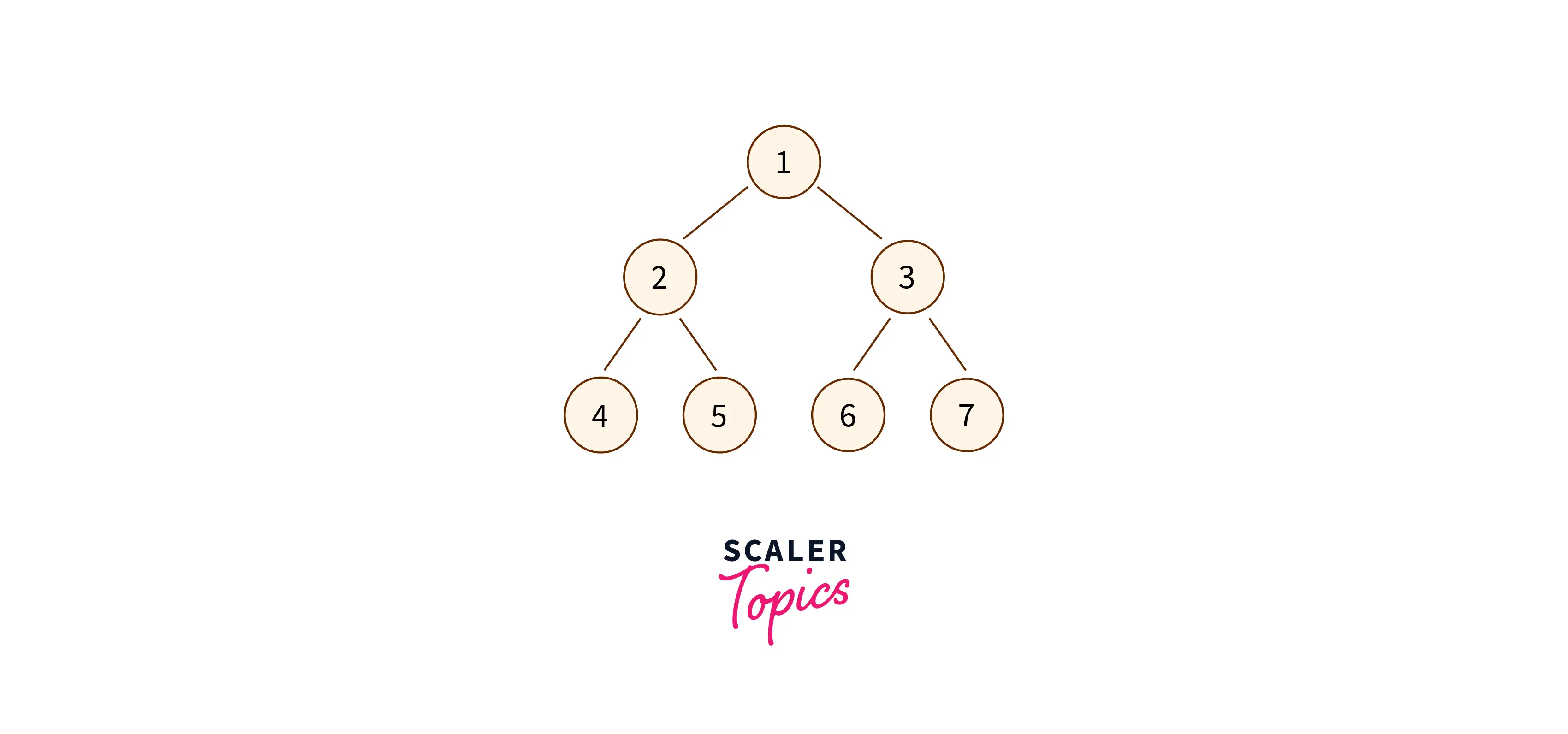
Let us now see the implementation of the Mirror for the following binary tree in C++:
Output
Let us now see the implementation of the Mirror binary tree in Java:
Output
Let us now see the implementation of the Mirror binary tree in Python
Output
-
Time Complexity
In the above code implementation, we are using the recursive approach along with updating the pointers at every recursive call (that are constant time operations thus having a time complexity of ), therefore, the time complexity of this approach will be the same as that of the inorder traversal, which is .
-
Space Complexity
If we consider the size of the stack for function calls, the space complexity of the above implemented recursive approach is . The recursive approach does not utilise any other auxiliary space other than the space used for the stack calls.
Approach 2- Iterative method using Queues
The intuition of this approach is to implement level order traversal using the queue data structure. While doing traversal, swap left and right children of every node.
-
Algorithm
The algorithm for this approach is as follows:
- Perform a level order traversal, swapping every left and right child
- Create a queue and add the root node to it.
- If the queue is not empty,
- deque node from the queue
- swap left and right children of the removed node
- push back the left and right child of the removed node to the queue
- return to step 3
-
Implementation
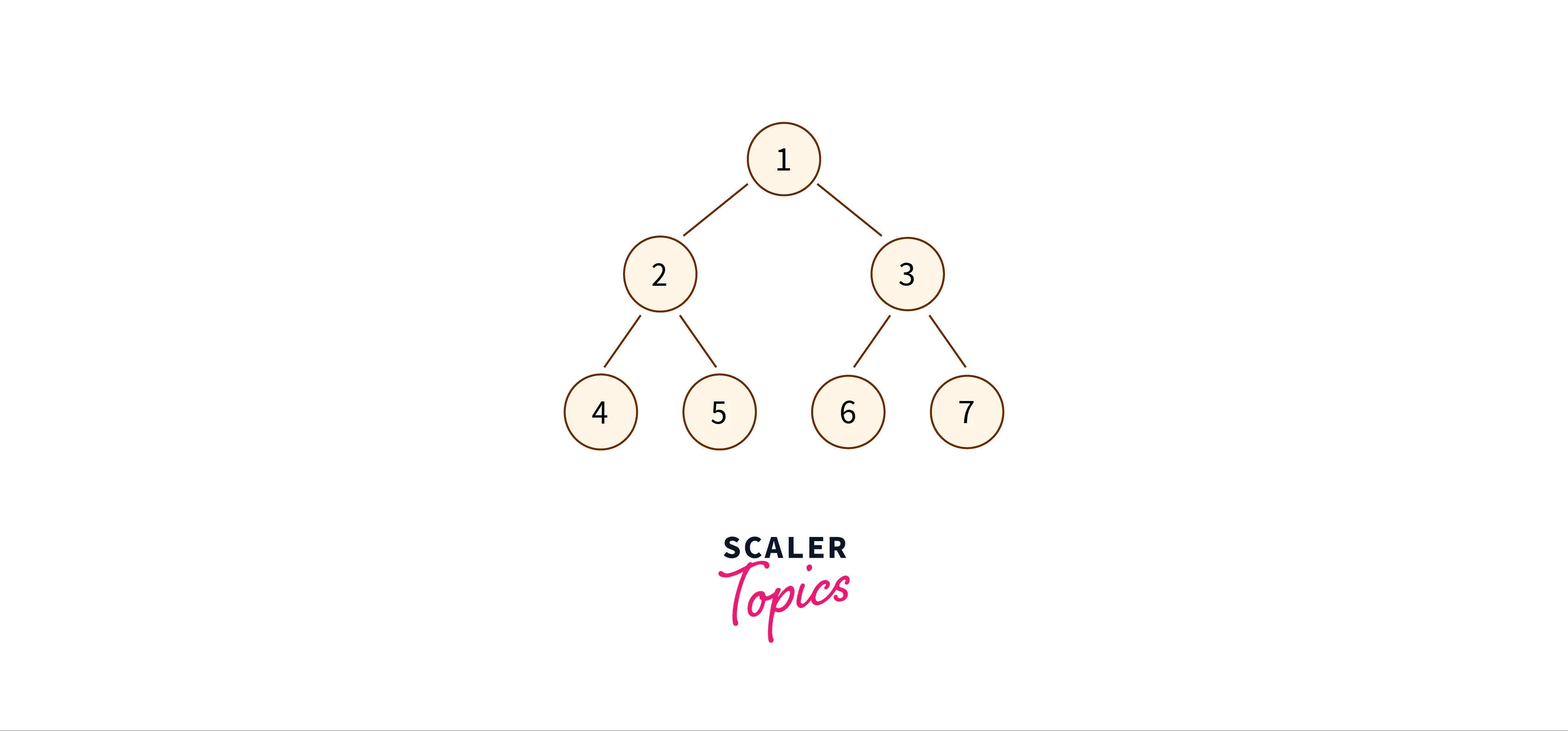
Let us now see the implementation of the Mirror for the following binary tree in C++:
Output
Let us now see the implementation of the Mirror binary tree in Java:
Output
Let us now see the implementation of the Mirror binary tree in Python:
Output
-
Time Complexity
We implement level order traversal, which has a time complexity of , as well as the swapping of left and right children, which has a constant time complexity, for a total time complexity of .
-
Space Complexity
Because this approach employs the queue data structure, the space complexity of this method is .
Conclusion
- A mirror tree is a form of the binary tree where left and right children of all non-leaf nodes are interchanged.
- Complexities for Recursive approach
- Time Complexity -
- Space Complexity -
- Complexities for Iterative approach using Queue data structure
- Time Complexity -
- Space Complexity -




