


OLAP Operations in Data Mining
OLAP, which stands for Online Analytical Processing, operations are a set of techniques used in data mining and business intelligence for analyzing large datasets. OLAP operations enable users to extract insights from multidimensional data sets quickly and efficiently. These operations help users explore data from multiple perspectives, gain insights into data relationships, and make informed decisions based on data analysis.
One example of an OLAP operation is the "slice" operation. This operation allows users to extract data from a multidimensional cube by selecting a single dimension and a specific value for that dimension. For instance, if a user wants to analyze data for a particular product, they can slice the cube by selecting the product dimension and the desired product value.
The importance of OLAP operations in data mining lies in their ability to simplify the analysis of large and complex datasets. OLAP operations enable users to extract data based on specific criteria, which allows for more focused and targeted analysis. Furthermore, these operations enable users to perform ad-hoc analysis, allowing them to explore data without the need for predefined reports or queries. Overall, OLAP operations are essential tools for data mining, as they provide users with powerful tools to extract insights from multidimensional data sets quickly and efficiently. In the next section, let’s explore a few of the most commonly used OLAP operations in data mining.
Operations in OLAP
Drill Down
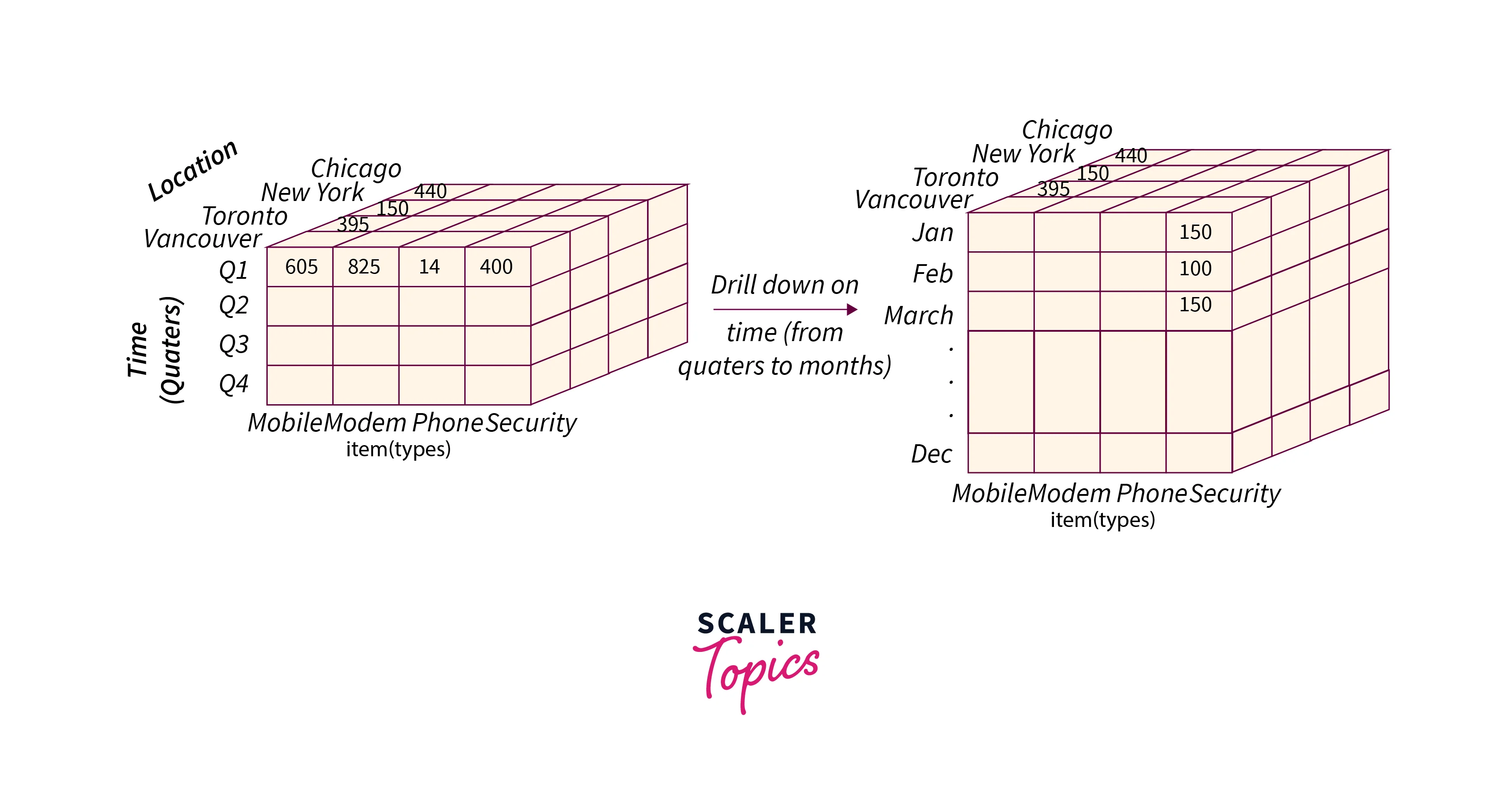
The Drill Down OLAP operation allows users to view more detailed data by expanding a particular dimension in a multidimensional cube. For example, a user can drill down into the product dimension to view data for individual products, or a user can expand quarterly sales data into monthly sales figures. This operation is important in data mining as it enables users to explore data at lower levels of detail and gain insights into specific aspects of the data. By drilling down into the data, users can identify trends and patterns that may not be apparent at higher levels of aggregation, allowing for more targeted analysis and decision-making.
Build an AI-First Career, Master the Complete Skillset
Choose from our industry-leading programs designed for career success
Modern Software and AI Engineering Program
Master full-stack development with AI integration


 +1000 more
Modern Data Science and ML with specialisation in AI
Advanced data science techniques with AI specialization
+1000 moreAdvanced AIML with Specialisation in Agentic AI
Deep dive into AIML with focus on Agentic systems
+1000 moreDevOps, Cloud & AI Platform Engineering
Build and manage AI-powered cloud infrastructure
+1000 moreAI Engineering Advanced Certification by IIT-Roorkee
Premier AI engineering certification from IIT-Roorkee

AI Forward Deployed Engineer Program
Full-stack engineering, production AI and client-facing consulting
+1000 moreDrill Up
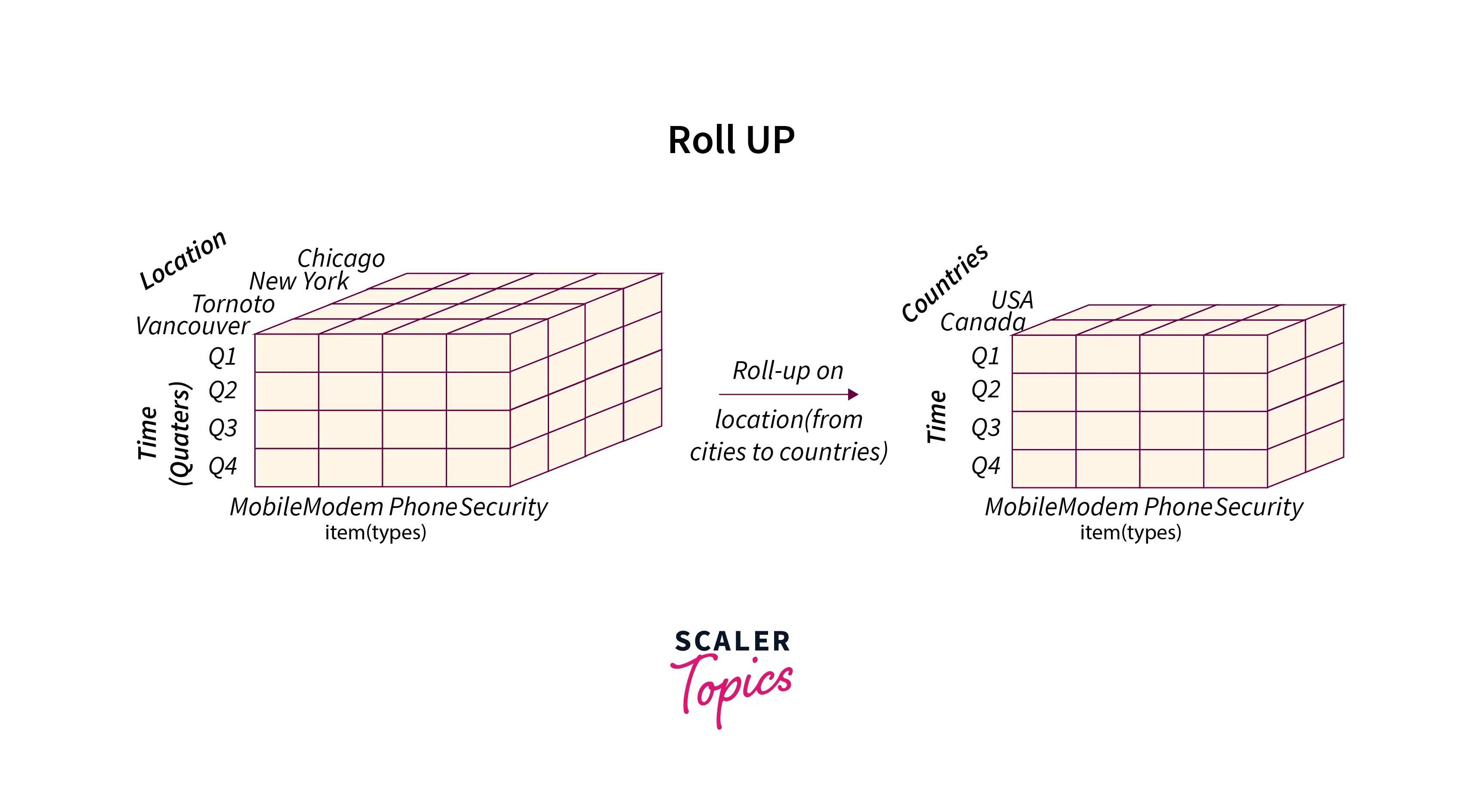
It is the opposite operation of Drill Down. The Drill Up OLAP operation allows users to view data at a higher level of aggregation by collapsing a specific dimension in a multidimensional cube. For instance, a user can drill up into quarterly or yearly sales figures to view data for a higher-level time. By drilling up, users can identify trends and patterns that may not be visible at lower levels of detail, enabling them to make informed decisions based on a complete picture of the data.
Slice
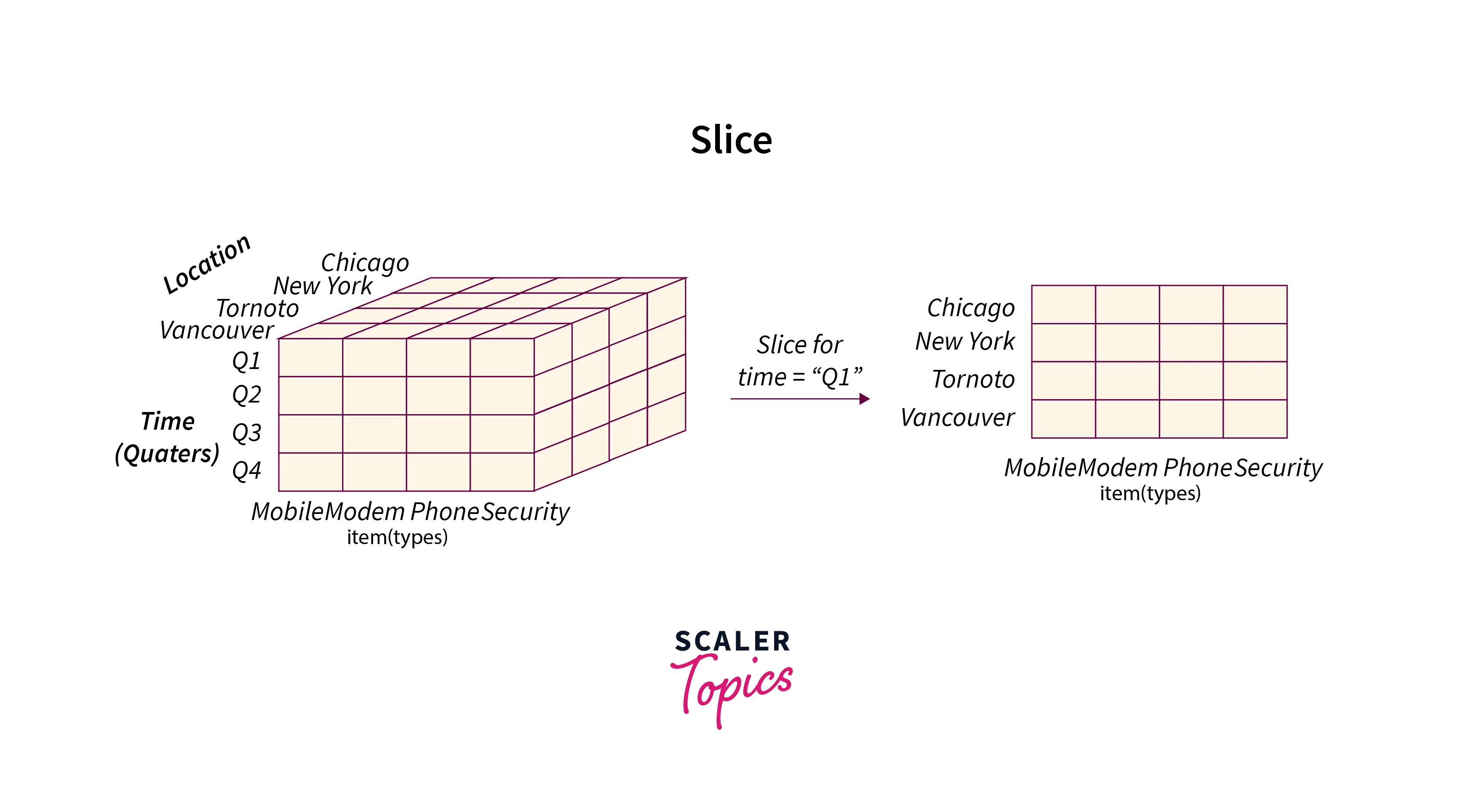
The Slice OLAP operation allows users to extract data from a multidimensional cube by selecting a single dimension and a specific value for that dimension. For example, if a user wants to analyze data for a particular product, they can slice the cube by selecting the product dimension and the desired product value. This operation is important in data mining, enabling users to extract data based on specific criteria and allowing for more focused and targeted analysis.
Dice
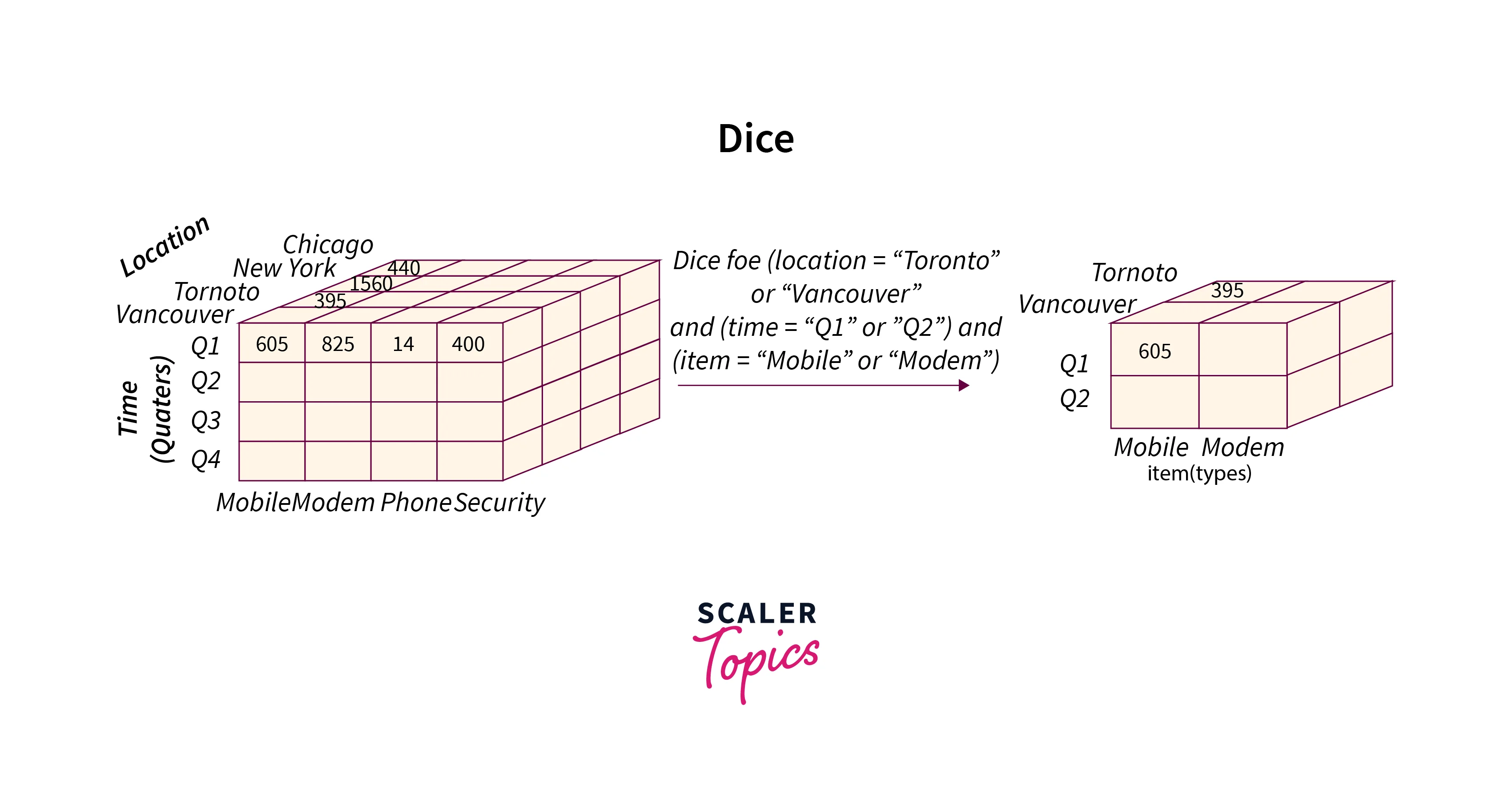
The Dice OLAP operation allows users to extract data from a multidimensional cube by selecting multiple dimensions and specific values for each selected dimension. For example, if a user wants to analyze data for a particular product and a specific period, they can dice the cube by selecting both the product and time dimensions and the desired values for each dimension. This operation is important in data mining, enabling users to extract data based on multiple criteria, allowing for more focused and targeted analysis.
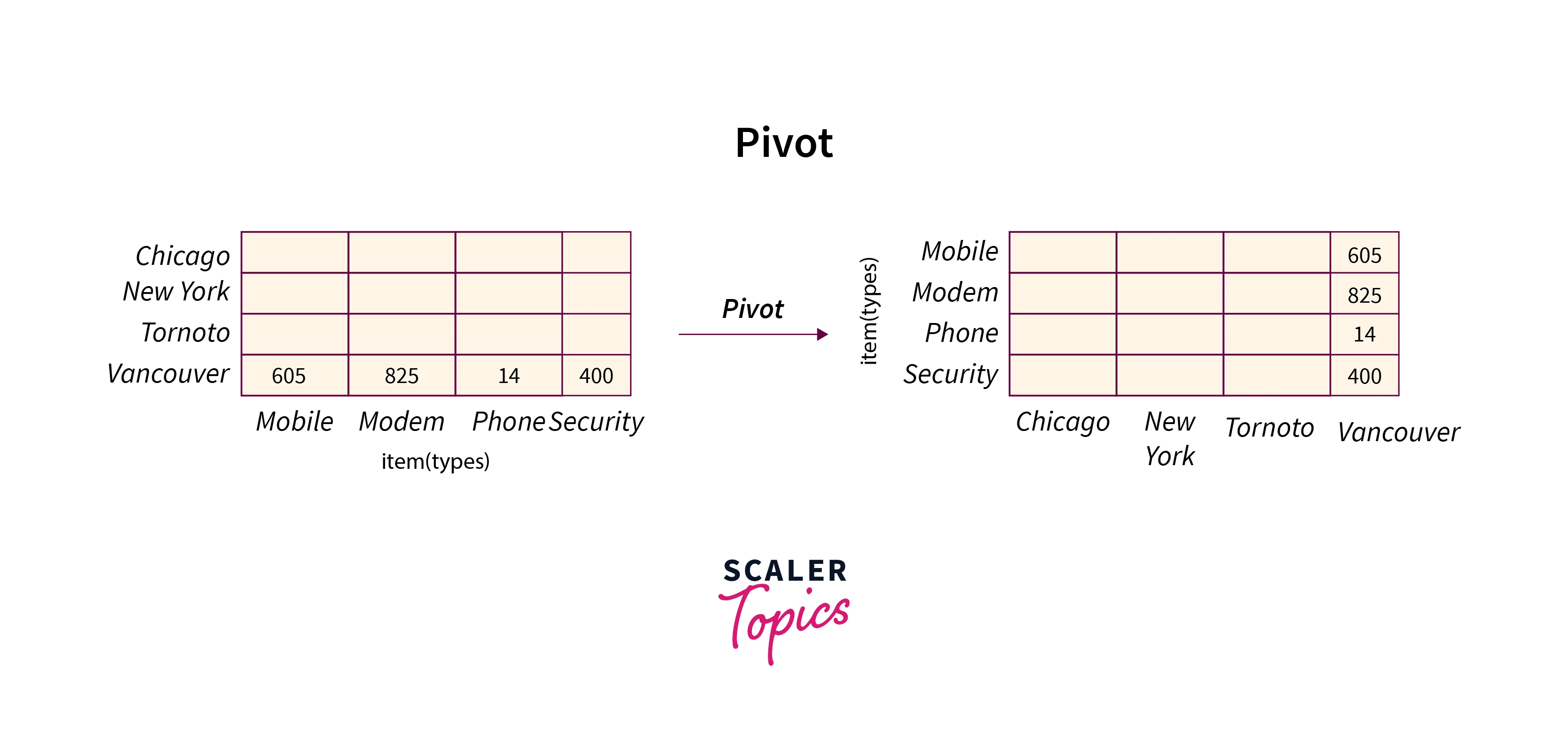
Pivot
The Pivot OLAP operation allows users to rotate the orientation of a multidimensional cube to view the data from a different perspective. For example, if a user wants to analyze sales data by product category and sales channel, they can pivot the cube to view the sales data by sales channel and product category. This operation is important in data mining as it enables users to view the same data from different angles and gain new insights into the patterns and relationships in the data.
Scoping
The Scoping OLAP operation involves restricting the database view to a specified subset. The Scoping will allow users to receive and update only data values they wish to receive an update. Scoping can be useful in restricting access to a required subset in an environment where a large volume of data is stored.
How Scaler Transformed Careers in Different Fields
Scaler learners achieved 2.5x salary growth with average post-Scaler CTC reaching ₹23L.
 Google
 Amazon
 Microsoft
 Flipkart
 Adobe1200+ more
Screening
The Screening OLAP operation involves restricting the set of data retrieved against the data or members of a dimension.
Drill Across
The Drill Across OLAP operation allows users to view data across multiple dimensions in a multidimensional cube. For example, if a user wants to analyze data for a particular product category and a specific geographic region, they can drill across the cube by selecting the product category and the geographic region dimensions. This operation is important in data mining as it enables users to analyze data across multiple dimensions simultaneously, allowing for more comprehensive and detailed analysis.
Drill Through
The Drill Through OLAP operation allows users to access detailed information about a specific data point in a multidimensional cube. For example, if a user wants to view the sales data for a particular product in a specific region and period, they can drill through the cube to view the underlying transactional data for that product, region, and time period.
Turn Learning into Career Growth
Sort
The Sort OLAP operation allows users to sort the data in a multidimensional cube based on one or more dimensions or measures. For example, if a user wants to analyze sales data for a particular product category and sort it by sales volume, they can use the sort operation to arrange the data in descending order of sales volume. This operation is important in data mining as it enables users to identify the top-performing products or categories, identify outliers and anomalies in the data, etc.
Add Measure
The Add Measure OLAP operation allows users to add a new measure to a multidimensional cube.
Drop Measure
The Drop Measure OLAP operation allows users to remove one or more measures from a multidimensional cube, simplifying the view of the data and making it easier to analyze.
Union
The Union OLAP operation combines the data from two or more cubes into a single cube. For example, if a user has two cubes that contain sales data for different regions, they can use the union operation to combine the data into a single cube that contains the total sales data for both regions.
Difference
The "Difference" OLAP operation calculates the difference between two cubes or two data sets in a single cube. For example, if a user has two cubes that contain sales data for different time periods, they can use the difference operation to calculate the change in sales between the two periods. This operation is important in data mining as it enables users to identify trends, changes, and anomalies in the data.
Eager to Explore Further? Enroll in Our Industry-Expert-Led Data Scientist Course and Bridge the Gap Between Theory and Application.
Conclusion
- OLAP operations are important data mining techniques that enable users to analyze and manipulate multidimensional data.
- There are several types of OLAP operations, such as drill down, drill up, slice, dice, drill across, pivot, sort, drop measure, union, and difference.
- Each operation serves a specific purpose and helps users to identify patterns, relationships, and anomalies in the data.
- Using OLAP operations, users can gain a more comprehensive view of their data and make informed decisions based on data-driven insights.




