


Selecting, Extracting and Slicing Dataframes Pandas
Build an AI-First Career, Master the Complete Skillset
Choose from our industry-leading programs designed for career success
Modern Software and AI Engineering Program
Master full-stack development with AI integration


 +1000 more
Modern Data Science and ML with specialisation in AI
Advanced data science techniques with AI specialization
+1000 moreAdvanced AIML with Specialisation in Agentic AI
Deep dive into AIML with focus on Agentic systems
+1000 moreDevOps, Cloud & AI Platform Engineering
Build and manage AI-powered cloud infrastructure
+1000 moreAI Engineering Advanced Certification by IIT-Roorkee
Premier AI engineering certification from IIT-Roorkee

AI Forward Deployed Engineer Program
Full-stack engineering, production AI and client-facing consulting
+1000 moreOverview
Selecting, Extracting and Slicing dataframe in Pandas are frequently used to retrieve data. These are actively applied in many domains, including data exploration, analysis, and visualization. It is easier to carry out actions with these customized dataframes when just the relevant fields are provided.
Introduction
When we need a specific subset of a dataframe, we use Slicing. Slicing dataframe Pandas, as the name suggests, separates the dataframe as required by our parameters. Dataframes can be sliced either by rows or columns.
Selecting Dataframe in Pandas is quite similar to slicing, where the difference is the indexing of the dataframe when the method is being applied. Another difference is that selecting is inclusive of the parameters used, like the row index or location of separation, while slicing the dataframe is not.
Whereas Extracting is simply returning the group of values based on a pattern or location.
Slicing a Pandas Dataframe
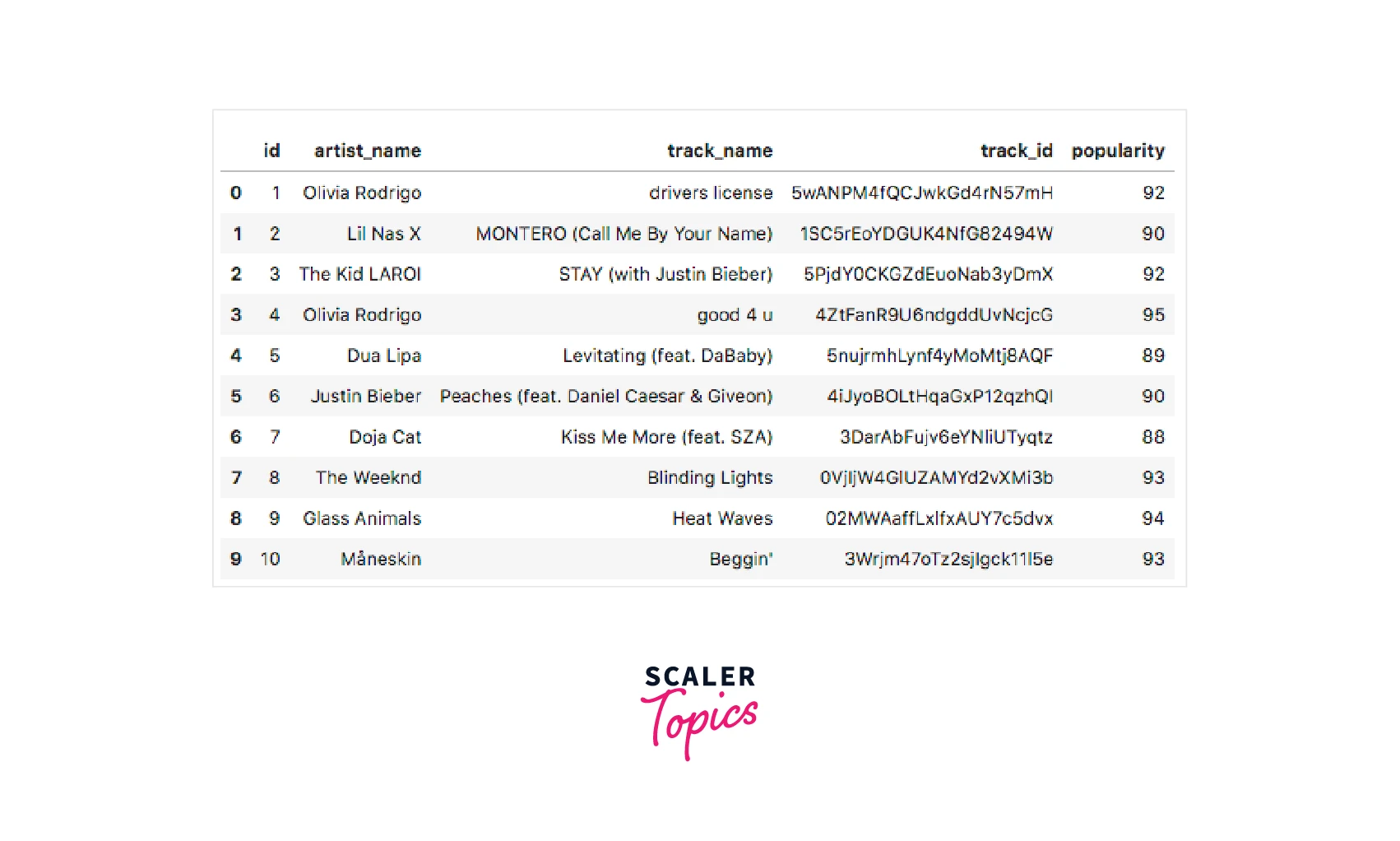
Let us consider the Spotify top 50 songs in the 2021 dataset for Dataframe Slicing.
Output :
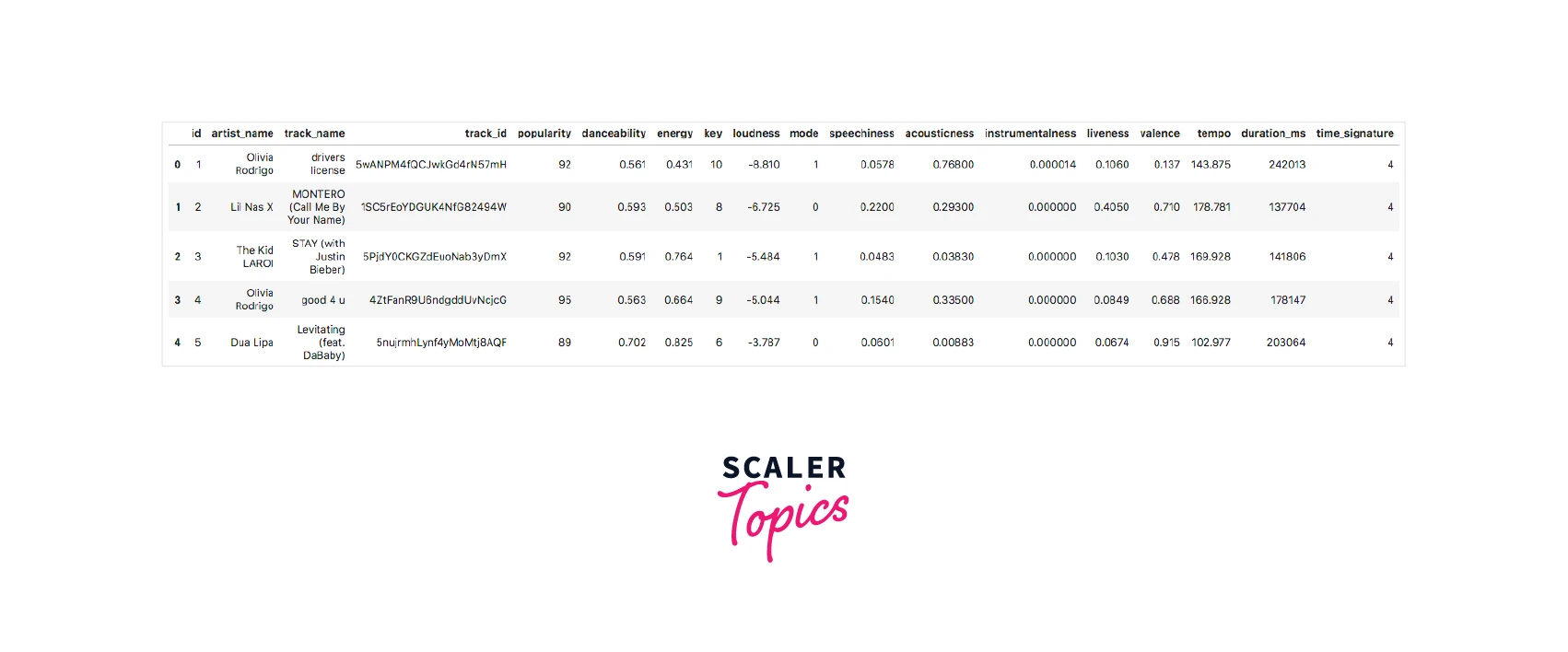
The dataset has 18 columns and 50 rows
-
Loc :
It is used to get a group of rows or coloums in a specific location. This method can be used with coloums and arrays.
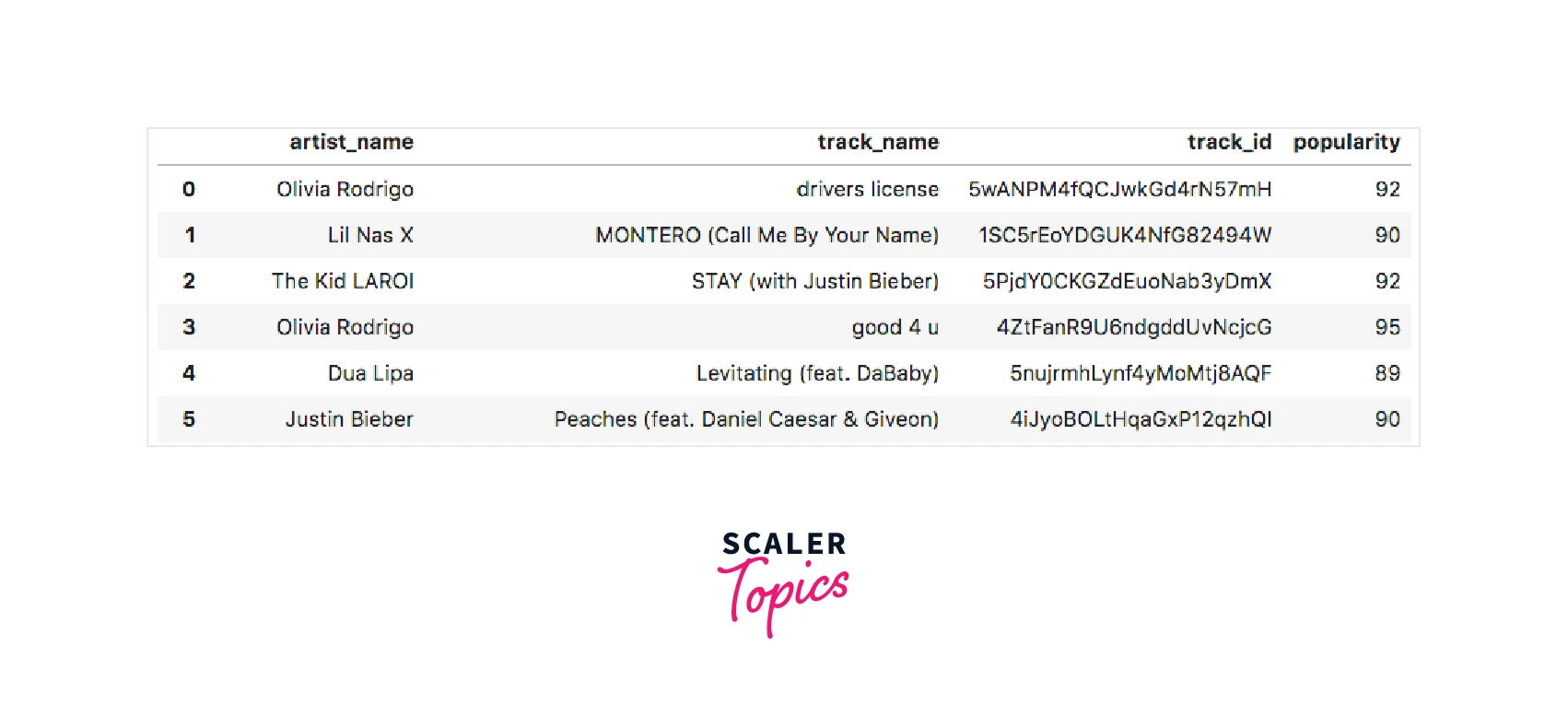
Example - 1 :
Example - 2 :
Example - 3 :
-
Iloc :
Iloc is used to get values from a dataframe based on indices. It only takes in integer values, unlike loc, which uses column names as well for locating values.
Example - 1 :
Example - 2 :
How Scaler Transformed Careers in Different Fields
Scaler learners achieved 2.5x salary growth with average post-Scaler CTC reaching ₹23L.
 Google
 Amazon
 Microsoft
 Flipkart
 Adobe1200+ more
Selecting in a Pandas Dataframe
Let us consider the Harry Potter Movies dataset for this example.
-
Using Labels :
Labels or coloum names can be directly used to extract values from a dataframe To understand each one of them, let us look at the below examples.
Example - 1 :
Example - 2 :
Example - 3 :
-
Using Index Position :
Loc is also used to extract multiple rows in specific columns.
Example - 1 :
Example - 2 :
Extracting Information from Pandas Dataframe
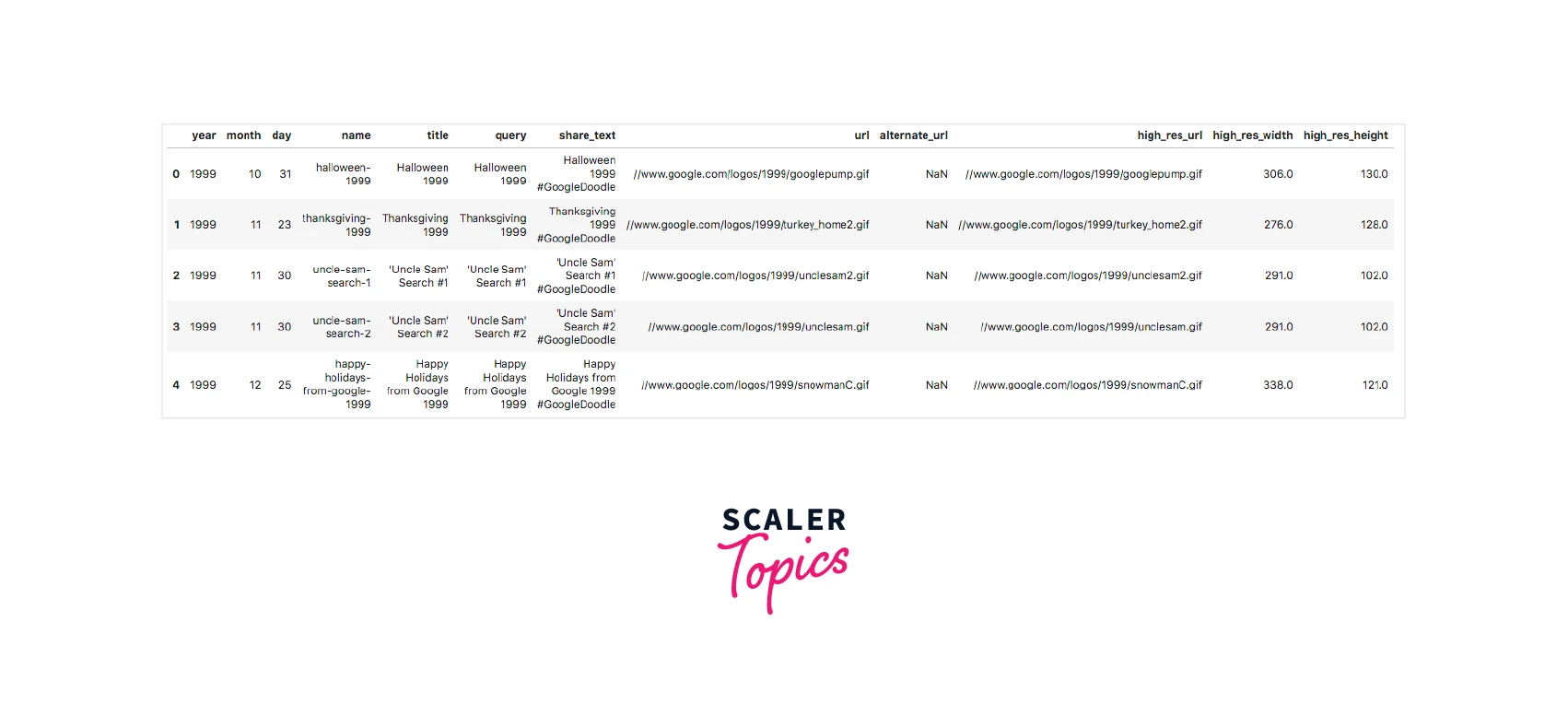
Let us consider the Google Doodles dataset for this example.
-
Using Loc
Among various other uses of loc as mentioned above, here is the one focusing on extracting multiple values from a dataframe.
Example :
-
Using iat
Iat is used when we need to extract values using specific indices. This is quite similar to iloc. We also specifically use iat when we require a set of single values or a single value as the returned output.
Example :
-
Using at
At is used to get single values from rows or columns. This method is similar to iat, although here, we can also extract values using column names.
Example :
Ready to Excel in Data Science? Enroll in Our Best Data Science Courses for Expert Guidance and Hands-On Learning!
Turn Learning into Career Growth
Conclusion
- Selecting, Slicing, and Extraction are the main tools for data retrieving in Pandas.
- Selecting Dataframe in Pandas is retrieving values y indexing.
- Slicing Dataframe Pandas is similar to digging into a pizza slice and choosing the required slice.
- Extraction in Pandas is purely indexing without using actual values.




