


Is Scaler Academy Too Demanding? Honest Review of Time Commitment & Study Load
Scaler Academy has gained quite some attention for its programs. And if you’re in tech, then you most certainly have spent some time searching for ways to level up your career. Now, if you have come across Scaler and have been wondering “is Scaler too intense” or “can I manage Scaler with a full-time job?”, then this blog will surely help you understand how the program works and the intensity at which the students are expected to catch up.
Scaler’s Programs are Intense. But Why?
Yes, Scaler has a reputation for being demanding. But that intensity is designed to push learners beyond theory and into applying concepts in real-world problem-solving.
Why Scaler Demands More Time than Self-paced Platforms?
Self-paced platforms let you learn casually. Scaler, on the other hand, holds you accountable with fixed timelines, assessments, and live feedback. That structure is what ensures progress, but it also requires more hours each week. So basically, Scaler runs on a bootcamp-style, cohort-based model. That means fixed deadlines, live mentor sessions, and hands-on projects designed to equip learners with industry-ready skills. The ultimate goal is to upskill learners while setting up opportunities for career acceleration. So naturally, that brings higher expectations and a heavier time commitment. If you are a working professional juggling jobs, a graduate looking to upskill, or someone wanting to switch careers, then this program is definitely meant for you. But again, it's always better to see if your schedule fits right with the Scaler Program’s time commitments. So let’s get into it!
Study Load Breakdown: What Does a Typical Week Look Like?
One of the most common concerns that we have noticed in Scaler reviews is about the study load. We completely understand that some learners might feel like the program is achievable, but end up feeling that the program is too intense later on. Hence, to set expectations clearly, Scaler follows a bootcamp-style format, meaning learners need to dedicate consistent hours each week. On average, students spend 12 - 15 hours per week between live sessions, assignments, and mentorship. The exact workload varies by track, like DSML, DSA, or Full Stack, but the intensity remains focused on job-readiness. For detailed curriculum insights, check the Scaler Curriculum PDF.
Average Time Commitment by Course Track
These are estimated timings; they may vary according to your pace or the program’s updated curriculum. Data Science & Machine Learning (DSML): 14 - 16 hours per week, due to project-heavy modules and ML concepts. Data Structures & Algorithms (DSA): 12 - 14 hours per week, mainly focused on problem-solving and coding practice. Full Stack Development: 15 - 18 hours per week, since projects, frontend-backend integration, and deployment require extra hands-on effort. These numbers may seem intimidating, but once you determine the best way to adjust your schedule, the program itself can be of great help to you.
Live Class Frequency, Assignments, and Projects
Live classes: 3-4 times a week, each lasting 2 hours. Assignments: Weekly problem sets and coding tasks typically take around 4-6 hours. Projects: Larger projects (especially in DSML and Full Stack) can take 8-10 hours on certain weeks. Assessments & tests: Periodic evaluations help track progress and simulate real interview scenarios.
Time for mentorship, doubt-clearing, and interviews
The Scaler Program doesn’t stop at providing knowledge; we believe that guidance beyond lectures is what truly gives the students the right path. Mentorship sessions: 1-2 hours per week with industry mentors. Doubt-clearing: On-demand, but expect to spend 1-2 hours weekly. Mock interviews: Integrated in later stages, adding 2-3 hours when scheduled.
Sample “Day in the Life” of a Scaler student
If you’re a working professional and have decided to join Scaler, then your day might look like this: Weekday (after office hours): 9:00 - 11:00 pm - Students attend live class on advanced DSA topics. 10:15 - 11:00 pm - Students usually take this time to solve practice problems from class; these timings are flexible, as it depends on each student’s ability to understand and solve the problems, so you don’t have to worry about time limitations. Weekend: 10:00 am - 12:00 pm - Project work or assignments 3:00 - 5:00 pm - Mentor session + doubt-clearing 6:00 - 8:00 pm - Mock interview or peer coding practice Note: The time mentioned here isn’t permanent; you can get more information on the batches and timings while speaking to our admissions team. This structure shows why Scaler program expectations feel more rigorous than the usual self-paced programs. Most of our learners have found this method to be a little tough at the beginning, but eventually it has provided them with the foundation and opportunity for career growth.
Is It Manageable with a Full-Time Job?
For many learners, the biggest concern is fitting this program into an already packed schedule. Since a majority of Scaler’s students are working professionals, the question “Is Scaler too demanding?” comes up often. But to be honest, it is tough but doable, provided you know what to expect and build the right habits.
Feedback from Working Professionals
Scaler reviews from working professionals usually mention that most students manage their Scaler study schedule alongside a 9-to-6 job by: Attending evening or weekend classes, we also provide morning classes from 6:00 am to 8:00 am for those who wish to start early. Using recordings when live attendance isn’t possible. Treating assignments like “second shifts,” dedicating 1.5-2 hours on weekdays. Some even shared that the program helped them structure their free time more productively, though they admit the initial period felt overwhelming.
Challenges of Balancing Job & Scaler
As much as our students have balanced the two, we do agree that adding a professional course alongside a full-time job comes with challenges. The most common struggles include: Time zone clashes for global professionals. Fatigue after office hours, especially on weekdays. Weekend overload, when most Scalers' weekly workload piles up. Burnout risk if breaks aren’t planned. These problems tend to arise when you have a pre-decided and completely full schedule. To avoid piling up projects, it’s always best to prepare a schedule that includes everything productive alongside break time.
Tools and Flexibilities Scaled Provide
If you are someone who works at odd hours, Scaler has built support mechanisms for working professionals, such as: Recorded sessions for when you miss classes. Weekend pods and alternate class slots to avoid clashes. Flexible mentorship sessions that can be rescheduled. Doubt-clearing on the app for quick help outside live hours. We understand that working takes energy and time. Hence, these aspects are added to our program to balance both commitments.
Habits of Students Who Succeeded
From Scaler reviews and mentor feedback, successful students tend to: Create a fixed daily slot that can be early morning or late evening for study. Break down assignments into smaller, manageable tasks. Rely on peer groups and mentors for accountability. Be aware that your social life might cool down in the process. With these habits in place, most of our students have managed to complete their program while working. It may be challenging, but trust us when we say that a disciplined timeline like this is what will help you grow to accelerate your career.
Testimonial from a Working Professional
“It was tough balancing work and academy classes, but I managed it by studying on weekends too.” - Scaler Student, Sumit Agarwal.
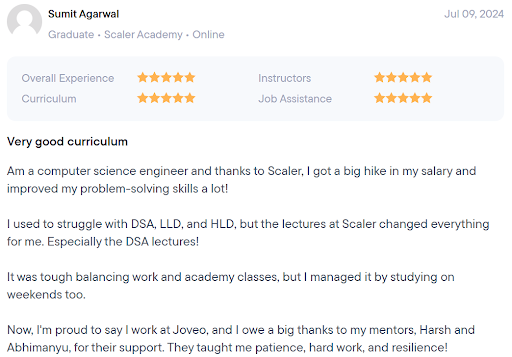
If you are working and still want to upskill for better opportunities, don’t worry, and join us at Scaler! We welcome all ambitious, career-driven, and resilient students and give them the best resources to achieve their goals.
What Students Struggle with the Most and Why?
Many Scaler reviews 2025 left by students mention burnout, information overload, skipped mentor sessions, and comparisons with peers. These issues are valid, so let’s look into a few of them and also how our alumni have been able to tackle these situations.
Common Pain Points Reported
Class cancellations & inconsistent scheduling
“The initial 2-3 months are satisfactory, but afterward… frequent class cancellations, rescheduling, and teachers taking leaves.”
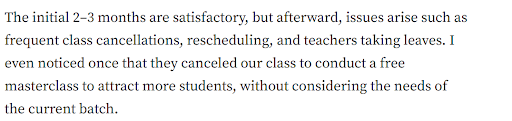
While we do agree that rescheduling might take place, we have never put our students’ programs on stake to attract a crowd, and that is essentially because we ourselves believe that having more students won’t provide equal benefits to all. Hence, we keep our cohort limited to our availability of seats.
Limited mentor availability
“Mentors are meant to assist… they themselves work in product-based MNCs … I didn’t receive much help in this regard.”

Our mentors are specially designated to guide our students, while it is true that they may not be available 24/7, our students have noticed that their mentors can assist better when they are prepared with questions and at any point of the interview stages. Scaler keeps the programs intense for sure, and that is because after completion, the students are completely industry-ready, along with the required knowledge. The deadlines, mentor-driven projects, and regular assessments are what mimic real workplace demands. Our students have learnt much with this structure, and we hope all our learners are able to do the same.
How Students Overcome Burnout?
One of our students has mentioned.
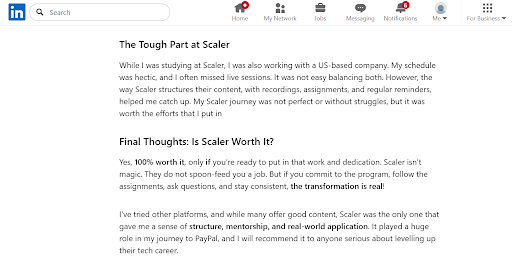
We can see with being consistent and making use of all the resources, our students have been able to complete their program. And so can you!
Here’s what you can do to catch up to the program in case of any difficulties: You can use lecture recordings when classes are missed or rescheduled. Try breaking down weekly projects and assignments into small, doable milestones. Rely on peer groups and mentors for accountability. Proactively communicate scheduling issues to mentors or TAS.
Scaler’s Response to Difficulty Feedback
Scaler tries to adapt to these challenges through: Captured lectures to fill gaps from cancellations. Weekend pods and alternate class batches. Mentorship structures that allow some rescheduling flexibility. Scaler seems intense for people who are already time-bound with their jobs, but once the right schedule is followed, the outcomes become truly beneficial. For more reflections and honest stories, check out our Student Stories and review how our Refund Policy handles student concerns.
How Scaler Supports Students Under Pressure?
One of the biggest worries for students considering Scaler is the sheer intensity of the program. Long hours of coding practice, back-to-back mentor sessions, and peer competition can easily feel overwhelming. But Scaler has built-in support systems to ensure that students don’t burn out, lose track, or feel isolated during the journey.
Weekly Mentorship and Check-In System
Every student is assigned a dedicated mentor who connects with them every week. These aren’t just casual conversations; they’re structured check-ins designed to track progress, identify blockers, and realign focus when students feel stuck. Mentors also share personal strategies from their own career journeys, which helps students pace themselves better. Think of it as having an accountability partner who has already walked the path you’re on.
Escalation Process for Doubts and Support
Scaler understands that missed mentor sessions or unanswered queries can derail motivation. That’s why we have a system for students to access these missed opportunities: If a mentor becomes inactive, students can raise it with the support team. Teaching assistants (TAs) step in to resolve pending doubts quickly. Students are never left without guidance, as replacement mentors or extra doubt-clearing sessions are offered when needed. This system is established to ensure that no one falls behind just because of logistical hiccups.
Prep Modules and Beginner Tracks
Learners at Scaler usually join with different backgrounds. Some come from tier-2/3 colleges or non-CS backgrounds, which makes the first few weeks especially tough. To ease this, Scaler provides prep modules, beginner-friendly tracks covering programming basics, data structures, and problem-solving approaches. Students are given the options for beginner or advanced modules based on their Scaler NSET test scores, and they can always opt for beginner courses if they aren’t sure about the advanced ones.
Slack Channels, Pods, and Peer Learning
At Scaler, we give importance to students’ effective learning, and for that, we have curated a community-driven structure. Students are grouped into pods, which means smaller peer groups where they study, discuss problems, and push each other to stay consistent. Dedicated Slack channels make it easy to ask quick questions, share solutions, or celebrate milestones. This setup usually reduces the feeling of isolation, especially for working professionals juggling jobs alongside the program. Many alumni mention that peer accountability and friendships kept them going when they considered quitting.
FAQs for If Scaler is Too Intense for You?
Many prospective learners raise concerns about time commitment, burnout, and whether the program is right for them. Here are some of the most common questions we get:
Can I do Scaler if I only have weekends?
Yes. Many working professionals at Scaler balance their jobs with weekend learning. Sessions are recorded, so if you can’t attend live, you can revisit them anytime. The Scaler support system also ensures you can catch up through mentorship calls, doubt-solving channels, and peer pods.
How many hours per week are realistic?
On average, students dedicate 10-15 hours a week. This includes live classes, practice, and mentor syncs. If you’re able to manage being consistent, this time is sufficient to build strong foundations without overwhelming your schedule.
What happens if I fall behind?
No worries! Scaler provides an escalation process. Which means if you miss classes or struggle with concepts, your mentor and Teaching Assistants step in with check-ins, revision modules, and peer accountability. The program is designed so you never feel stuck alone.
Do I need a CS background to keep up?
No, Scaler has beginner tracks and prep modules made specifically for non-CS backgrounds. Whether you’re from mechanical engineering, civil, or even non-tech fields, the curriculum gradually builds you up.
Conclusion
So does Scaler feel too intense to join?
You don’t have to worry, as we have turned this program challenging for the very reason to make you industry-ready and proficient. By dedicating 12-15 hours a week, you can make use of this program to boost your career in every way possible.
And we say this because we have seen our students who show up regularly and engage with mentors, coaches, and peers tend to see a strong return on investment in terms of career growth, skill-building, and confidence.
So, is Scaler the Right Choice for You?
Students who can dedicate their time and efforts to the program benefit the most. If you want a community that keeps you accountable, mentors who push you, and a system designed to track your progress, Scaler will feel like the right environment.
When Scaler Might Not Be a Good Fit
If you prefer a completely self-paced course, have no bandwidth to dedicate weekly hours, or are unsure about committing to a long-term program, Scaler might feel overwhelming.
Ready to Decide?
Before making the call, you can take a look at the Scaler Curriculum to see exactly what’s covered, or even better, talk to Scaler Alumni to hear real experiences. That way, you’ll know firsthand whether Scaler’s learning pace and structure match your goals.