


Connect to Redis
Overview
Caching is a common technique to improve the performance of any application. Frequently accessed data can be cached, so avoid repeated, expensive database/third-party service calls. Varieties of caching solutions are available in the market, and Redis is one of them and a popular one.
Build an AI-First Career, Master the Complete Skillset
Choose from our industry-leading programs designed for career success
Modern Software and AI Engineering Program
Master full-stack development with AI integration


 +1000 more
Modern Data Science and ML with specialisation in AI
Advanced data science techniques with AI specialization
+1000 moreAdvanced AIML with Specialisation in Agentic AI
Deep dive into AIML with focus on Agentic systems
+1000 moreDevOps, Cloud & AI Platform Engineering
Build and manage AI-powered cloud infrastructure
+1000 moreAI Engineering Advanced Certification by IIT-Roorkee
Premier AI engineering certification from IIT-Roorkee

AI Forward Deployed Engineer Program
Full-stack engineering, production AI and client-facing consulting
+1000 moreWhat Is Redis?
The official definition of Redis from its website
Redis is an open-source, in-memory data store used by millions of developers as a database, cache, streaming engine, and message broker.

Let's understand each capability.
- In-memory data store - By default, Redis keeps data in memory through key-value pairs.
- Database - Redis can be used as a persistence database. By default, Redis keep information in memory; however, it can also be configured to store the information in the physical disk.
- Caching - This capability of Redis is used widely. Its primary intent was to use it as a highly available distributed cache.
- Streaming engine - The stream data type enables high-rate data ingestion, messaging, event sourcing, and notifications.
- Message broker - Redis can be used as a message broker to implement the pub-sub architecture.
Redis has many capabilities but it is traditionally used as cache.
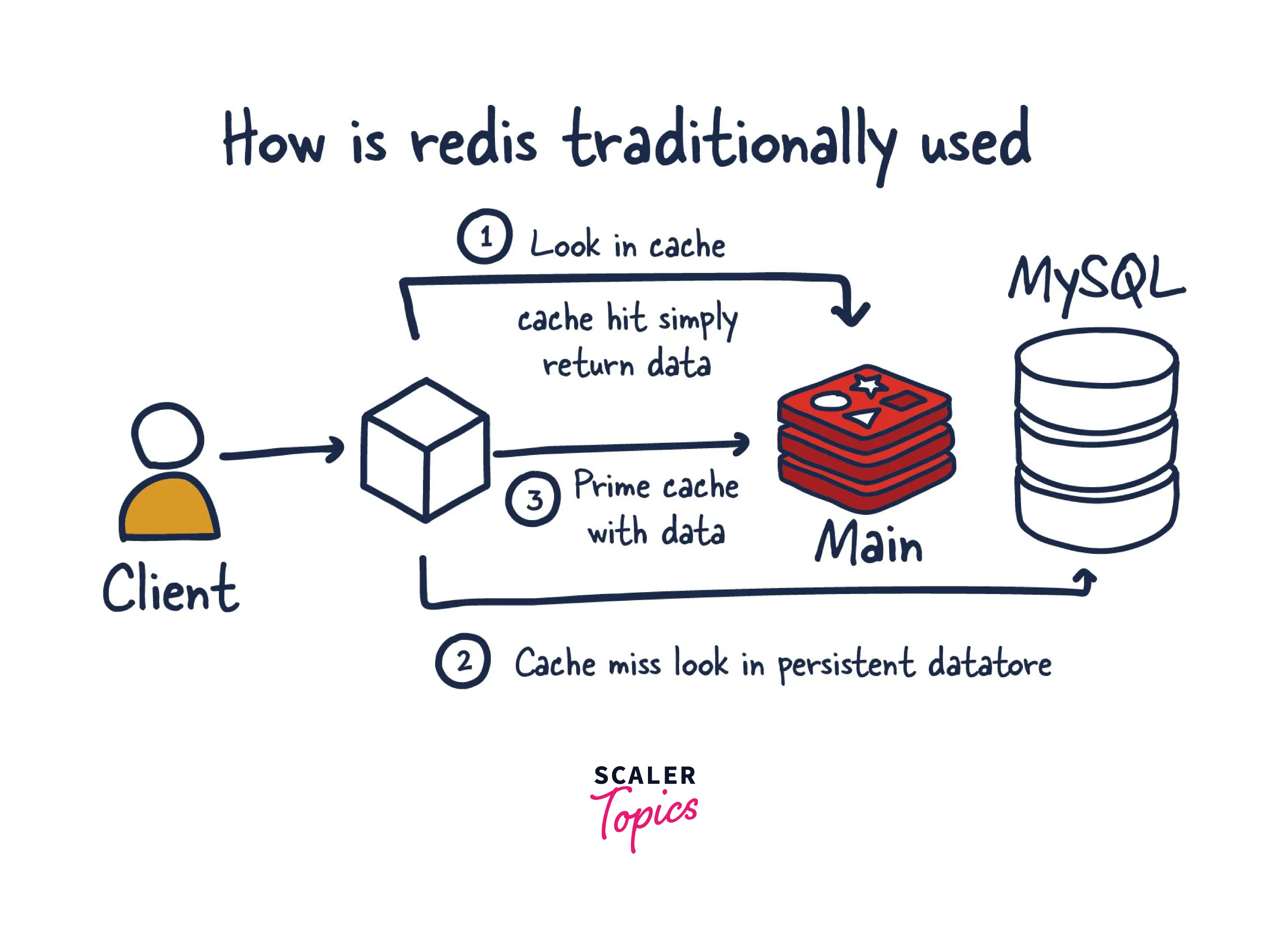
Spring Boot Redis Project Setup
Spring boot offers simple integration with Redis using starters and application.properties configuration. It also offers a RedisRepository just like JpaRepository to perform operations on the Redis store.
Dependencies
We need two dependencies to work with Redis.
- Spring Redis abstraction
- Java client for Redis
Alternatively, you can use starter dependency will bring jedis along with it.
The above starter dependency comes with a default configuration which can be overridden using the application.properties configuration.
Configuring Redis
By default, Redis runs on your system on host localhost and port 6379. The starter-data-redis comes with the same default configuration; therefore, no need for extra configuration.
If you use a configuration other than the default, it can be provided using properties spring.redis.*. For example, if your Redis instance runs on port 6000, you need to specify a port in the application configuration.
How Scaler Transformed Careers in Different Fields
Scaler learners achieved 2.5x salary growth with average post-Scaler CTC reaching ₹23L.
 Google
 Amazon
 Microsoft
 Flipkart
 Adobe1200+ more
Defining the Model
Let's use an Intern entity and perform operations on it.
Note - The annotation on top is @RedisHash, which marks Objects as aggregate roots to be stored in a Redis.
Defining the Repository
To interact with Redis and the Intern entity, we have a repository not different from regular CrudRepository. Behind the scene, spring takes care of where to fetch information from.
CrudRepository comes with a basic CRUD method, as the name suggests. Now we can perform different operations on the Redis.
Turn Learning into Career Growth
Creating a new Redis cache entry
InternRepository#save method will create a new entry in the Redis store.
Updating the existing Cache entry
No special methods are available to update the cache entry. InternRepository#save will update the entry if it already exists in the Redis store.
Clearing Cache
To delete entries from the Redis store, use the method InternReposotory#deleteById.
Conclusion
- Redis is a key-value database used widely across the industry.
- Redis can be used as a cache, database, pub-sub, and streaming engine.
- Spring boot offers spring-boot-starter-data-redis dependency to simplify integration.
- Redis model uses @RedisHash annotation to mark as a Redis entity.




