


What is the Linux kernel?
What is the Linux Kernel?
The Linux kernel serves as the central component of the Linux operating system, acting as the essential link between hardware and software layers. It efficiently manages computer resources, facilitates process management, supports device drivers for hardware communication, and ensures system security.
The kernel serves as the backbone of the operating system, providing a robust platform for running applications and enabling seamless interactions between users and their devices. The article will help you in understanding Linux kernel.
Build an AI-First Career, Master the Complete Skillset
Choose from our industry-leading programs designed for career success
Modern Software and AI Engineering Program
Master full-stack development with AI integration


 +1000 more
Modern Data Science and ML with specialisation in AI
Advanced data science techniques with AI specialization
+1000 moreAdvanced AIML with Specialisation in Agentic AI
Deep dive into AIML with focus on Agentic systems
+1000 moreDevOps, Cloud & AI Platform Engineering
Build and manage AI-powered cloud infrastructure
+1000 moreAI Engineering Advanced Certification by IIT-Roorkee
Premier AI engineering certification from IIT-Roorkee

AI Forward Deployed Engineer Program
Full-stack engineering, production AI and client-facing consulting
+1000 moreWhat the Kernel Does
The Linux kernel is the central component of the Linux operating system, acting as the vital link between hardware and software layers. Its primary role is to efficiently manage computer resources and provide a robust platform for running applications. Let's explore some key functions that the Linux kernel performs.
Memory Management
One of the fundamental tasks of the Linux kernel is memory management. It ensures that each running process has access to the memory it needs without interfering with others. The kernel handles memory allocation and deallocation for various tasks, preventing them from overwriting each other's data.
Understanding Linux kernel memory management is crucial for efficient resource allocation.
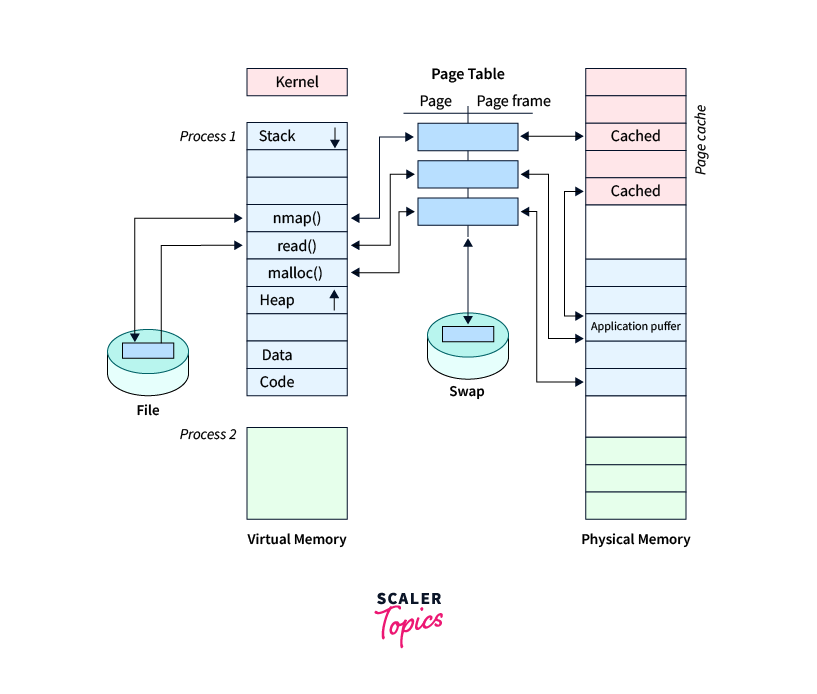
For instance, imagine you have multiple applications running on your computer, like a web browser, a media player, and a word processor. Each program requires its own memory space to store data while they run. The kernel ensures they don't accidentally interfere with each other's memory, thus avoiding crashes or data corruption.
Process Management
The Linux kernel oversees the management of processes on the system. Process represents an independent task or program in execution. The kernel schedules and prioritizes these processes to ensure fair and efficient utilization of the CPU.
For example, as you work on your computer with several applications open, such as an email client, a code editor, and a spreadsheet application, the kernel takes care of allocating CPU time to each process. This way, your tasks can progress smoothly without any noticeable slowdowns.
Device Drivers
Linux supports hardware devices, like graphics cards, printers, and network adapters. Device drivers act as intermediaries between the kernel and these hardware components. They enable the kernel to communicate with and control the hardware effectively.
Understanding Linux kernel device drivers will help you grasp hardware communication mechanisms.
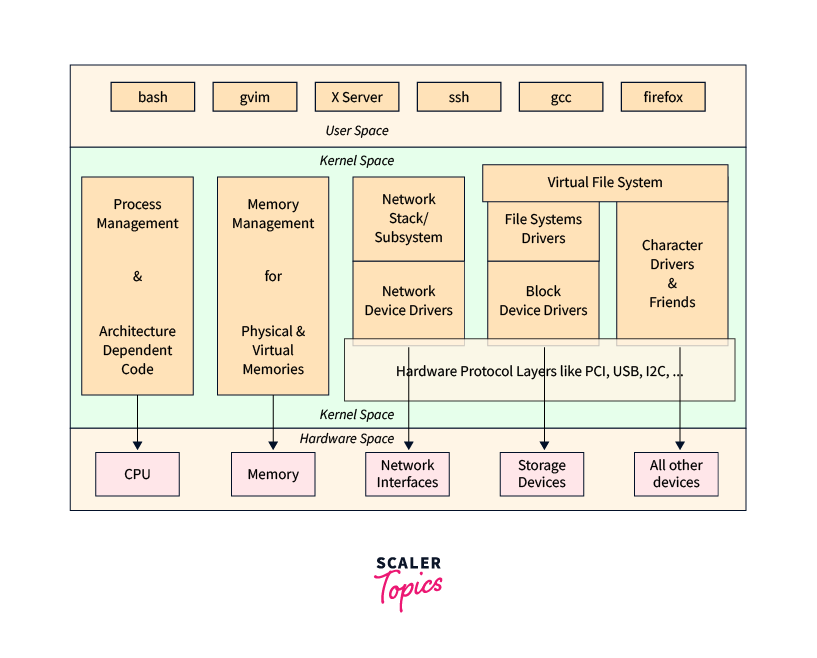
When you connect a new printer to your Linux machine, the kernel uses the appropriate printer driver to interact with the device. This driver allows the kernel to understand how to send print jobs to the printer and manage its specific capabilities.
How Scaler Transformed Careers in Different Fields
Scaler learners achieved 2.5x salary growth with average post-Scaler CTC reaching ₹23L.
 Google
 Amazon
 Microsoft
 Flipkart
 Adobe1200+ more
System Calls and Security
System calls serve as the interface between user-level applications and the kernel. They provide a way for applications to request services from the kernel, such as reading from or writing to files, creating new processes, and managing network connections.
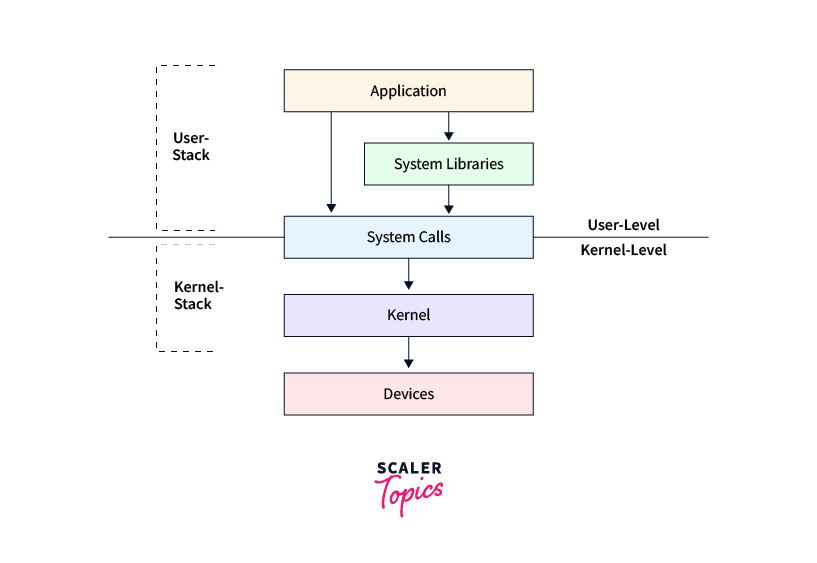
Understanding Linux kernel security measures is vital for protecting sensitive data. It enforces access control to prevent unauthorized access to sensitive resources and data. Additionally, the kernel provides isolation between processes, ensuring that one process cannot interfere with or access the memory of another process.
In summary, the Linux kernel is the OS backbone, efficiently managing resources, overseeing processes, enabling hardware communication, and ensuring security.
Where the Kernel Fits Within the OS
Understanding Linux kernel is essential to grasp the core functioning of the operating system. To understand the role of the Linux kernel within the operating system, let's explore where it fits in the overall structure:
Turn Learning into Career Growth
The Hardware
At the lowest level lies the hardware, which includes the physical components of the computer the processor (CPU), memory (RAM), storage devices (hard drives or solid-state drives), and various input/output devices (keyboard, mouse, monitor, etc.). These hardware components form the foundation upon which the operating system operates.
The Linux Kernel
Sitting directly above the hardware is the Linux kernel. As the core component of the Linux operating system, it acts as a mediator between the hardware and the user-level software. It efficiently manages the computer's resources and ensures that different software components can interact with the hardware without conflicting with one another.
User Processes
Above the Linux kernel are the user processes. These processes encompass all the applications and software running on the system. When you interact with your Linux system, you are primarily engaging with user processes. These applications communicate with the kernel through system calls to request access to hardware resources and perform various tasks.
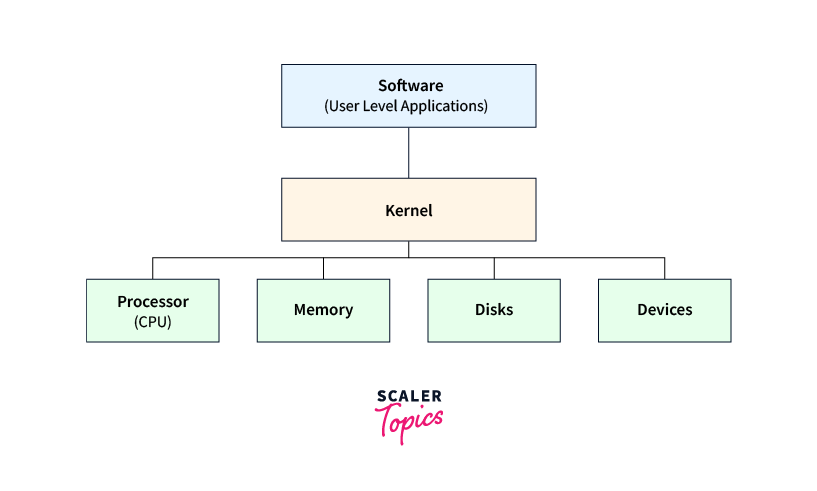
In summary, the Linux kernel resides between the hardware and the user processes, serving as the central control and management layer.
Conclusion
The Linux kernel plays a pivotal role in the functionality and efficiency of the Linux operating system. Here are the key takeaways from the article:
- The Linux kernel efficiently manages computer resources, ensuring that each running process has access to the memory it needs without interfering with others.
- It oversees the management of processes on the system, scheduling and prioritizing tasks to optimize CPU utilization.
- Device drivers enable the kernel to communicate with and control various hardware components, such as printers and network adapters.
- System calls serve as the interface between user-level applications and the kernel, allowing applications to request services from the kernel.
- The Linux kernel ensures system security through access control and process isolation, safeguarding sensitive resources and data.
In summary, understanding Linux kernel's robust performance is essential for the stability, security, and overall functionality of your Linux system.




