

Generative AI: What It Is & How It Works
What is generative AI? Generative AI is a subset of artificial intelligence that utilizes deep learning models to generate novel content, such as text, images, code, or audio. By learning underlying patterns and statistical distributions from vast training datasets, these models synthesize original outputs that mimic human-created data.
Introduction to Generative Artificial Intelligence
Generative AI represents a fundamental paradigm shift in machine learning, moving from purely discriminative models—which classify or predict labels based on input data—to models capable of creating high-dimensional, novel data samples. At its core, generative AI relies on advanced neural network architectures to approximate complex probability distributions. When a model successfully learns the joint probability distribution of the training data, it can sample from this distribution to generate new, synthetic instances that share the same statistical properties as the original dataset.
For software engineers and computer science professionals, understanding generative AI requires a firm grasp of deep learning, optimization algorithms, and probabilistic frameworks. The rapid evolution of these technologies, from early Hidden Markov Models to modern multibillion-parameter Large Language Models (LLMs), has drastically expanded the capabilities of machine learning systems. Today, generative models power an array of sophisticated applications, including autonomous code generation, high-fidelity image synthesis, and dynamic natural language reasoning.
How Gen AI Works: Technical Foundations
To understand exactly how gen ai works, one must look at the underlying mathematical and statistical foundations that drive data synthesis. Unlike discriminative models that learn the conditional probability P(Y|X) to map an input X to a label Y, generative models learn the joint probability distribution P(X, Y), or simply P(X) if the data is unlabeled. By modeling the underlying density of the data, generative systems can draw new samples from P(X) that were not explicitly present in the training set.
This process generally involves mapping data into a lower-dimensional continuous vector space known as the "latent space." The latent space acts as a compressed representation of the data's core features. When the model is instructed to generate new content, it samples a point from this latent space and decodes it back into the high-dimensional original data format (such as a grid of pixels or a sequence of text tokens). The training objective of these models usually involves minimizing the divergence—often measured via Kullback-Leibler (KL) divergence or similar metrics—between the model's estimated probability distribution and the actual, empirical distribution of the training data.
Build an AI-First Career, Master the Complete Skillset
Choose from our industry-leading programs designed for career success
Modern Software and AI Engineering Program
Master full-stack development with AI integration


 +1000 more
Modern Data Science and ML with specialisation in AI
Advanced data science techniques with AI specialization
+1000 moreAdvanced AIML with Specialisation in Agentic AI
Deep dive into AIML with focus on Agentic systems
+1000 moreDevOps, Cloud & AI Platform Engineering
Build and manage AI-powered cloud infrastructure
+1000 moreAI Engineering Advanced Certification by IIT-Roorkee
Premier AI engineering certification from IIT-Roorkee

AI Forward Deployed Engineer Program
Full-stack engineering, production AI and client-facing consulting
+1000 moreThe Training Process and Objective Functions
Training a generative model is highly computationally intensive and requires vast amounts of high-quality data. Models are trained using specific objective functions tailored to their architecture. For instance, autoregressive models predict the next token in a sequence by maximizing the likelihood of the training data, while other models might use adversarial loss or variational lower bounds.
During training, optimization algorithms like Adam or AdamW update the network's weights (often denoted as θ) via backpropagation. The scale of modern generative AI necessitates distributed training strategies, such as Data Parallelism and Tensor Model Parallelism, effectively splitting the workload across clusters of specialized GPUs.
Stop learning AI in fragments—master a structured AI Engineering Course with hands-on GenAI systems with IIT Roorkee CEC Certification


AI Engineering Course Advanced Certification by IIT-Roorkee CEC
A hands on AI engineering program covering Machine Learning, Generative AI, and LLMs - designed for working professionals & delivered by IIT Roorkee in collaboration with Scaler.
Enrol Now
Inference and Decoding Strategies
Once a model is trained, the inference phase begins. In text generation, for example, the model outputs a probability distribution over the entire vocabulary for the next token. The decoding strategy dictates how the final output is selected:
- Greedy Decoding: Always selects the token with the highest probability. This can lead to repetitive and deterministic text.
- Beam Search: Keeps track of multiple sequence paths (beams) and selects the sequence with the highest overall probability, balancing local and global optimization.
- Top-K and Top-p (Nucleus) Sampling: Introduces stochasticity by sampling from the top K most likely tokens, or from the smallest set of tokens whose cumulative probability exceeds p. This creates more creative and diverse outputs.
Generative AI Model Architectures
The architectural backbone of a generative AI system dictates how it processes data, learns patterns, and synthesizes outputs. Over the past decade, several distinct neural network architectures have emerged as the standard for different generative tasks. Each architecture presents unique mathematical approaches to the challenge of data generation, varying in how they structure their latent spaces, process sequential data, and compute loss during training. Understanding the nuances between these architectures is critical for selecting the right tool for a specific engineering problem, whether that entails real-time text completion, high-resolution image synthesis, or complex time-series forecasting.
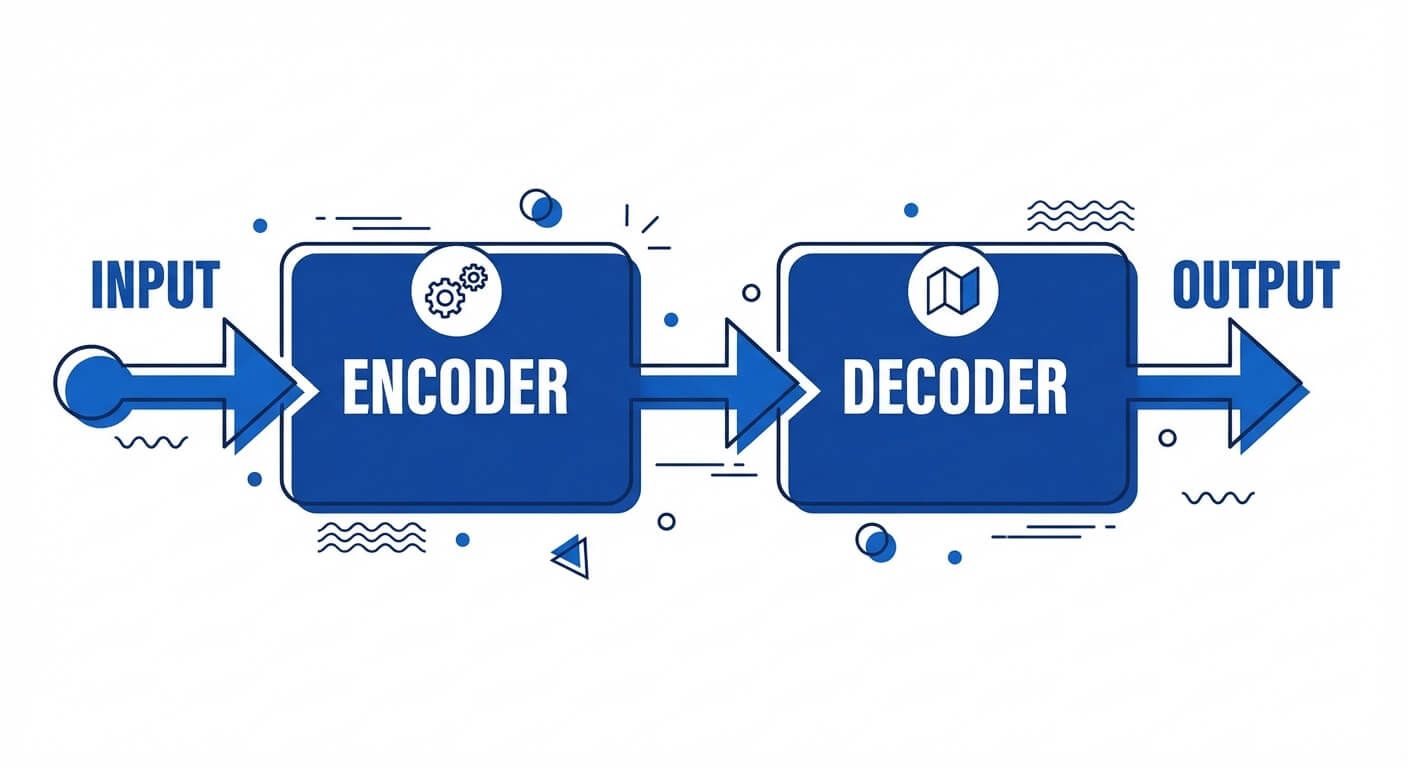
Transformer Models
Transformers, introduced by Vaswani et al. in 2017, revolutionized Natural Language Processing (NLP) and serve as the foundation for modern Large Language Models (LLMs) like GPT-4, Llama 3, and BERT. Transformers rely entirely on the self-attention mechanism, dispensing with the recurrent networks (RNNs) previously used for sequential data.
The self-attention mechanism allows the model to weigh the importance of every token in a sequence relative to every other token, capturing long-range dependencies effectively. Mathematically, attention is computed using Query (Q), Key (K), and Value (V) matrices:
Attention(Q, K, V) = softmax(Q K^T / √d_k) V
Where d_k is the dimension of the key vectors. By stacking multiple layers of multi-head attention and feed-forward networks, Transformers build highly contextualized representations of data.
Generative Adversarial Networks (GANs)
Introduced by Ian Goodfellow in 2014, GANs consist of two neural networks competing in a zero-sum game: a Generator and a Discriminator. The Generator attempts to produce synthetic data from random noise, while the Discriminator evaluates the data and attempts to distinguish between real training samples and the fake samples produced by the Generator.
The training process is a minimax game represented by the value function V(D, G). The Generator (G) tries to minimize the probability that the Discriminator (D) correctly identifies its outputs as fake, while D tries to maximize its accuracy. Once convergence is reached—ideally the Nash equilibrium—the Generator produces outputs indistinguishable from real data.
Variational Autoencoders (VAEs)
VAEs are probabilistic generative models that consist of an Encoder and a Decoder. Unlike standard autoencoders that map input data to a single fixed vector, a VAE maps inputs to a probability distribution (typically a Gaussian distribution parameterized by a mean μ and a variance σ^2) in the latent space.
During generation, a point is sampled from this learned distribution and passed through the Decoder to reconstruct the data. To ensure the latent space is continuous and well-structured, the VAE loss function includes a regularization term—the KL divergence—which forces the learned distributions to closely match a standard normal distribution.
How Scaler Transformed Careers in Different Fields
Scaler learners achieved 2.5x salary growth with average post-Scaler CTC reaching ₹23L.
 Google
 Amazon
 Microsoft
 Flipkart
 Adobe1200+ more
Diffusion Models
Diffusion models are currently the state-of-the-art for image and audio generation (powering tools like DALL-E 3 and Midjourney). They operate via a two-step Markov chain process.
- Forward Diffusion: The model gradually adds Gaussian noise to the original training data over a series of time steps until the data is completely destroyed, becoming pure random noise.
- Reverse Diffusion: A neural network (often a U-Net) is trained to denoise the data step-by-step, predicting the noise added at each time step and subtracting it.
During inference, the model starts with pure noise and runs the reverse process to synthesize a highly detailed, coherent image from scratch.
Master structured AI Engineering + GenAI hands-on, earn IIT Roorkee CEC Certification at ₹40,000
AI Engineering Course Advanced Certification by IIT-Roorkee CEC
A hands on AI engineering program covering Machine Learning, Generative AI, and LLMs - designed for working professionals & delivered by IIT Roorkee in collaboration with Scaler.
Enrol NowArchitecture Comparison Table
To summarize the differences, the following table compares the primary generative AI architectures:
| Architecture | Primary Mechanism | Key Strengths | Key Limitations | Common Applications |
|---|---|---|---|---|
| Transformers | Self-Attention & Autoregression | Excellent at capturing long-range context; highly scalable. | Quadratic compute cost relative to sequence length. | Text generation, Code synthesis, LLMs. |
| GANs | Adversarial Minimax Game | Produces sharp, high-fidelity outputs quickly. | Prone to mode collapse; notoriously difficult to train. | Image upscaling, Deepfakes, Video generation. |
| VAEs | Probabilistic Latent Space Mapping | Creates a smooth, easily interpolatable latent space. | Outputs tend to be blurrier compared to GANs. | Anomaly detection, Audio synthesis. |
| Diffusion Models | Iterative Denoising (Markov Chain) | State-of-the-art image quality; stable training. | Computationally slow during the reverse inference process. | High-resolution Image generation, 3D modeling. |
Software and Hardware Infrastructure
Building, training, and deploying generative AI models requires specialized software frameworks and massive hardware infrastructure. The scale of the matrix multiplications inherent in deep learning necessitates highly parallelized compute architectures. Without robust hardware accelerators and optimized software pipelines, dealing with billions of parameters would result in computationally intractable training times. This section explores the stack that makes generative AI possible, from the physical silicon up to the high-level application programming interfaces.
Turn Learning into Career Growth
Hardware Acceleration
Generative models are primarily trained on Graphics Processing Units (GPUs) or Tensor Processing Units (TPUs). NVIDIA GPUs, specifically those utilizing the Hopper (e.g., H100) or Ampere (e.g., A100) architectures, are the industry standard due to their specialized Tensor Cores. These cores are designed to accelerate mixed-precision matrix math operations seamlessly.
Memory bandwidth is often the primary bottleneck in generative AI inference, particularly for LLMs. Techniques like KV caching (storing previously computed Key and Value tensors in memory to avoid recalculation) help mitigate this, but they require substantial High Bandwidth Memory (HBM).
Software Frameworks and Ecosystem
At the software layer, developers interact with models using deep learning frameworks like PyTorch, TensorFlow, or JAX. These frameworks provide automatic differentiation (autograd) capabilities, allowing for the easy computation of gradients during backpropagation.
For deploying generative AI applications, the ecosystem has rapidly expanded:
- Hugging Face Transformers: A dominant open-source library providing pre-trained models and APIs for fine-tuning.
- vLLM and TensorRT-LLM: Highly optimized inference engines designed to maximize GPU throughput and reduce latency through techniques like PagedAttention.
- LangChain and LlamaIndex: Orchestration frameworks that allow developers to build complex applications using generative AI, integrating concepts like Retrieval-Augmented Generation (RAG) and autonomous AI agents.
Applications and Capabilities
Generative AI is not confined to a single domain; its ability to model complex distributions makes it a versatile tool across multiple disciplines. In software engineering, code generation models (like GitHub Copilot) act as intelligent pair programmers, capable of writing boilerplate code, generating unit tests, and translating legacy codebases into modern languages. These models are typically fine-tuned on vast repositories of open-source code and understand syntax, logic, and context.
In Natural Language Processing, generative models have revolutionized machine translation, dynamic text summarization, and conversational AI. By leveraging context windows that now span millions of tokens, models can process entire books or massive codebases in a single prompt. In the realm of Computer Vision, generative AI is used for inpainting (filling missing parts of an image), outpainting (extending images beyond their borders), and generating photorealistic assets for video games and architectural visualizations.
Limitations, Risks, and Empirical Challenges
Despite their impressive capabilities, generative AI systems possess significant empirical challenges that engineers must navigate. Because these models are fundamentally stochastic and lack grounded, logical reasoning, their outputs must be rigorously validated. One of the most prevalent issues is "hallucination"—a phenomenon where a model confidently generates factually incorrect or nonsensical information because it is optimizing for statistical likelihood rather than factual accuracy.
Bias is another critical risk. Generative models inherit the statistical biases present in their training data. If a dataset contains demographic imbalances or toxic language, the model is highly likely to reproduce and amplify these biases during generation. Furthermore, the sheer computational cost required to train and run inference on frontier models poses a severe economic and environmental challenge, driving research into optimization techniques like Quantization (reducing the precision of model weights from 16-bit to 4-bit or 8-bit) and Low-Rank Adaptation (LoRA) for efficient fine-tuning.
Become the Ai engineer who can design, build, and iterate real AI products, not just demos with an IIT Roorkee CEC Certification
AI Engineering Course Advanced Certification by IIT-Roorkee CEC
A hands on AI engineering program covering Machine Learning, Generative AI, and LLMs - designed for working professionals & delivered by IIT Roorkee in collaboration with Scaler.
Enrol NowLegal and Regulatory Dynamics
The proliferation of generative AI has sparked intense legal and regulatory debates globally. Because these models require immense volumes of data for training—often scraped directly from the public internet—questions regarding copyright infringement and intellectual property rights are heavily contested. Creators and organizations argue that training a commercial AI model on copyrighted text, code, or art without consent or compensation violates intellectual property laws.
In response, regulatory bodies are drafting comprehensive frameworks. The European Union's AI Act categorizes AI systems by risk, imposing strict transparency requirements on foundational generative models. Developers must disclose the data sources used for training and implement safeguards against the generation of illegal or harmful content. For enterprise software engineers, this means that integrating generative AI into business workflows requires rigorous data governance, provenance tracking, and an understanding of data privacy laws like GDPR to prevent the accidental leakage of Personally Identifiable Information (PII) into model outputs.
FAQs
What is the difference between discriminative and generative AI models? Discriminative models learn the boundary between classes (predicting a label given an input), mathematically represented as P(Y|X). Generative models learn the distribution of the data itself, mathematically represented as P(X) or P(X, Y), allowing them to synthesize entirely new data samples.
What is the "temperature" parameter in generative AI? Temperature is a hyperparameter applied to the logits before the softmax function during inference. A lower temperature (e.g., 0.2) makes the model's probability distribution sharper, resulting in more deterministic and predictable outputs. A higher temperature (e.g., 0.8) flattens the distribution, increasing randomness and creativity in the generated content.
What is Retrieval-Augmented Generation (RAG)? RAG is an architectural pattern that grounds a generative model's responses in external, factual data. Before generating an output, the system queries a vector database to retrieve relevant information. This retrieved context is appended to the user's prompt, significantly reducing hallucinations and allowing the model to answer questions about proprietary or real-time data it was not trained on.
How does Quantization help in generative AI? Quantization is a model compression technique that reduces the memory footprint and compute requirements of a model by converting its weights and activations from high precision (like 32-bit floating point) to lower precision (like 8-bit or 4-bit integers). This allows massive models to run efficiently on consumer-grade hardware with minimal loss in generation quality.




