


STLC - What is Requirement Traceability Matrix
Build an AI-First Career, Master the Complete Skillset
Choose from our industry-leading programs designed for career success
Modern Software and AI Engineering Program
Master full-stack development with AI integration


 +1000 more
Modern Data Science and ML with specialisation in AI
Advanced data science techniques with AI specialization
+1000 moreAdvanced AIML with Specialisation in Agentic AI
Deep dive into AIML with focus on Agentic systems
+1000 moreDevOps, Cloud & AI Platform Engineering
Build and manage AI-powered cloud infrastructure
+1000 moreAI Engineering Advanced Certification by IIT-Roorkee
Premier AI engineering certification from IIT-Roorkee

AI Forward Deployed Engineer Program
Full-stack engineering, production AI and client-facing consulting
+1000 moreOverview
Requirement Traceability Matrix(RTM) is an important document in the software development life cycle that captures many-to-many relationships to map a project's requirements to that of test cases. This document is essential to validate the product's functional requirements to have been tested and the extent to which these requirements have been tested from a quality assurance perspective.
What is the Requirement Traceability Matrix?
Requirement Traceability Matrix is a document prepared by the test manager to map the requirements listed by the client to that of test cases that would run against them. It is a many-to-many document prepared on an excel sheet. It indicates the extent of testing on every functionality to ensure quality in time and budget constraints.
Why is Requirement Traceability Important?
- RTM acts as a tracker to know which functionalities have been tested and which are pending for both the development and testing teams.
- Preparing RTM is crucial for the next step in STLC, test planning. Based on RTM, the entire test architecture is laid down.
- RTM contains the current states of test cases, i.e., which have been passed, failed, and pending.
- RTM ensures all functionalities have been tested and nothing is left. Updating this document ensures that.
How Scaler Transformed Careers in Different Fields
Scaler learners achieved 2.5x salary growth with average post-Scaler CTC reaching ₹23L.
 Google
 Amazon
 Microsoft
 Flipkart
 Adobe1200+ more
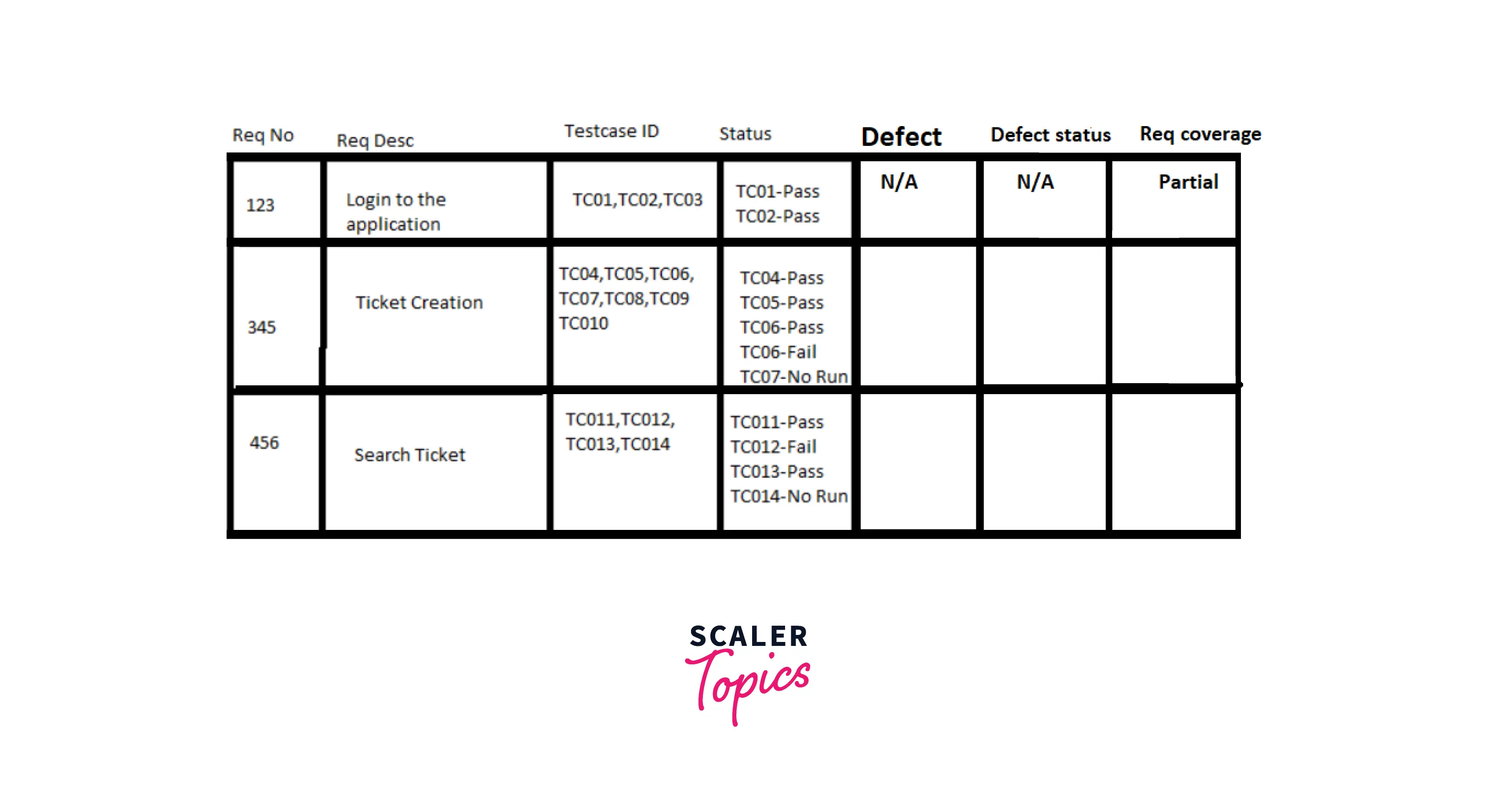
Parameters to Include in Requirement Traceability Matrix
Following are the pointers that are mentioned in the RTM.
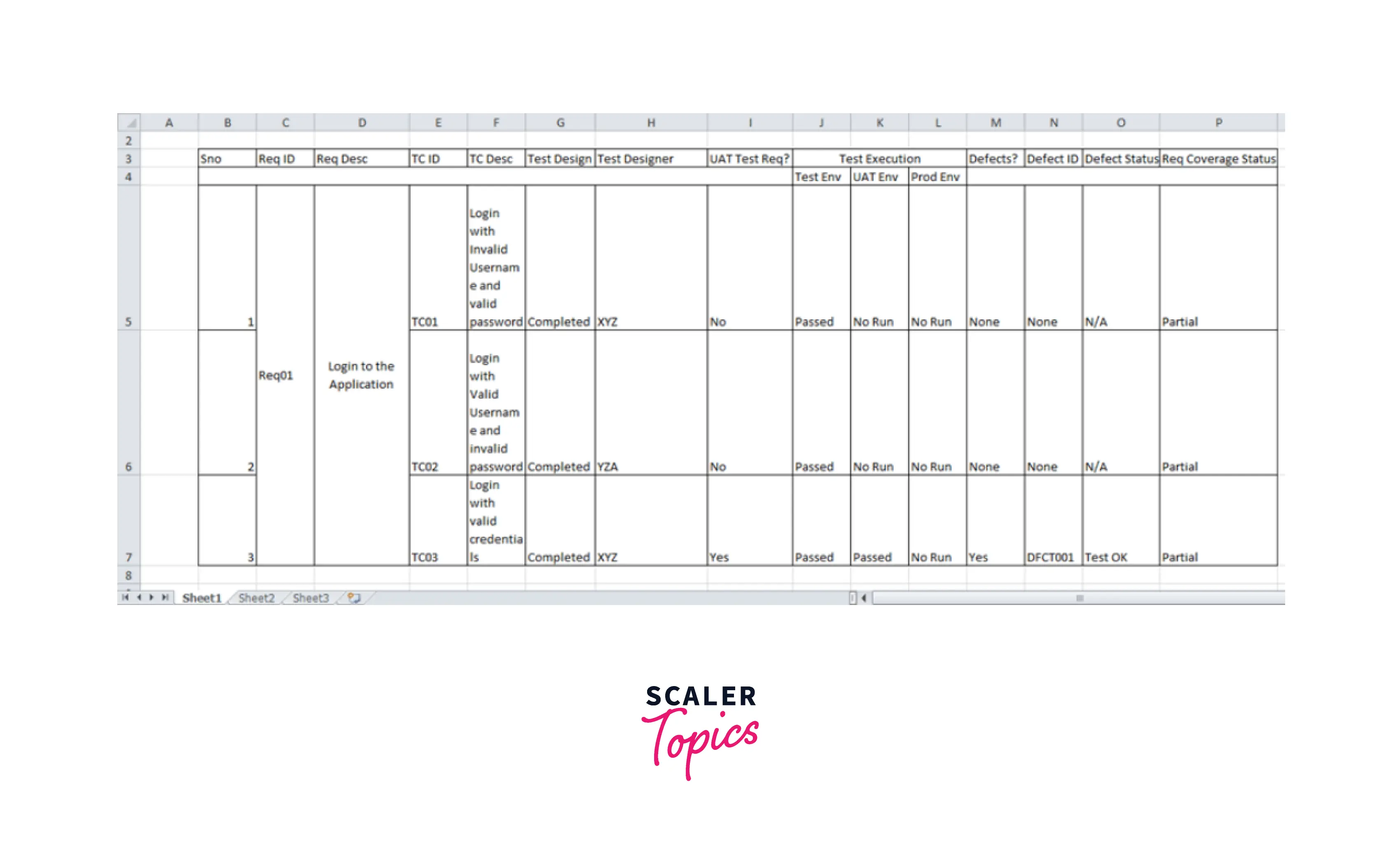
- Information about Requirement, i.e., Req Id, Req Description,
- Test case mapping Test Scenario, Test Case Id, Test Case Description, and Test status. Only mapping of test cases is done here.
- Defects are also mapped using Defect Id and Defect status.
- Lastly, the Requirement Coverage status is mentioned here. The terminology here is Partial, Complete, and None.
Types of Traceability Test Matrix
A traceability test matrix can be created for three primary purposes:
- Forward traceability: This ensures that all requirements have been mapped to test cases in RTM. That is, test case coverage is the primary concern. It keeps track of test cases, what is the current status, and if there are any bugs.
- Backward or reverse traceability: RTM can also be used to ensure no unnecessary code. All test cases have been covered, and the requirement is satisfied, but the developer has added more cases. Then that aspect can also be a useful feature in reverse traceability.
- Bi-directional traceability: RTM document created to ensure all test cases are covered and no unnecessary code added to ensure the SDLC cycle is going in the correct path is bi-directional traceability.
Turn Learning into Career Growth
Creating a Requirement Traceability Matrix
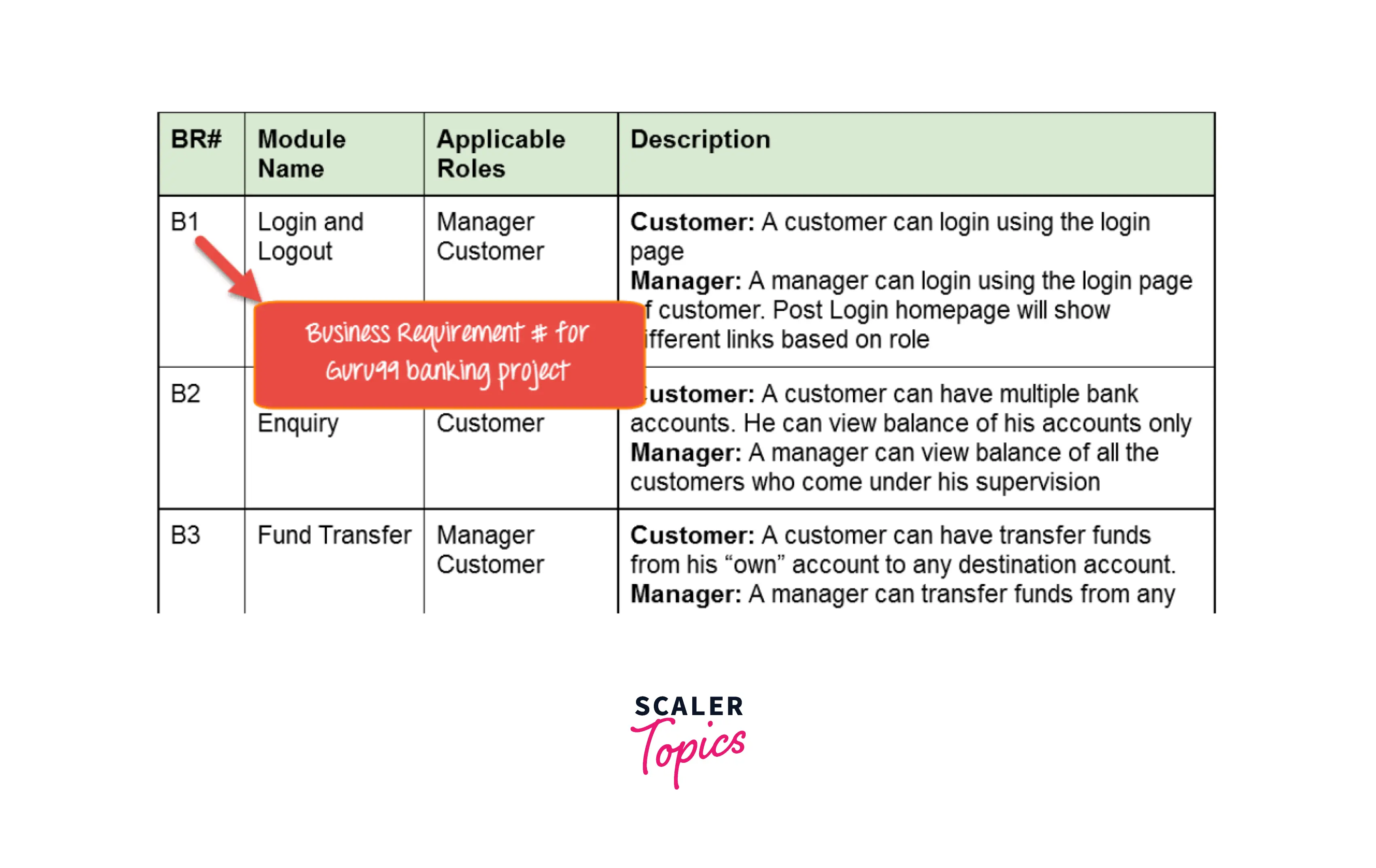
Step 1: Map the Requirements in an excel document. There is already a separate document for a requirement where the absolute requirement is listed in detail. Here we require only the reqId, and req Desc because RTM is a mapping document.
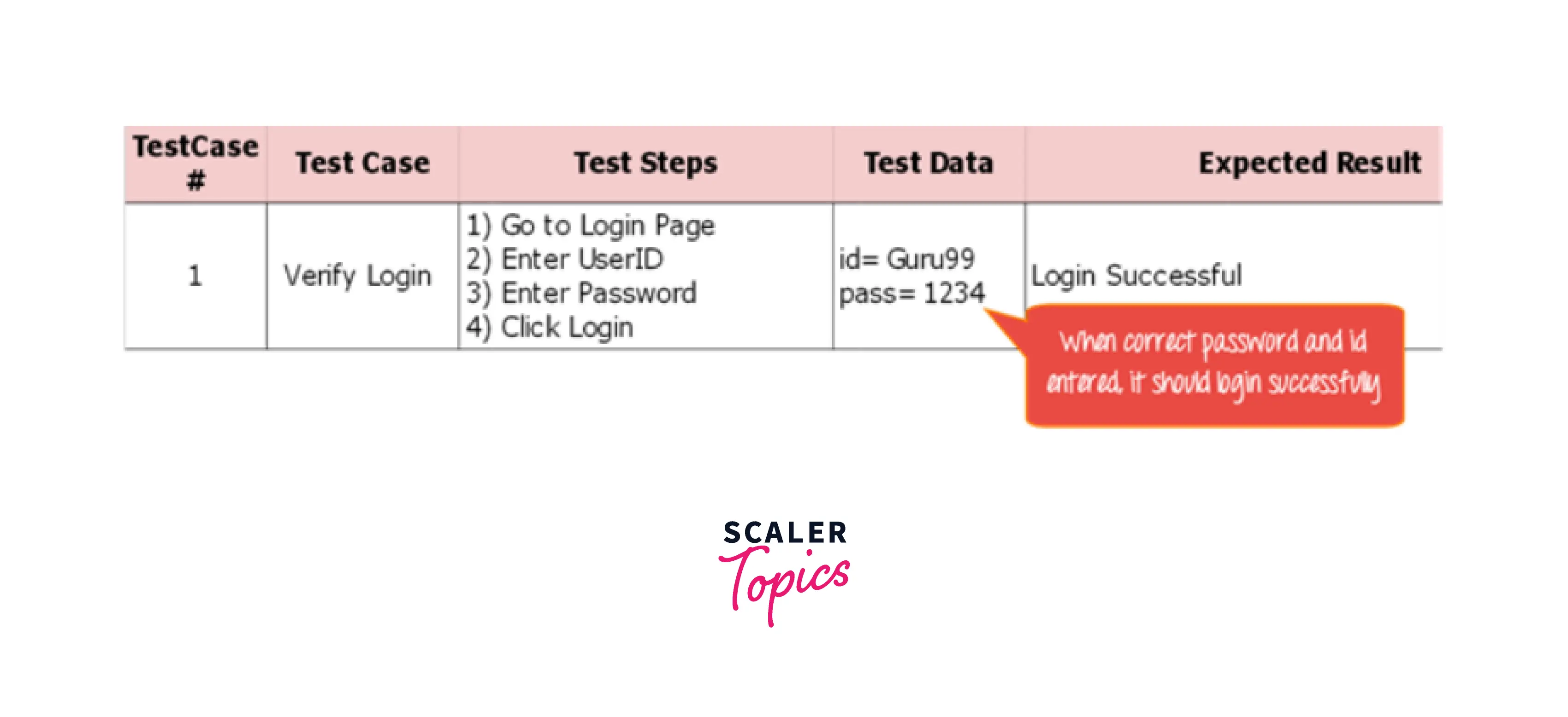
Step 2: Map the test cases to requirements. Again, only the test case is attached to the requirement. We don't write detailed test case columns like steps, expected results, etc. Here, we map testcaseId, test case status
Step 3: Map defects to the test cases. Here, we specify defect Id and defect status. The only objective here is to know the defect's status to that of the requirement to keep a tracker.
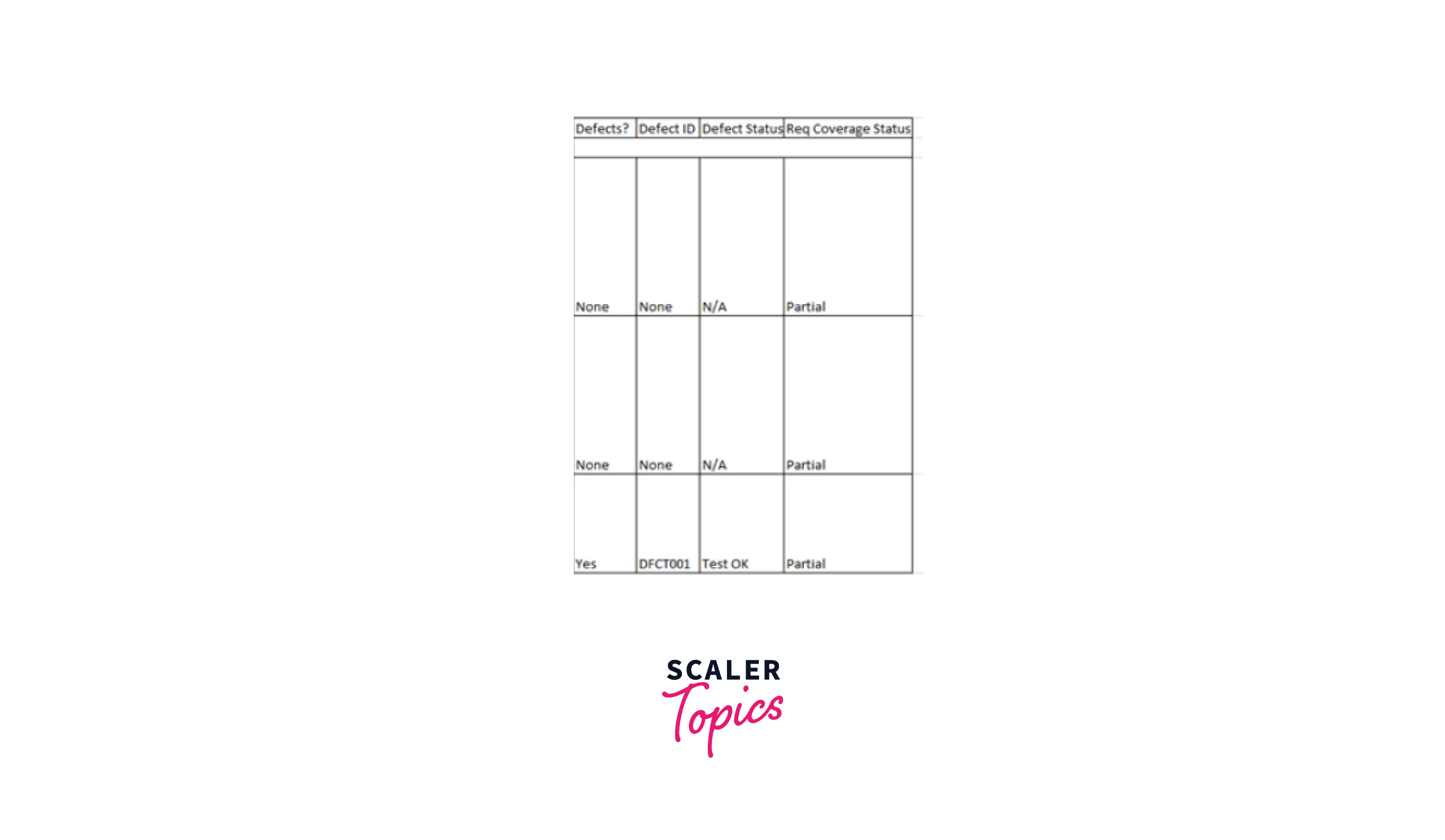
Step 4: Requirement coverage status is updated after test planning is done. It is further updated after the test execution stage.
Advantage of Requirement Traceability Matrix
- It ensures the maximum test coverage possible.
- It acts as a tracker for the testing team. The status of test execution and bugs.
- RTM also keeps a tracker for bug management. Bugs are pending, and hence, keep the development team involved.
- RTM is necessary to ensure the development cycle is on track and helps minimize time and effort where ever possible.
Conclusion
- Requirement Traceability Matrix maps requirements listed by clients to test cases that need to be executed.
- RTM contains requirements, test case information, and bug status.
- RTM works both ways to ensure maximum test case coverage and that the development cycle has not exceeded the requirements.
- The major purpose of RTM is a tracker for the testing team to keep the team updated about the STLC.
- We also discussed how to create an RTM document and the essential parameters.




